‘Enough is enough’: Activists push back as BGE requests another rate increase
Aug 11, 2026 | 6:03 pm ET

Description
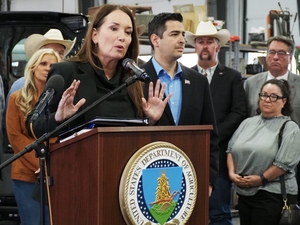
Angel Nuñez, a bishop at the Bilingual Christian Church in East Baltimore, speaks against Baltimore Gas & Electric rate hike request Tuesday. Nuñez said his church recently got a $3,000 BGE bill, at a time when parishioners are often asking for help with high costs. (Photo by Christine Condon/Maryland Matters)
Consumer advocates, environmental groups and workers’ unions are pushing back against the latest rate hike proposal from Baltimore Gas & Electric, arguing that it is unjustified, particularly after the Exelon utility earned a record-setting $578 million in profits last year.
BGE estimates that, if approved by Maryland regulators at the Public Service Commission, its proposal would raise customer bills by $8 per month. The request would increase the monopoly utility’s “return on equity” — essentially its guaranteed profit margin for capital investments — from 9.5% to 10.4%.
“After six years of annual rate hikes and record-breaking profits, BGE has come forward not with solutions, but with more problems. Enough is enough,” said Emily Scarr, a senior adviser with consumer advocacy group Maryland PIRG. “We’re calling on the Public Service Commission to reject BGE’s rate hike, and to lower BGE’s already excessive profit rate.”
BGE’s latest request comes with rising utility costs squarely in the political limelight. During the past two legislative sessions, Maryland lawmakers have passed legislation aimed at lowering bills. They believe their most recent attempt will lower customer bills by at least $150 annually, with new rules for utility companies and cuts to an energy efficiency program subsidized by customer bills. As of March 2026, about 290,000 BGE customers were behind on their payments.

The distribution rates that BGE charges for electricity have increased at about twice the rate of inflation since 2010, according to data from the Maryland Office of People’s Counsel, which represents ratepayers in rate proceedings before the PSC. BGE’s gas rates have increased three times more than the rate of inflation during that same timespan, according to the office.
BGE has said that its July request for a $156 million increase is based on “bare bones” spending that it must undertake in order to maintain the electric system, which serves about 1.3 million Marylanders.
“We hear from customers all the time: Their No. 1 priority right now is affordability,” said Nick Alexopulos, a spokesman for BGE. “They are facing increased costs of all life essentials. Energy is one of them, but it’s food, it’s housing, it’s transportation, it’s childcare.
“This rate case from BGE is the bare minimum to keep the lights on,” he said. “We did that for a reason. We did that because we heard our customers.”
But for the BGE customers who gathered Tuesday in downtown Baltimore outside of BGE’s headquarters, frustrations remain.
Angel Nuñez, who serves as a bishop at the Bilingual Christian Church in East Baltimore, said his church hears from numerous parishioners struggling with high utility bills. The church itself recently received a $3,000 bill, Nuñez said.
“They bring it to the church and ask us to help them out to pay these bills, these crazy bills that are going on,” he said. “But there’s a problem. We can’t help them. You know why? Because we’re getting these bills in the thousands.”
Poll: Utility costs, the economy and taxes top of mind for voters
Tuesday’s news conference also attracted representatives of a few local unions, who said their members are feeling the pinch from high utility bills, in addition to higher costs at the gas pump, the grocery store and more.
“The people caring for our communities are struggling to take care of themselves,” said Ricarra Jones, the political director for 1199 Service Employees International Union United Healthcare Workers East.
The Public Service Commission has said that a decision in the case is not expected until early 2027. During a brief hearing in Baltimore on Tuesday, commissioners were presented with a possible schedule that would involve evidentiary hearings in November and a final decision by the end of January.
The commission operates almost like a jury at a trial, said Chairman Kumar Barve, who represented Montgomery County as a Democrat in the legislature for decades before taking the post.
“The burden of proof is on the company, BGE, to prove that they’re correct and that they need higher rates,” Barve said.
BGE’s profit rate, storm costs debated
BGE, which was acquired by Chicago-based Exelon in 2012, argues that its return on equity must be competitive — compared to alternative investments with comparable risks — in order for it to attract investors who can provide capital to cover its costs. If BGE struggles to attract those investors, consumers can face other cost increases.

During its last rate case, BGE also requested a 10.4% return, but received 9.5% instead.
“We propose what is — in our opinion — what we need to finance our investments, to make sure that the immediate impact to customers is as low as possible and that we recover it over time,” Alexopulos said.
During this year’s legislative session, Del. Andre Johnson (D-Harford) sponsored a bill that would have required the PSC to compare requests from investor-owned utilities such as BGE against the average expected 10-year U.S. equity market return.
Johnson withdrew the bill before its hearing, citing concerns with the way it was drafted. But consumer advocates like PIRG say they plan to fight for the legislation to make a return in 2027.
“We expect that [legislation] to come back, to direct the PSC to make sure that rate … is in line with the amount of money it actually costs to attract investors, and not a penny over that,” Scarr said. “Because every penny over that is just adding to their profits.”
In February testimony filed in support of Johnson’s bill, the Office of People’s Counsel argued that, because BGE is a monopoly utility and investors’ risks are low, it should receive a far lower return on equity.
The office pointed to one study, which showed average 10-year U.S. equity market return forecasts from large investment firms in early 2025 was at 6.7%. If BGE were held to a 6% rate, customers would have saved $282 million from 2024 through 2026, the office found.
Scarr also expressed concern that one component of BGE’s rate request may violate “the spirit” of the energy bill passed by the General Assembly this year, which set a one-year ban on the use of “forecast test years.” That’s when utilities request rate increases based on future projections, rather than asking for reimbursements for past spending.
BGE is seeking a certain amount of storm recovery costs in advance, by calculating a historic average for storm costs, and adding it to rates automatically each year. In traditional ratemaking, utilities incur costs, and then request reimbursement from regulators, who determine whether their costs were reasonable and prudent.

“They’re asking for more money for expenses for 2026 when they already got a rate increase for this year. That doesn’t seem to go with the spirit of that law,” Scarr said.
But the company argues that it needs the advance storm cost payments in order to be more nimble, especially as storms increase in frequency and intensity amid a changing climate. And the customer base would be reimbursed if they overpay, Alexopolus said.
“If the weather isn’t as bad and we don’t have to spend as much to do storm restoration, rates will go down because of this rider in the future,” Alexopulos said. “Now, if the weather is much, much worse and we have to spend more money to do storm restoration, then rates will adjust accordingly based on that. But we need a baseline.”
Also facing scrutiny is BGE’s proposed FlexPay program, which BGE advertises as a flexible, optional program that would let customers prepay for their energy use.
But advocates say the customers who sign up for the program would be waiving traditional termination protections, allowing BGE to shut off their power more quickly after late payments.
Olivia Wein, a senior attorney at the National Consumer Law Center, said she worries the program would place families on a “hamster wheel of stress.”
“[It] should really be called StressPay, because what this means is that you will have to keep an eye on the meter — and when it starts ticking to zero, you’re about to be disconnected,” Wein said. “This is going to result in faster and more disconnections, and constant stress.”

Annapolis, MD