Ag secretary defends SNAP work requirements during Colorado visit
Aug 12, 2026 | 5:50 am ET

Description
U.S. Secretary of Agriculture Brooke Rollins, at mic, and U.S. Rep. Gabe Evans, a Fort Lupton Republican, at center right, hold a press conference Tuesday after participating in a roundtable with Colorado farmers and ranchers at Bobcat of the Rockies in Henderson. (Photo by Lindsey Toomer/Colorado Newsline)
U.S. Secretary of Agriculture Brooke Rollins and U.S. Rep. Gabe Evans on Tuesday defended funding cuts and work requirements Republicans added to federal food assistance programs that have led to thousands of Coloradans losing benefits.
Rollins and Evans, a Fort Lupton Republican, hosted a roundtable with Colorado farmers and agricultural producers at Bobcat of the Rockies in Henderson. At a press conference after the roundtable, which was closed to the media, the pair talked about challenges farmers in Colorado face and how the federal government supports them and the agriculture industry.
The Republican tax cut and spending bill known as H.R. 1, which President Donald Trump signed into law last year, cut funding and added new work requirements for anyone who receives food stamp benefits through the Supplement Nutrition Assistance Program, or SNAP. To remain eligible for SNAP, an able-bodied adult without children must “participate in a work activity” for 20 hours a week.
Rollins, whose department oversees SNAP, said 8 out of 10 Americans, “even an average Democrat who’s walking down the street of Denver, Colorado,” would say the 20-hour-a-week requirement is reasonable.
“In order to receive, arguably, a generous benefit from the American taxpayer, all we’re requiring you to do is look for a job for 20 hours a week, work at a job for 20 hours a week, or volunteer somewhere 20 hours a week,” Rollins said.
Research has found that work requirements for public benefits like SNAP and Medicaid do not increase employment rates and reduce access to food and healthcare.
SNAP enrollment has dropped nationwide after Trump signed H.R. 1. In Colorado, enrollment dropped by about 27,000 people between July 2025 and April.
SNAP error rate
Evans highlighted the recent annual increase in Colorado’s SNAP error rate, which measures how accurate a state’s eligibility determination is for a public benefit like food stamps. The error rate accounts for both under and over payments. In the 2025 fiscal year, Colorado’s error rate was about 10%. In the 2018 fiscal year, Colorado’s error rate was just over 5%.
States whose error rates are above 6% will be required after October 2027 to pay more to support their SNAP programs under the requirements of H.R. 1. Those requirements will push Colorado to meet the same standard it had previously, Evans said.
“If they can do that, the state of Colorado gets 100% of its SNAP benefits paid for by the federal government,” Evans said.

The 10% error rate means about $12 million a month is “not getting to the people who need it the most because of mismanagement here in the state of Colorado,” Evans said, adding that the new requirements will “cut out fraud, waste and abuse” — a slogan that is commonly invoked in the second Trump administration.
The Colorado Fiscal Institute predicted that increased spending on SNAP would be detrimental to Colorado’s already tight state budget. The House-approved Farm Bill is stalled in the Senate because Democrats want an extension for states to meet the error rate requirements.
Hearing from Colorado farmers
Rollins said roundtable participants talked about how gray wolves have been “absolutely devastating” for cattle ranchers, water challenges for agriculture producers, and bird flu.
Evans touted the central role Colorado’s 8th Congressional District plays in the state’s agriculture economy, calling it an “ag powerhouse” that produces beef, milk, eggs, specialty crops, and more for the whole state.
“This truly is the district that feeds and fuels the rest of Colorado,” Evans said.
Evans was elected to represent the 8th District in 2024 and is running for reelection against Democrat Manny Rutinel this year. The district, which includes the northern Denver suburbs and Greeley, is the most competitive in Colorado and the race to represent it is expected to be one of the contests that determines which party controls Congress.
Kreg Vollmer, who serves on the board of directors for the Colorado Farm Bureau, said he wanted to highlight the struggles Colorado farmers have faced with extreme drought conditions, which he said has been “top of mind for everybody” following a historically dry and warm winter.
“There’s a lot of guys who weren’t able to put stuff in the ground. There’s a lot of families that, with some of the other economic pressures that are going on, that are having a hard time,” Vollmer said. “So there’s a lot of concern for their family farms, their legacy, and then the communities that they support.”
Ensuring there is a strong safety net and disaster recovery aid in the Farm Bill is a top priority, Vollmer said, as farmers and ranchers work through the ramifications drought and fires in neighboring areas have on their production.
“We need to make sure that the systems we have in place to support our food systems are strong and flexible,” Vollmer said.
He mentioned record-breaking fires in Nebraska, which took out more than 500,000 acres. A disaster of that scale “completely destabilizes the ag economy” and “completely throws off the natural order” of how farmers get their product to market.
“Federal support to make sure that we have the tools we need for drought resiliency, for fire mitigation and management, tools for effective conservation of our lands and the surrounding areas is pivotal,” Vollmer said.
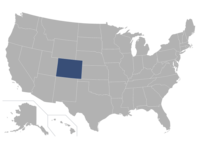
Denver, CO