Grant-funded program to bring cooking labs, fresh local foods to Northwest Tennessee schools
Aug 12, 2026 | 6:02 am ET

Description
School cafeteria cooks prepare sandwiches using fresh ingredients during a training day for the Children’s Health through Education and Food program in Northwest Tennessee. (Photo Courtesy of Northwest Tennessee Local Food Network)
School lunch menus in Northwest Tennessee will be a bit fresher over the next two years thanks to a local food organization, area farmers, chefs from a New York-based nonprofit and federal grant funding.
Cafeteria cooks from five districts trained alongside chefs in late July, learning techniques for handling the fresh, local produce that they will help introduce to students this fall as part of the Children’s Health through Education and Food, CHEF, program.
Integrating fresh produce into school lunches is a complex task. Schools have limited budgets and strict nutrition regulations they must meet. Cafeterias often turn to more affordable pre-processed products instead of pricier, fresh produce from local farms.
The Northwest Tennessee Local Food Network, a nonprofit organization dedicated to strengthening local food systems, has worked for years to change that equation, now alongside New York-based nonprofit Wellness in the Schools, WITS, the Tennessee Farm2Future Coalition and Healthy Flavors Tennessee.
The organizations piloted the CHEF program in select Tennessee and Arkansas schools over the last two years, and the Northwest Tennessee Local Food Network was the only Tennessee organization to receive a $500,000 Patrick Leahy Farm to School Grant this year, allowing the program to continue and expand.
It will span 12 schools in Crockett and Lake County school districts and the Milan, Trenton and South Carroll special schools districts, reaching nearly 6,700 students.

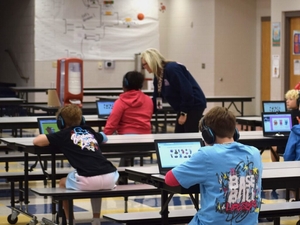
The program helps train cafeteria cooks with WITS chef ambassadors and teaches students how to make simple foods in classroom cooking labs — foods that they will later see and sample on the cafeteria line. Recipes and activities are tailored to each school’s needs, according to Samantha Smith Goyret, co-director of the Northwest Tennessee Local Food Network.
The program’s success depends on administrators, federal funds, food organizations, and farmers working together, Co-Director Caroline Ideus said.
The goal: Students will learn the seasonality of foods and what grows locally, and how they can be prepared.
“For our labs particularly, we really try to source as much as we can locally, so that way we could share with the kids, ‘This was grown by Darrell Bell and Bell Family Farms is out in Gleason, and you can go visit there,’” Smith Goyret said. “Just building that excitement, giving the kids that opportunity to cook, to be responsible for a recipe, and seeing them digest that, in a figurative and literal sense.”
The art and science of school lunch
Ideus typically opens any conversations about freshening up school lunches with a question: “When’s the last time you had school lunch?”
“School lunch components and requirements have changed so much,” she said. Nutrition staff and directors have many factors to balance: taste, cost, federal requirements and more.
“Your school lunch is going to taste a little different, because there’s basically no salt, no sugar, and limited fat,” Ideus said. “That’s going to taste different than what people eat at home. This is why we’re trying to teach kids to cook, so that they can cook healthier foods at home and develop those taste preferences to eat it at school, too.”
Schools serve a lot of carrots, Smith Goyret said, because they are a vegetable that “meets the orange component.” (The U.S. Department of Agriculture requires certain quantities of vegetables to be served each week, including specific amounts of red or orange vegetables).
Seasoning carrots and changing their flavor profile is a challenge without adding salt, she said.
During the program’s pilot, a chef ambassador with Weakley County Schools added a chimichurri sauce — an Argentinian sauce made with herbs, garlic, olive oil and vinegar — to carrots to spice things up.
The program will try to focus on Tennessee’s “Harvest of the Month” crops, seasonally available produce highlighted by the state. During their July training, cafeteria cooks learned to make homemade applesauce, for example (October’s crop is apples).
WITS Director of National Programs Marion Williams said teaching students “juicy chef words” to describe how foods taste and look helps keep them open to trying new foods.
During training, a few students attending summer camp approached and asked what the group was cooking.
“We’re making a golden applesauce,” Williams answered.
“It’s going to look very different from the one they get in the package, because we’re using the skins of the apples, so it does have more of a richer color,” she said. “You have to start describing it, because if you just say it’s applesauce, the kids will look and say, ‘Well, that doesn’t look like applesauce.’”
Telling students that homemade applesauce is a little sweeter or a little chunkier helps, she said.
And for cafeteria cooks, WITS writes recipes tailored to the equipment each school has in its kitchen. That applesauce recipe will be written for cooking with a stove top, oven or steamer, for example. Recipes are also written to fit fresh food availability; If a school can’t source pricier fresh tomatoes for a from-scratch marinara sauce, WITS provides a “speed scratch” recipe that uses canned tomatoes, still giving cafeteria staff more control over flavor and freshness than a can of pre-made marinara sauce would, Williams said.


Cooking foods with students in the classroom before introducing them to the school lunch menu also helps.
“Once these kids have cooked this item, have tried that item, when we do the school-wide taste test, they’re the cheerleaders that are saying, ‘Hey, you’ve got to try this! We made this in class the other day,’” Smith Goyret said.
Students can sample the new food, rate it, and describe what they like and don’t like about it.
“The children are learning how to bravely try something, be okay if it doesn’t taste the way they feel it should taste, but also be open to the idea that maybe if you communicate how you feel about it, someone can alter the recipes,” Williams said.
Ultimately, the goal is to make the new, fresh-prepared food part of the school’s lunch menu rotation.
Locally grown
The federal grant for the CHEF program also allows schools to buy more food fresh from local farmers.
“The biggest barrier for the schools for getting more local products is cost,” Ideus said. Schools are still feeling the absence of funding that came from Local Foods for Schools, a USDA program cancelled by the Trump administration in early 2025.
The funding loss also dealt a blow to farmers, who must prepare well in advance to provide the large quantities of produce needed to feed students on a large scale, Ideus said.
“When that Local Food for Schools money disappeared … that’s when all the farmers were planting their crops, so we lost (their) trust,” she said.
The Northwest Tennessee Local Food Network is working with five farmers as part of the CHEF program, both in purchasing fresh food from their farms and in helping equip their operations for larger-scale production.

A beef producer partnering with the program will receive a larger-capacity, more efficient freezer to allow her to handle the quantity of meat the schools need. Darrell Bell, owner of Bell Family Farm, will receive a new pea sheller that he’ll use to provide the schools with purple peas and lima beans.
While Bell sells crops wholesale to distributors, he said he has also supplied a variety of produce to schools through grants in the past. He switched from growing row crops on his family farm to growing produce about nine years ago. He grew up with his grandfather growing watermelons in the garden, and now he grows them on a broader scale for his community.
“Feeding thousands of kids, giving them nutrition through your food that you grow, that’s pretty rewarding in itself, right there,” Bell said.
He said he appreciates the Northwest Tennessee Local Food Network for seeking grants that allow him to serve schools. Fruits and vegetables lose nutrients starting right after they’re harvested, he said, so working directly with schools allows students access to fresher, more nutrient-dense produce.
Bell acknowledges that grants are taxpayer money.
“It’s being used for good things, good purposes,” he said.
Nashville, TN