English literacy center serves Detroit immigrants despite climate of fear
Aug 07, 2026 | 4:00 am ET
Description
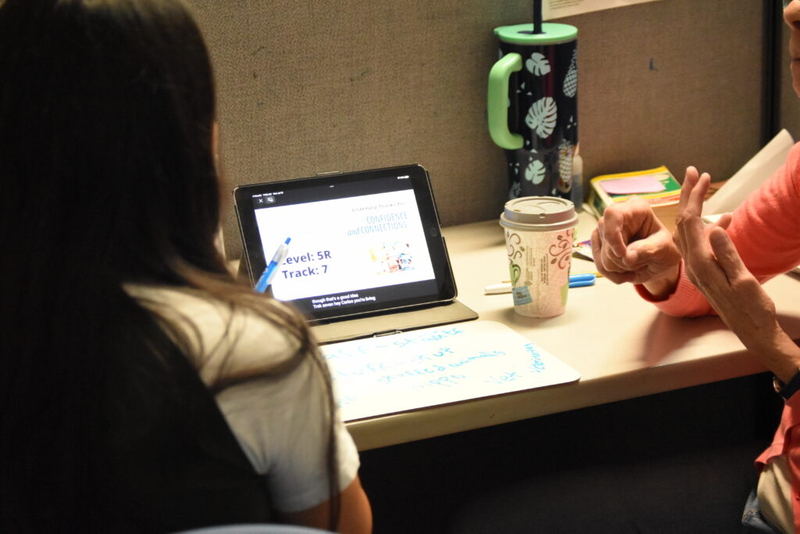
A student works one-on-one with a tutor at All Saints Literacy Center. July 15, 2026. | Photo by Katherine Dailey/Michigan Advance.
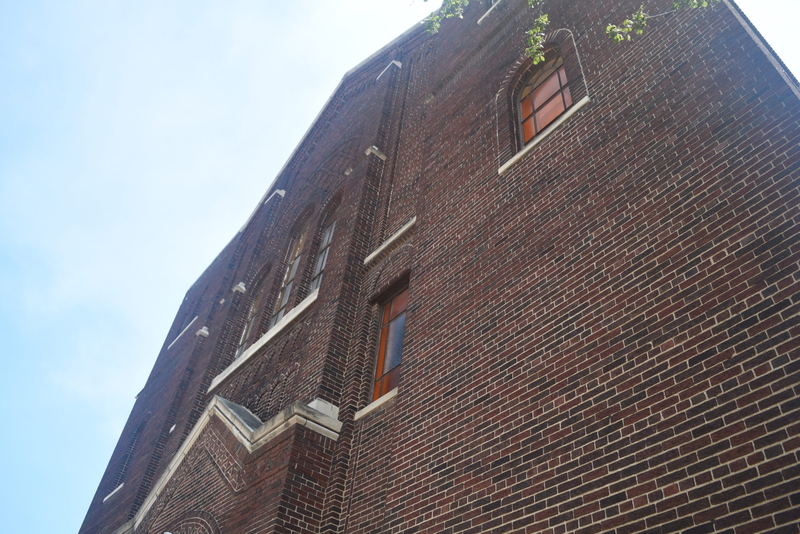
At a historic Lithuanian church in Detroit’s Mexicantown neighborhood, All Saints Literacy Center is working to open doors for community members who are not literate in English — whether that be parents who need to meet with their child’s teachers, workers looking to advance in their careers, or someone who needs to understand what a doctor is saying at an appointment.
Founded in 2015 by the Adrian Dominican Sisters, the center provides one-on-one, individualized tutoring sessions to adults seeking English literacy skills, all for free. Currently, there are 36 learners at All Saints, all English-language students.
Grace Irwin, who was named the executive director of the center in May, said that the center’s home in Mexicantown, on the city’s Southwest side, is and always has been a strategic location — All Saints is not the only adult literacy center in Detroit, but it is the one that caters most to ESL students.
Many of the learners are immigrants, and all but one are native Spanish speakers. In a time when fear of deportation has been weaponized against immigrant communities nationwide, Irwin emphasized that even given the fear and uncertainty that ICE creates in the community, they work hard to create a safe and welcoming space for everyone there.
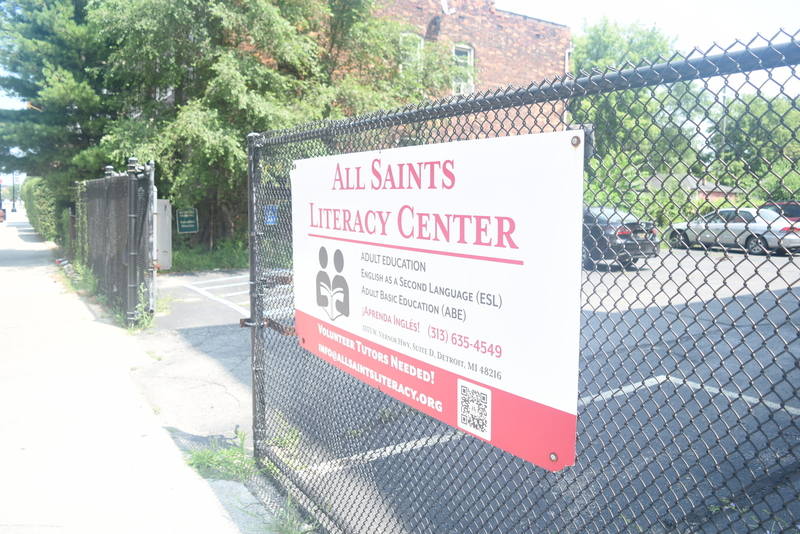
Steve Ragan, who chairs the board of All Saints Literacy Center, said that though ICE has never come inside All Saints or attempted to, they have had incidents where agents are parked outside their gates or down the street from the center.
“This is a community where literacy is critically important. In every community, literacy is important, but especially here,” Ragan said. “I just want to be clear: most of these are legal immigrants. While we don’t screen them, we do know that most of the people we serve are legal immigrants, and the immigrant community is incredibly important.”
Immigrants have become very concerned about going to any institution, including schools — though Irwin noted that the option of remote classes, a remnant of the COVID-19 pandemic, has helped to mitigate those concerns for some students at a time of heightened concern.
“We can’t even discuss it anymore, and so people are scared. I’d say the biggest thing I’ve seen is just fear, that a lot of people are afraid to come here,” Ragan, who said he considers himself a Republican, continued. “We don’t ask people to prove their citizenship. That’s not our business. But you know we also help people learn the skills so they can become citizens, and I think that’s really important.”
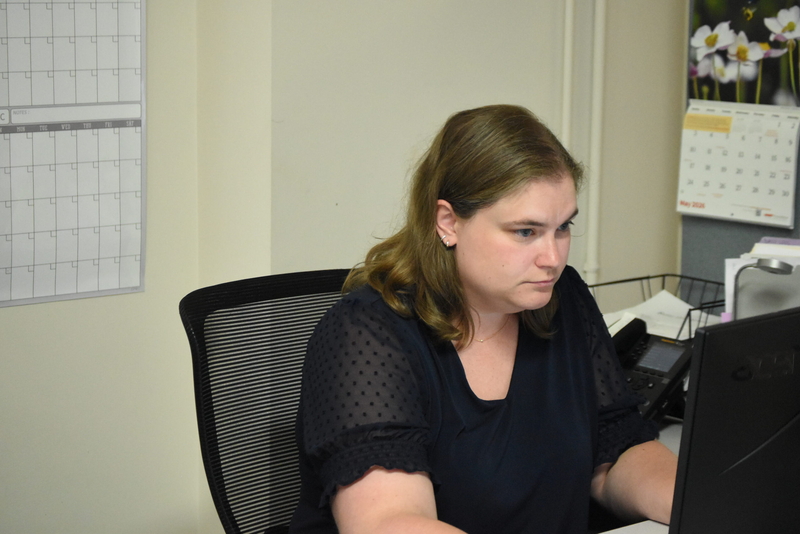
All of the tutors at the center are volunteers — currently, there are 29. One of them, David Rubenstein, who has been volunteering at All Saints for around a year and was doing literacy tutoring at a different location for years before then, said that he has gotten so much personal satisfaction and growth from doing this volunteer work.
“I get the satisfaction of somebody improving their lives,” he said. “There’s nothing hard about it, and the easiest thing is doing it.”
Rubenstein now lives in Royal Oak and spent a number of years tutoring at the Siena Literacy Center in northwest Detroit, but he spent a period of his life living in Mexico and Panama, so he felt a particular connection to teaching Spanish-speaking learners, which All Saints caters to. He’s taught students from around the world — including from Vietnam, Jordan and Thailand. Now, he has two students at All Saints — one from Mexico and one from Iran.
Beyond teaching them the fundamentals of English, Rubenstein said that he finds it meaningful to have his clients encounter different accents and cultural contexts — so he has them speak with each other in English, since he sees them on the same day.
But his involvement with his students also stretches beyond the bounds of classwork.
“I also get involved with the ones that I like, which is all of them so far, in a way that we’ve become family,” Rubenstein said. “They’ve never been to a baseball game, so I took the Iranian guy and his wife to the Tigers game. I love Detroit, so I try to introduce them to new things.”
It’s also made it harder for him to feel the pain of the learners he works with as they deal with the immigration system. He recalled feeling the pain of one of his clients, who works at Henry Ford Hospital and whose wife is a post-doctoral researcher in Parkinson’s Disease, when they were denied a green card, even after putting in hours of work and even having a child.
“It’s very disturbing. It’s costing the government nothing for us to teach these people,” Rubenstein said. “I’m sick to my stomach about what our government’s doing.”
Irwin, who previously worked with ACCESS, or the Arab Community Center for Economic and Social Services, in Dearborn, emphasized the real-life impacts of literacy work, giving the example of a client who was beginning to work towards her GED after developing her English skills.
Those stories have stuck with the leadership of All Saints — including Ragan, who has been involved with the center for a decade.
“I think about the first person I tutored. I know that after we helped him improve his English skills, he got a promotion. He went to a manager level position that he never would have had if he hadn’t improved his English skills,” Ragan said. “So yeah, I think the work we do is life changing sometimes.”
And he remains close with another of his earliest tutees, a man from Sri Lanka whose wife was in the United States to do her Ph.D., and who himself had a medical tech degree from his home country. He asked Ragan for help studying for the TOEFL exam in order to apply for his master’s degree, a type of lesson that All Saints generally does not do. But Ragan knew he could help, and so he took it on.
“I got some books, I tutored him, and a year later, we got him his score up, and he got into his master’s program, got his certification. He’s now working for Northwestern University,” Ragan said, adding that whenever he visits Chicago, he still makes a point to see his old friend.
Approximately 75% of the learners are women, and most are between the ages of 25 and 44, according to statistics provided by the center.
The future of the All Saints Literacy Center is bright — the Adrian Dominican Sisters, who founded the center, are shifting from literacy as a priority, Irwin explained, but are providing a $1.5 million transfer to the center as they become an independent nonprofit. That money, for a center with a relatively small annual budget, will make a big difference.
“One of the things we’ve done with their $1.5 million dollars is we’ve taken part of it and we’ve put it in reserve for growth, and we’ve taken part of it and focused it on capacity building,” Ragan explained. “Those are the three outcomes that we’re measuring. We want to grow fundraising, tutors, and students. And you know, because we know that there’s need in this community.”
He noted, however, that an administrative error by the IRS has delayed their ability to receive that transfer of funding in a timely fashion — an issue that he calls the agency every day to try to resolve.
But the center continues to grow, with both staff like Irwin and volunteers like Rubenstein expressing interest in restarting group literacy classes that the center had previously held.
Rubenstein also emphasized the cycle that he hopes to create by helping people develop their English skills and by giving back to the Detroit community.
“One of the things I hope is that these people, once they have sufficient English knowledge, will give back,” he said. “Not necessarily teaching, but will become part of their community, of our community, and participate.”
Lansing, MI