How to bring candidates of different parties together? Take them to a pre-K classroom.
Aug 06, 2026 | 2:38 pm ET

Description
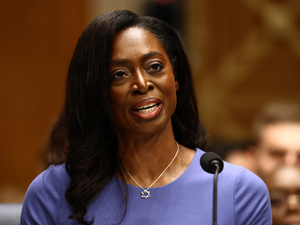
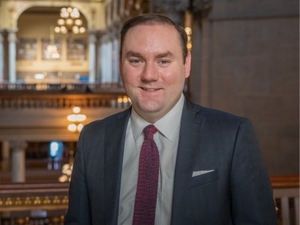
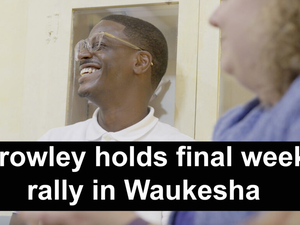
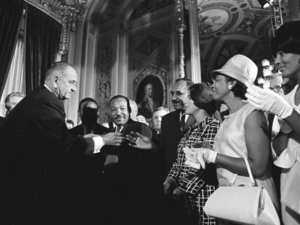
Clockwise from top left: Gubernatorial candidates Ken Block, an independent; Aaron Guckian, a Republican; Jay Gotra, an independent; and Helena Buonanno Foulkes, a Democrat, participated in a gubernatorial forum at Children's Friend in Providence on Thursday, Aug. 6, 2026. (Photos by Nancy Lavin/Rhode Island Current)
Few people could stand before a crowd of childcare providers and advocates, having just toured classrooms brimming with cheery toddlers, and not pledge more funding for early education programs and educators.
Indeed, all four gubernatorial candidates who attended the Thursday morning forum at Children’s Friend in Providence were emphatic that the state can and should do more to support its youngest residents and the people who care for them. The hourlong event was heavy on promises but scant on details as participants Helena Buonanno Foulkes, a Democrat; Aaron Guckian, a Republican; and independents Ken Block and Jay Gotra answered the same four questions from moderator Ian Donnis, a political reporter for Ocean State Media.
All seven gubernatorial candidates who met the 1,000 signature threshold to qualify for the ballot were invited to attend the event organized by Children’s Friend and RIght from the Start, a legislative and budget campaign centered on children and families. The other three, Gov. Dan McKee, Republican Elaine Pelino and independent Christopher Reynolds never responded to the invitation, said Kaycie Green, a spokesperson for Children’s Friend. Rhode Island Current also contacted McKee, Pelino and Reynolds independently; none responded to requests for comment on their absence.
Despite the partisan differences between the participating candidates, they came together on the need for Rhode Island to maximize federal funding for early childhood development, education, and associated programs like nutrition and home visitation.
“We should be fully funding every match available on a yearly basis,” said Block, 60, a software engineer who lives in Barrington. “We leave hundreds of millions on the table because we are not fully funding and taking advantage of federal matches across all programs.”
Even with the enticement of a 2-to-1 match, state lawmakers have not always maxed out contributions from state coffers amid competing budget priorities.
Rhode Island’s fiscal 2027 budget, for example, marks the first annual state spending plan in which lawmakers invested the maximum state funding for a federal program providing trained home visitors to pregnant women and families. The $787,000 in state funds included in this year’s budget comes with a $2.4 million federal match.
Asked by Donnis where they would find the money to max out state contributions to programs like Head Start and Medicaid, all four candidates suggested there was too much being spent in other areas.
Guckian, 49, of East Greenwich, echoed the familiar conservative refrain about “bloat” in the $15.2 billion state budget. An aide to then-Gov. Don Carcieri and the former executive director of the Rhode Island Dental Association, Guckian proposed a combination of modern technology and an incentive program that offers a small portion of saved revenue to the people who find ways to improve government efficiency as solutions.
Gotra, 44, an East Greenwich resident, said that eliminating “waste” in government would free up funds for childcare services. But the first-time candidate whose now-defunct solar sales company is the subject of a predatory sales lawsuit by the Rhode Island Attorney General’s office, sidestepped Donnis’ follow-up question about where he would propose cuts.
“Bloated budgets are not a one-person problem, so one person can’t solve that,” Gotra said.
Foulkes singled out the Rhode Island Department of Transportation, which despite its $1.1 billion budget and 700-person payroll has not kept Rhode Island from ranking dead last in infrastructure conditions in a string of surveys
Foulkes, 62, of Providence also proposed adding a state worker devoted to maximizing federal funds across programs, replicating a similar position in Massachusetts.
The former CVS Pharmacy president took aim at the Trump administration for threatening to dismantle or substantially restrict eligibility to key social safety net programs, including those for early childhood development.
Workers wanted
Ample program funding is not the only obstacle facing families and children. Candidates were also asked for proposed solutions to the shortage of critical childcare providers and educators. Children’s Friend has struggled to fill the eight pre-K and Head Start classrooms at its Berkshire Street location because it can’t find enough workers.
Increasing childcare providers’ wages was a common proposal across gubernatorial candidates, along with improved training programs to grow the pool of future educators and social service providers. Foulkes, the only woman to participate, stressed the value of high school vocational programs that cater to industries beyond plumbing, automotive and other male-dominated fields.
“We should also be training in fields that young girls want to be in, and I want more young boys in this field,” she said.
Block, whose wife is an educator, suggested improving students’ academic performance would set them up for early childhood development careers, among other industries.
But the grand fix to an underfunded, understaffed and unpredictable system proved elusive.
“Put everyone in the room and lock the door and just give them bread and water and say let’s solve the problem,” Block suggested.
Guckian’s take? “No one’s listening. We need to communicate more and listen.”
Rather than closing statements, the forum was capped off with a string of pre-K students filing into the room to present thank you cards to the participants.
Early voting begins on Aug. 20, ahead of a Sept. 9 primary. The general election is Nov. 3.


Providence, RI