Cassandra Sanchez came to NH to bring change. She’s leaving concerned for children’s future.
Aug 07, 2026 | 5:00 am ET
Description
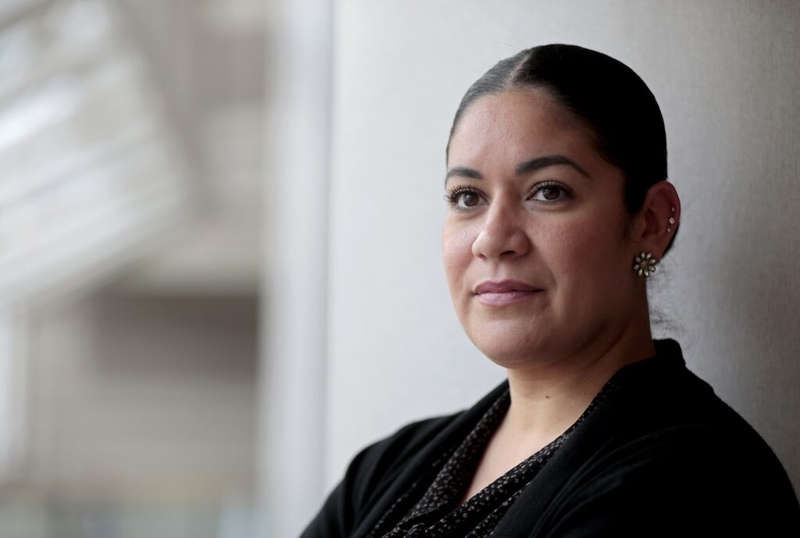
Cassandra Sanchez left her role as New Hampshire's child advocate last month. She had served in the role since 2022. (Photo by Pat Greenhouse/The Boston Globe)
In 2021, Cassandra Sanchez was working for the Massachusetts Department for Children and Families in Lowell and growing frustrated with red tape and ineffective bureaucracies. She decided she needed to find a new role — one where she could enact systemic change.
“I felt at a certain point that I wasn’t helping families by doing that work,” Sanchez said. “I was actually harming them at times.”
Across the state line, the kind of role Sanchez was looking for opened up. New Hampshire had established the Office of the Child Advocate in 2018 to oversee youth-focused state systems like foster care, juvenile justice, and child welfare, and to advocate for the best interests of children in the state. The idea was to have an independent watchdog working to ensure vulnerable children are protected. When the first person to lead the office, Moira O’Neill, announced she planned to step down at the end of her term in 2022, the state put out a call for applications.
“It was almost like the perfect timing where I was getting burnt out in doing that work and feeling like it wasn’t beneficial in the way that I wanted it to,” Sanchez said, “that this posting came out.”
Fast-forward to 2026, and the optimism she felt while filling out that job application has evaporated. Last month, Sanchez was forced out of the role. She’s leaving office frazzled, disillusioned, and fearful for the future of the independent agency she’s spent the last four years leading.
In January, Gov. Kelly Ayotte had nominated Diana Fenton, a former prosecutor and lawyer for the Education Department, to replace Sanchez. However, after Fenton withdrew from consideration following accusations she held a conflict of interest in her personal life as a foster parent, Sanchez remained in the role on holdover status while a messy succession saga took place. In late July, the six months Sanchez was allowed to serve in holdover status expired, and former Manchester Police Chief Allen Aldenberg took over as acting child advocate. The search for a permanent replacement continues.
Sanchez fears for the future of the office amid this chaotic leadership transition, but she’s proud of what she accomplished over the last four years — work that, from the beginning, centered on tragedies and a belief that systems can do better to prevent them.
Entering office amid tragedy
In late 2021, 5-year-old Harmony Montgomery was reported missing in Manchester. A few years prior, a Massachusetts judge ruled the young girl would no longer live with her mother, Crystal Sorey, in Massachusetts and that her estranged father, Adam Montgomery, would have full custody in New Hampshire. Adam Montgomery was later convicted of assaulting and murdering the young girl in his Manchester home. The murder conviction was recently overturned, and a retrial is expected. Harmony’s body still hasn’t been found.
The high-profile case shocked New England and led to calls for reform, particularly after officials concluded Massachusetts failed to properly vet Adam Montgomery.
Those reform efforts were underway when Sanchez applied to be the next child advocate in New Hampshire. Her experience in Massachusetts, she said, primed her to examine interstate breakdowns in communications and other failures.
“I worked on the border of New Hampshire and Mass.,” she said. “And so having observed cross-border cases, how things could fall in between the gaps … I was like, ‘I want to be part of that. I want to be part of the solution. I want to be part of doing better by children.’”
Sanchez, who was nominated by then-Gov. Chris Sununu, took over the Office of the Child Advocate in April 2022 and continued the work of O’Neill’s team.
Sanchez said the Montgomery tragedy taught her the state needs to strengthen statutory language around what’s considered child abuse. In her view, Massachusetts was able to send Harmony to live with her father without proper vetting because of gaps in New Hampshire law that weren’t present in Massachusetts law. Sanchez worked with lawmakers for four years to attempt those changes, without success. Most recently, 2025’s House Bill 553 died on the table in the House.
Jason Taylor, an assistant child advocate who worked under both O’Neill and Sanchez, is proud to have worked with Sanchez.
“The relationships that we built with people in the state,” he said, “whether it be with group homes, whether it be with the agencies themselves, we have come miles forward during Cassandra’s time.”
A crisis in Tennessee
Another watershed event in Sanchez’s tenure as child advocate came in 2023, when she visited two New Hampshire boys sent to a care facility in Tennessee. What she saw horrified her.
At Bledsoe Youth Academy, she discovered children with rug burns on their face from aggressive restraints; unsanitary conditions; children being told “you are here because your mamas don’t love you”; children being dressed in a color-coded jumpers meant to designate them as suicidal, dangerous, or facing disciplinary measures; and “a culture of shame, humiliation, and inhumane punishment.”
“That is something that I don’t think will ever leave me in life,” she said. “I don’t. That situation is the real impactful type of situation where it’s almost like a piece of me walked away with some of their trauma.”
She promptly reported the abuse and was proud of how her office was able to force action on the issue.
Legislation was passed to enhance oversight of residential facilities by the Bureau of Children’s Behavioral Health and require visits from the Division for Children, Youth, and Families.
“That is the one area we were able to gain the most traction and impact change rather quickly,” she said, “because I do understand that change takes time and it’s often a slow process. But that one, there was a really swift response to.”
Friction with the Legislature
In March 2025, Sanchez was at a juvenile justice conference in Boston when she got a call from a colleague: A state lawmaker on the House Finance Committee had just proposed eliminating the Office of the Child Advocate as a cost-saving measure.
“We had no prior warning,” Sanchez said. “It completely blindsided us.”
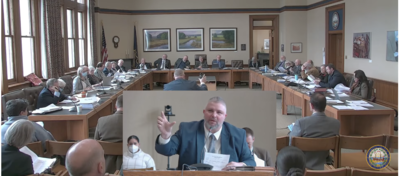
Indeed, state Rep. Dan McGuire, an Epsom Republican, introduced the measure during the state budgeting process, launching a monthslong negotiation between lawmakers.
During that negotiation, what was pitched as a cost-cutting measure morphed into attacks on the office’s advocacy work. Notably, in April 2024, Sanchez appeared at a rally where she publicly advocated against a slate of legislation to ban transgender girls from playing in girls’ sports, require public school teachers and staff to reveal a child’s gender identity or sexual orientation if asked, and allow businesses to designate bathrooms and locker rooms based on biological sex. Several lawmakers, including Republican Sens. Victoria Sullivan and Tim Lang, criticized her advocacy in 2025 amid discussions to cut the office.
Sullivan told New Hampshire Public Radio at the time, the advocacy was “distracting from the actual good work that’s happening with the children, with the systems.”
After months of back-and-forth, a compromise struck by Senate President Sharon Carson saved the office, but instituted major cuts. In July 2025, when the new budget took effect, the Office of the Child Advocate’s staff went from nine employees to five. Sanchez said it’s been tough ever since. The team had to pull back on oversight measures and slow down their response times.
Taylor, the assistant child advocate, was frustrated with the way his boss was targeted for her LGBTQ+ advocacy.
“People have used the word ‘activist’ several times with me,” he said. “That Cassandra was some sort of activist, because we had one press conference that we participated in as an office, right? That’s like 1% of what took place during her tenure, and that’s what folks are talking about.”
The two are convinced that Republicans’ anger over her LGBTQ advocacy — which she still stands by — was always the deciding factor in their cuts. Sanchez said the dynamic undermines a core tenet of the office: It was designed to be independent.
“An independent agency that’s intertwined in statute the way that we are is not truly independent when the Legislature could remove your entire budget because they don’t like your advocacy,” she said. “Where is that independence truly?”
A degradation of trust and communication
When Sanchez entered office, Joe Ribsam was executive director at DCYF.
“He was very much, I will say in his time working for the agency, a visionary,” Sanchez said. “Very much looking to the future and how to expand and do better for children across the state.”
She said what made Ribsam stand out was his willingness to work with external partners. She said when crises occur in child welfare, agencies too often “shut everybody else out to say we need to figure this out on our own.”
“In those moments what’s actually far more impactful,” she said, “and has the ability to have greater system reform, is working with communities, other folks that are doing this work, getting their perspective.”
Sanchez said Ribsam did that.
In an interview with the Bulletin, Ribsam said he was fond of Sanchez as a colleague.
“She understood the importance of being able to understand systemic challenges that systems face and that families face,” he said. “And how to make sure that when we’re making recommendations about improving things that we’re doing it from this broader systemic lens, and not just looking to, say, blame a caseworker for a bad decision when that might not have been the cause of the underlying challenge.”
He particularly appreciated the way Sanchez included frontline DCYF staff in conversations about systemic change.
“It wasn’t somebody from the outside saying, ‘I know what’s right and I’m telling you what to do,’” Ribsam said. “But rather working with people who actually do the work to understand what are all the problems that you’re seeing, and what’s the context in which you’re working trying to solve these problems for kids and families.”
Ribsam left the role in 2023 to work in the nonprofit sector before accepting a position as acting commissioner of the New Jersey Department of Children and Families. He was replaced by Jeff Fleischer, who left the role after less than a year “to pursue other interests closer to family out of state.” Marie Noonan replaced him in 2024, and still leads the division today. Sanchez has been disappointed with DCYF, which is part of the Department of Health and Human Services, since Noonan took over.
“I don’t believe there’s any partnership with the OCA and DHHS at this point,” Sanchez said. “… We make recommendations, and they say ‘thank you,’ and they move on, and they go do what they want to do.”
Sanchez doesn’t expect DCYF to take all their recommendations, but she doesn’t believe they’re being considered anymore.
“They are failing our state’s children, and I have seen it,” she said. “I have tried not to say it, and I have tried to push behind the scenes to say things aren’t working. We, as a state, can do better.”
She acknowledges the tough job frontline social workers have and said they aren’t to blame, but added: “I really struggle with where I see leadership right now. And I don’t see the support for change, and I don’t see even just the acknowledgement of: ‘We’re not doing what we should be doing. We can do better.’”
In response to the Bulletin’s request for comment, Jake Leon, spokesperson for DHHS and DCYF, wrote in an email: “DHHS and DCYF believe that meaningful partnership with the Office of the Child Advocate is essential to protecting vulnerable children in New Hampshire. DCYF leadership has met weekly with the OCA for the past several years to hear concerns regarding children and youth in the child protection system, discuss with the OCA solutions to those concerns, and provide updates on our work responsive to OCA concerns. We have already met with Interim Child Advocate Allen Aldenberg and will continue to regularly meet with him.”
Sanchez said the change in the State House’s corner office has seen a similar dynamic. When Sununu was governor, lines of communication were open and he respected her efforts at advocacy, including the pro-LGBTQ rally she participated in, she said.
“He might not have agreed,” she said. “But I think what I felt the most from his office is the respect that we are an independent agency.”
Sanchez had “a lot of respect for” the line Sununu walked between respecting the office’s independence and engaging with it as the state’s chief executive.
“He was always a phone call away if I needed to bring something to his attention,’” she said. “But he was not calling me and saying, ‘I need you to tell me what you’re doing.’”
When Ayotte was inaugurated in January 2025 following Sununu’s retirement, Sanchez said that communication disappeared.
“She’s not engaged with the office,” she said. “I do not have a direct line to her in any way.”
Sanchez said she requested a meeting with the new governor following the inauguration but did not get it until 10 months later. Her staff formerly had communications with Ayotte’s staff, she said, but that ceased in January when Ayotte announced she wouldn’t be reappointing her.
Sanchez believes Ayotte decided to move on from her because of her LGBTQ+ advocacy. However, the governor has denied the charge, telling the Bulletin in January following Fenton’s nomination: “I have a responsibility to say who’s the best person for the job. And so I believe that the person I just nominated is going to do an excellent job, and she’s the best person for the job.”
Last month, after the Executive Council confirmed Aldenberg, Ayotte said “we’re continuing to search for the permanent child advocate to really make sure that we are acting as quickly as we can.”
Ayotte’s office did not respond to repeated questions about a lack of communication with the Office of the Child Advocate.

Ongoing investigations at SYSC
Sanchez is leaving office in the middle of one of the biggest investigations of her tenure.
In late March, Sanchez and her team sent a letter to lawmakers and other elected officials alleging that staff at the state’s biggest juvenile detention center, the Sununu Youth Services Center, had been potentially abusive to and neglectful of the facility’s child inmates. They reported an overly restrictive lockdown that denied children access to the outdoors and an adequate education. And they said they reviewed security camera footage showing a staff member employing an illegal restraint on a child, resulting in a broken bone.
The Office of the Child Advocate is continuing its investigation and monitoring of the facility. The Disability Rights Center-NH subsequently announced it had done its own investigation and reported more troubling accusations. The Attorney General’s Office and a state Senate subcommittee are also doing parallel investigations. More allegations, including children being forced to urinate on the floor of their cells, unnecessary strip searches, and dried blood found on the walls, have emerged as a result of the investigations.
The Sununu Youth Services Center, formerly known as the Youth Detention Center or YDC, has a long history of abuse. Even before this year’s allegations, hundreds of victims have come forward with allegations spanning decades and the state has paid millions in legal settlements.
Sanchez is “extremely frustrated” she’s being forced to leave in the middle of the new investigation and before the office drafts its final report. She worries that, in her absence, there could be outside pressure to downplay certain elements of the report, which is no longer in her control.
“These are children, and they may have made poor decisions, but they are children who need help,” Sanchez said. “And the system and the way it’s working right now is not helping them. It’s harming them further, and I do worry that that aspect is going to be either not allowed to get out public or downplayed completely.”
The Attorney General’s Office’s final report found leadership issues and staffing shortages, but no evidence of physical abuse by staff. Sanchez has publicly criticized the findings, telling the Bulletin the report “put the blame on the children almost completely” and “very minimal blame elsewhere,” which is “just not accurate.”
Sanchez said staff experiences are important but should be balanced with children’s testimony. She hopes the Office of the Child Advocate’s final report centers the children’s experience more. However, she’s concerned the office will be pressured to be “more aligned with” the attorney general “because I’ve seen the governor’s coverage of supporting that report and I am not sure that the state wants the facts to show otherwise.”
Leon, the DHHS spokesperson, wrote in his email to the Bulletin: “We are actively addressing the long-standing operational challenges at the Sununu Youth Services Center identified in recent reports and have taken immediate steps to implement recommendations provided to us by several stakeholders, including the DOJ and the OCA. … We remain firmly committed to providing trauma-informed care for youth and working with the Office of the Child Advocate and other stakeholders to improve the operations and culture at SYSC.”
An uncertain future
Sanchez was prepared to serve on holdover status until a permanent replacement was found. However, the state’s human resources department informed her in late June that state law forbade her from serving in holdover status longer than six months.
At that point, she believed that Taylor, her deputy, would be offered the interim position. Taylor said human resources told him to prepare to take the role. However, earlier this month, Taylor said human resources reversed course and informed him he would not be given the interim position. He said the team only learned that Aldenberg would become the acting child advocate when they read it in the New Hampshire Union Leader.
While Sanchez is proud of the work the office has done, what she’s left with is uncertainty.
“I have more questions than I have answers at this point for the future of the office,” she said.
Concord, NH