Election experts see few legal options for Trump to meddle with polling places
Sep 03, 2026 | 12:57 pm ET
Description
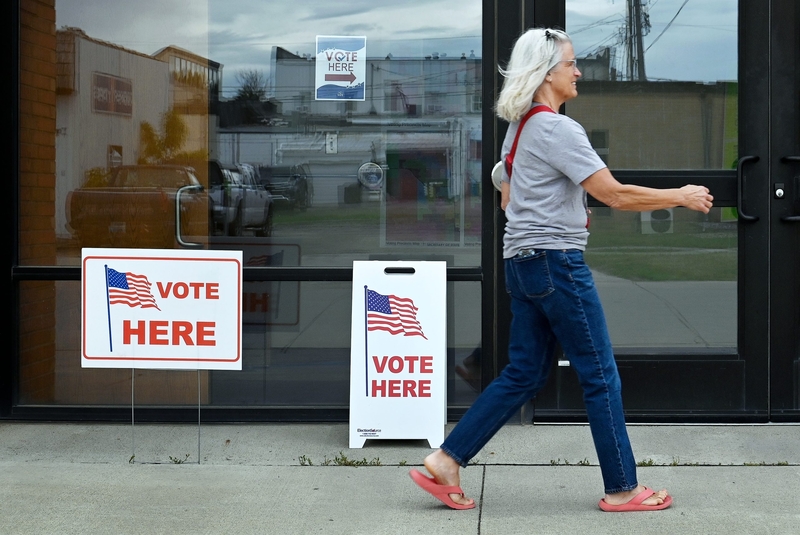
Karen Kost took part in the North Dakota primary election early voting available June 3, 2026, at City Hall in Casselton, North Dakota. (Photo by Dan Koeck/North Dakota Monitor)
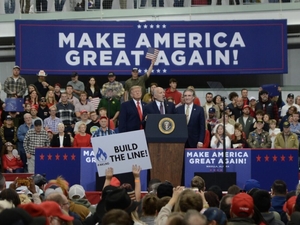
WASHINGTON — President Donald Trump said earlier this year he’d “do anything necessary to make sure we have honest elections” this fall, declining to rule out sending the National Guard or federal law enforcement officers to polling locations throughout the country.
Those comments came a few months after Trump casually and briefly mentioned canceling the midterm elections that will determine control of Congress.
Any such actions would lie outside the bounds of presidential power and the law, according to experts interviewed by States Newsroom. Nonetheless, one Democratic U.S. senator is sending letters to numerous members of the administration asking for commitments troops won’t be sent to the polls, and state officials are readying plans to keep voting secure.
“The president can say whatever he wants, but his powers are extraordinarily limited in this way,” said Maine Secretary of State Shenna Bellows.
With two months until voting ends on Nov. 3, the administration’s only publicly disclosed plan to monitor elections is a decades-old Justice Department program that sends federal workers throughout the country.
Michigan Deputy Secretary of State Aghogho Edevbie said there are strict rules for the people who participate, including that they can only observe if state election officials allow it or if a court orders it.
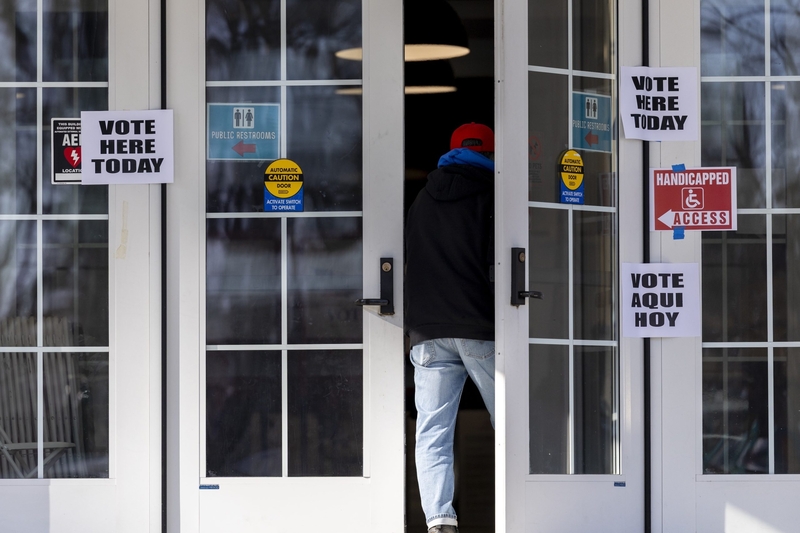
Edevbie said his state will allow DOJ monitors during this fall’s elections to observe but not to interfere.
“Their job is not to interrogate individual voters,” he said. “Now outside of the polling location, outside of the 100 feet, if they want to talk to a voter, they absolutely can. But if those interactions tip over into actions that we deem to be actions of intimidation, we will revoke our permission for them to be here.”
The Department of Justice declined an interview request from States Newsroom, writing in a statement the administration hopes “to have the largest monitoring effort in the Department’s history,” totaling around 1,000.
DOJ election observers have been dispatched to monitor primary elections throughout the year without much fanfare, though Wyoming Republican Gov. Mark Gordon said in late August that their behavior in his state was “a bit aggressive.”
“It just was irregular, and I have asked the attorney general to start looking into, you know, kind of the nature of the visits and all that sort of stuff,” Gordon said, according to reporting from WyoFile, an independent nonprofit newsroom.
Will ICE be sent to the polls?
White House staff have sent somewhat mixed messages on what else the president may try to do. A White House spokesperson wrote in an email they wouldn't “engage in hypotheticals,” adding that “Anyone breaking the law will be held accountable.”
The spokesperson pointed to comments former press secretary Karoline Leavitt made in February when she said she hadn't heard the president say he would consider sending Immigration and Customs Enforcement agents to polling locations.
Trump has repeatedly raised concerns that noncitizens may try to vote in the elections, despite it being illegal. There, however, isn’t much evidence of that having happened, with the Bipartisan Policy Center writing, “there is no evidence that noncitizen voting has ever been significant enough to impact an election’s outcome.”
Leavitt added, "I can't guarantee that an ICE agent won't be around a polling location in November. I mean, that's frankly a very silly hypothetical question. But what I can tell you is I haven't heard the president discuss any formal plans to put ICE outside of polling locations. It's a disingenuous question."
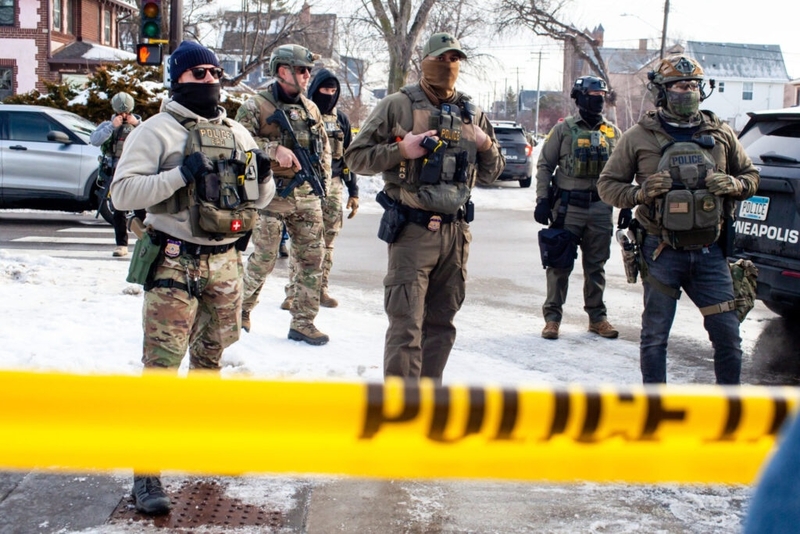
A few months later, Trump was asked whether he would rule out sending the National Guard or ICE officers to polling locations. He did not answer the question directly.
“I’d do anything necessary to make sure we have honest elections. We have to have honest elections,” he said.
Trump has repeatedly raised grievances about the outcome of the 2020 election without providing any evidence of fraud significant enough to change the outcome. He hasn’t expressed doubts about election integrity in 2016 or 2024 — the years he won despite a Democratic president running the country at the time.
This year, Trump has said he believes Democrats can only win if they cheat without releasing any proof of fraud or plans for sabotage. At the same time, he’s acknowledged that, historically speaking, Republicans are likely to lose seats in Congress during the November midterm elections.
Department of Homeland Security Secretary Markwayne Mullin said during a press conference in early September that ICE officers “will be where we need to be” when serving warrants. He did not rule out an ICE presence under some circumstances.
“ICE isn’t there to patrol the polling places. We’re there to enforce specific threats. The only reason why we would be at polling places, if there is a threat to that polling place or we’re serving a warrant on someone that we have been actively tracking down,” he said. “ICE’s job is immigration (and) custom enforcement. That’s their job and so if we’re doing something, we’re doing that specifically.”
‘Egregious history’
Federal law enforcement officers cannot enter polling places under most circumstances, according to Steve Huefner, the C. William O'Neill professor in Law and Judicial Administration at Moritz College of Law at The Ohio State University.
“There's this really egregious history of uniformed police officers intimidating Black voters in the Jim Crow era, and so today we have laws that prohibit uniformed officers from being observers at the polling place,” he said.
Additionally, there’s a federal law from the Civil War era that bars any federal official with a weapon from showing up at polling locations, unless that “force is necessary to repel armed enemies of the United States.”
Those prohibitions apply at the polling site and usually within 100 feet of that location, sometimes more. But there could be a loophole beyond that radius, Huefner said.
“If they just happen to be very close to a polling place, but not within 100 feet, it probably gets much trickier to figure out whether the president can have military troops in that kind of circumstance,” he said.
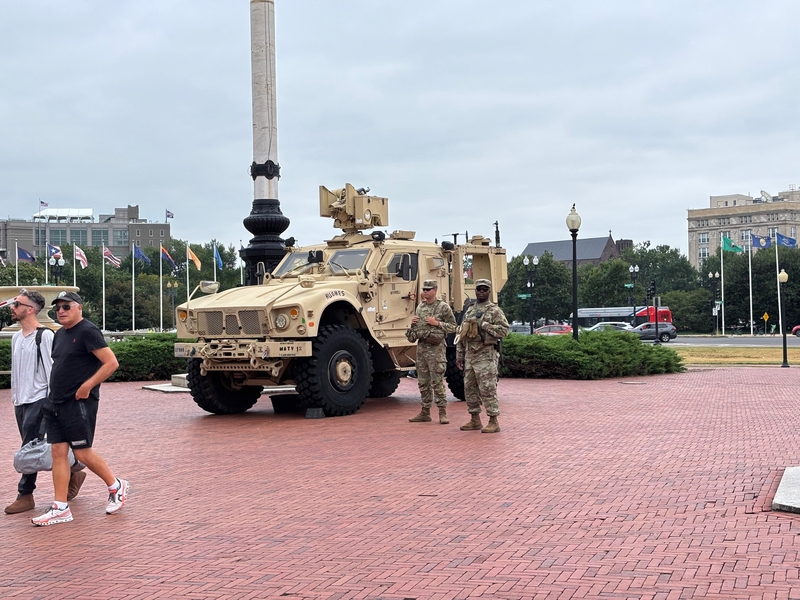
Any attempt to place either federal law enforcement, the National Guard or military members at or near polling locations would likely end up in the court system, which Huefner said would in many ways be “uncharted territory.”
“It's being characterized as an effort to help states, but states aren't asking for this help,” he said. “States don't feel like they need this help. States feel perfectly adequate to run safe, free, fair elections. And so it's uncharted in the sense that we've never seen this kind of tension between states and the federal government. And this worry that what's happening is an effort to intimidate voters on the part of the federal government.”
Slotkin letters
Members of Congress have also raised concerns the president may try to send members of the military or National Guard to polling locations.
Michigan Democratic Sen. Elissa Slotkin sent letters to Defense Secretary Pete Hegseth and Chairman of the Joint Chiefs of Staff Gen. Dan Caine in August, asking they provide assurances the government wouldn’t “send Federal troops to the polls or to seize election materials of any kind.”
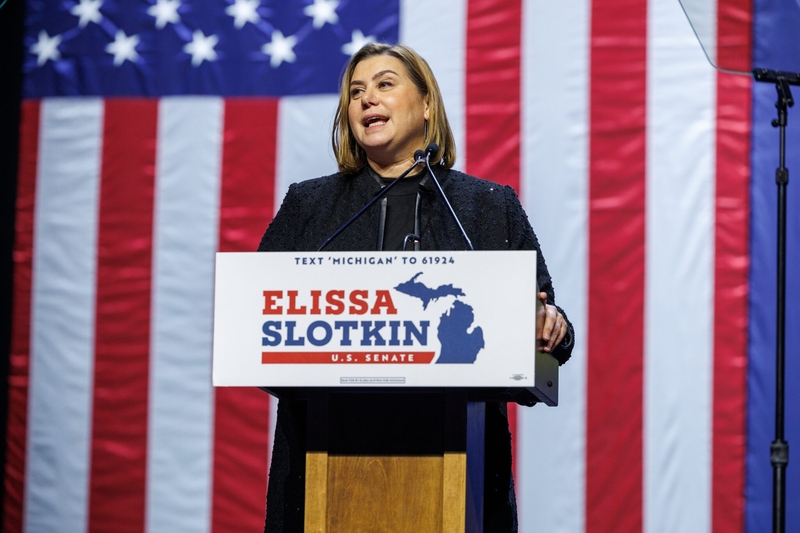
Slotkin requested the two “confirm that deploying the military to polling places for political purposes would undermine the integrity of our free and fair elections, pose an existential threat to our democracy, and taint the military as a politicized institution.”
Caine replied in a letter released by Slotkin’s office that the joint forces had and would continue to act ”in accordance with the Constitution and the law.”
“Election administration and security remain the fundamental responsibility of state and local officials,” he wrote. “The Joint Force has no plans to send Federal military personnel or Federalized members of the National Guard to polling places during the 2026 elections. Likewise, the Joint Force has no plans to use such personnel to seize ballots, voting machines, or other election-related material.”
Hegseth hadn’t responded as of early September and a Pentagon spokesperson wrote in a statement that as “with all Congressional correspondence, the Department will respond directly to the member.”
States make plans
Bellows, the Maine Secretary of State, said she and other elected officials are planning for several scenarios that could come up during election season, building on past experiences.
“We have run free, fair and secure elections through pandemics, through heightened threats in 2024. In Maine, for example, there were six swatting incidences at polling locations and voting continued uninterrupted,” she said.
Despite the president’s comments throughout the year, Bellows said the Constitution and law “are crystal clear that federal law enforcement, ICE or otherwise, are strictly prohibited at polling places.”
Maine law also makes it illegal to interfere with anyone’s voting rights, which Bellows said she and others in state government will be watching closely this fall.
“If any federal armed officer were interfering with a citizen's right to vote on Election Day, we would take every available legal action to disrupt and prosecute that because that is criminal and prohibited,” she said.
Director of Elections for Washington state Stuart Holmes said the Constitution and court rulings have made it clear that only state legislatures and Congress have the ability to regulate elections.
“And until either of those act, it's business as usual,” he said.
The Department of Justice could send election observers to Washington state this fall, Holmes said, but those people wouldn’t have any more authority or access than the regular citizens who are also allowed to observe certain aspects of the election.
"They can come in and they can watch and observe the process,” he said. “But the county auditor or elections director in that county is the administrator of that process and can set the rules based on the safety and operations of their facility."
It is illegal for anyone to interfere with a voter's ability to cast a ballot, regardless of whether they’re near or inside a polling location. That would include an observer asking voters to show their identification, Holmes said.
"Doing something like that could be seen as intimidating or interfering with their ability to cast their vote freely,” he said.
Despite the speculation around what Trump may or may not do, Holmes said he and other officials in Washington state are preparing much like they would for any other midterm elections.
All States Newsroom content is free to republish. Read our republishing policy for more information.