Dolly Parton showed us a different kind of Southern politics
Aug 26, 2026 | 12:07 pm ET
Description
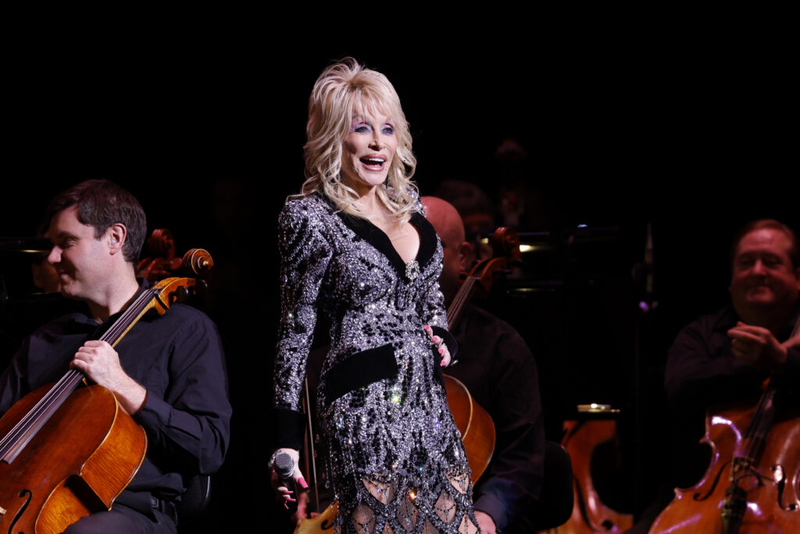
Dolly Parton speaks onstage at "Dolly Parton's Threads: My Songs In Symphony" world premiere at Schermerhorn Symphony Center on March 20, 2025, in Nashville, Tennessee. (Photo by Jason Kempin/Getty Images)
I stared at my phone, waiting for the interview of my life.
Dolly Parton was scheduled to call to promote the first national tour of her musical “9 to 5” at Greenville’s Peace Center. This was January 2011, when I was an arts writer at The Greenville News.
But Dolly was 10 minutes late. Would she even call?
Then the phone rang. I nervously picked it up.
“Paul?” she said in that famous sparkling voice. “I’m sorry I’m late. I was on another line and I said, ‘I gotta hang up and call Paul!’”
She said my name as if we were the closest of longtime friends — even though we had never spoken before.
I stammered, “It’s really OK, Ms. Parton.”
“C’mon now, Paul, call me Dolly. Everybody does!”
Dolly’s legendary charm reduced me to mush. And I understood why everybody loved her.
Dolly, who died Tuesday at 80, was beloved across cultural boundaries: by conservative Southern Christians, who appreciated her faith; feminists, who admired her independence; country-music traditionalists, who loved her music; and members of the LGBTQ community, who were grateful for her support.
That might seem impossible, but Dolly made it look easy.
She had strong convictions, but she didn’t weaponize them. Her Christianity was deep and unmistakable. She grew up in a Pentecostal family and continued throughout her life to speak openly about God, prayer and faith.
Yet she was remarkably nonjudgmental.
When asked about gay and transgender people, Dolly said she believed everybody should be allowed to be who they are. She supported same-sex marriage, even before the Supreme Court made it the law of the land.
And she didn’t merely talk about accepting transgender people. She wrote “Travelin’ Thru,” an Oscar-nominated song for the 2005 film Transamerica, about a transgender woman’s journey. Dolly said the song reflected her belief that “it’s alright to be who you are.”
This was Dolly’s particular genius: She could be deeply Southern, deeply Christian and deeply inclusive.
And she didn’t seem to regard those qualities as contradictory.
South Carolina roots
South Carolina has a special claim on Dolly.
Her mother, Avie Lee Owens, was born in Lockhart, Union County, and Dolly said the state was “very near and dear” to her heart because of her mother. She considered South Carolina almost a second home.
For 18 years, her Dixie Stampede dinner theatre operated in Myrtle Beach, employing South Carolinians and bringing millions of visitors to the coast.
In 2011, when the attraction became Pirates Voyage, the South Carolina General Assembly declared June 3 “Dolly Parton Day,” honoring her contributions to the state’s economy, tourism industry and charitable causes.
Perhaps her most important South Carolina legacy is quieter: for years, Dolly’s Imagination Library has been putting books into the hands of South Carolina children — tens of thousands of them.
In Charleston County alone, the program has delivered nearly 400,000 books since 2010.
So, Dolly didn’t merely entertain South Carolinians. She left something of herself here — books in the hands of children, jobs along the coast and a living example of a Southern identity spacious enough to include people who didn’t look, worship or love exactly as she did.
That example seems especially worth remembering at a time when some politicians are weaponizing the word “inclusivity” — portraying as a threat what Dolly treated as an invitation.
Inclusivity has become a political battleground. (See, for instance, the recent antics at the S.C. Arts Commission targeting LGBTQ groups.) But Dolly offered a different understanding of the idea.
It didn’t mean that everyone had to think alike. It meant that everyone belonged.
She didn’t require conservative Christians to surrender their faith. She didn’t require LGBTQ people to surrender their identity. She didn’t require liberals or conservatives to pass a political purity test before they could enjoy her music.
She simply treated people as people.
Dolly had political opinions, too. She jumped into the vaccine debates, donating $1 million to COVID-19 vaccine research and publicly received the Moderna vaccine, encouraging others to get the shot.
But Dolly understood something our politics often forgets: disagreement does not have to become dehumanization.
That is a particularly valuable lesson for South Carolina.
We can be Southern, Christian, patriotic and deeply inclusive at the same time.
Perhaps that is part of what it once meant to be Southern at our best: not that everyone belonged to the same tribe, but that there was room at the table for people who were different from us.
Dolly understood that.
Maybe that’s why, in this angry, divided country, so many Americans loved her.
And maybe that’s why, 15 years after our phone conversation, I still remember the feeling of hearing that lilting voice on the other end of the phone.
For a few minutes, Dolly Parton made a nervous newspaper reporter feel like an old friend.
She made millions of people feel the same way.

Columbia