Do we really need to see mugshots in television newscasts?
Oct 21, 2026 | 5:00 am ET
Description
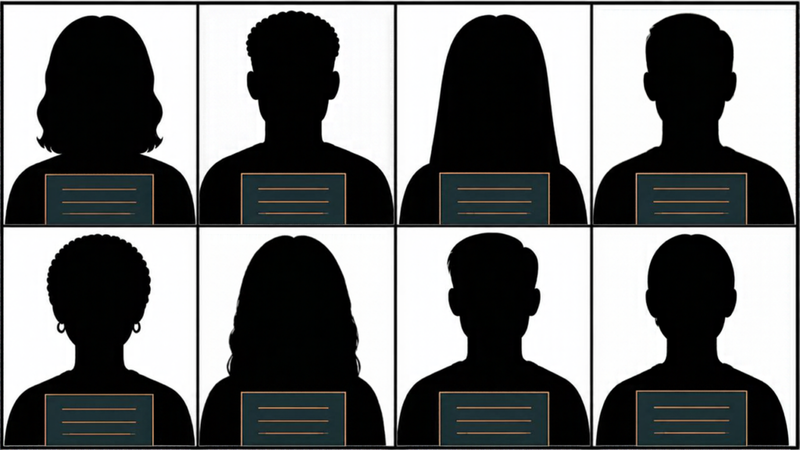
Mugshots can be problematic because they infer guilt whether or not there's a conviction. Newsrooms must decide the conditions under which they use them in newscasts. (Illustration courtesy of Poynter)
In the wake of George Floyd’s murder in 2020, some local newsrooms across the country started to make changes in how they cover people of color. Many promised to use fewer mugshots in their reporting. Journalists acknowledged that they were part of the problem. By publishing mugshots, which were disproportionately of Black and brown people, local news reports were amplifying harmful and inaccurate stereotypes.
In 2026, newsroom practices vary across the industry. Indianapolis TV stations have revised their mugshot policies in recent years in an effort to minimize unnecessary harm. I spent a couple of weeks watching the local 6 a.m. news broadcasts of WTHR and FOX59 to get a sense of their overall practices.
Neither station uses an excessive number of mugshots in individual stories or mugshot galleries, which are large groups of mugshots. I found both stations used mugshots occasionally, in line with their stated policies.
When should news outlets use mugshots in the reporting?
There was one recent story though, that presented a stark contrast.
On Sept. 29, both stations reported that 11 men were arrested for soliciting children for sex. The police ran a three-day online sting operation, and the men went to a Westfield location where they believed they would meet a 15-year-old girl, possibly to engage in sex. The Hamilton County Internet Crimes Against Children Task Force made the arrests. All but one of the men were from Central Indiana; one was from Texas.
WTHR chose not to include any of the 11 mugshots in its broadcast story. Reporter Ashton Hackman’s story included the age and hometown of each man arrested. His report also contained descriptions of the sting operation, including fragments of the conversations between the decoy and those arrested.

WTHR news director Cyndee Hebert told me the station has two rules for determining when to use a mugshot. First, the prosecutor needs to formally charge the suspect. In this case, officers had made the arrests, but the station did not have access to the prosecutor’s statement of probable cause or charging documents.
Second, Hebert said, the newsroom needs to be committed to following the case through until its legal conclusion. That’s important because charges often get reduced or dropped.
“This was a case where there were 11 or 12 people and it was not one that we were committed to following through to find out the outcomes of every single case,” she said. “So we did not use the mugshots.”
FOX59’s story included all 11 mugshots in its coverage. Reporter Claire Curry, included press conference statements from Hamilton County Lt. Doug Baker and other officers. FOX59 reported the names, ages and locations of each of the men arrested in Westfield. The story did not include details about the sting operation.
I asked FOX59 and CBS4 news director CJ Hoyt why his station aired the mugshots.
“Crimes against children are a category where we are more likely to use mugshots,” he said.
“Sex crimes against children often have unknown victims,” Hoyt said. “That is the primary motivation. But there is also the seriousness of these kinds of crimes, where we believe there is a public interest.”
For Nexstar Media Group stations, including FOX59 and CBS4 in Indy, mugshot policies are decided at the station level by regional news directors. The policy for these local stations was adopted in October 2022 based on newsroom discussions about crime coverage.
Hoyt noted that the station has scrutinized its use of mugshots in the past and made changes to better cover crime locally.
“We also know that the broadcast of lots of mugshots is pretty bad television; people don’t want to see it,” Hoyt said. “It gives the viewer an impression of the market that’s probably not accurate when you’re listing a lot of small crimes. It creates the impression that maybe there’s more crime happening than there is.”
The station also learned about viewers’ preferences from its own focus groups. Viewers who participated in this research said that seeing lots of mugshots felt repetitive. The focus groups also showed that viewers can’t distinguish between stories, Hoyt added.
How local TV news portrays crime coverage, down to how often and in what circumstances they use mugshots, has broader implications for building trust with different communities and how accurately news organizations are documenting crime.
Mugshot decisions begin with law enforcement and newsrooms’ discretion
The Indianapolis Metropolitan Police Department issues mugshots only upon request, an agency spokesperson told me. They will only share photos of adults, not juveniles, and only adults who have been arrested as part of an IMPD case.
The Marion County Sheriff’s Office has a similar policy and makes mugshots available to the press and general public through public records requests. Special circumstances, such as active criminal investigations and federal detainee holds are exceptions to the rule.
Hamilton County Sheriff’s Office uses an automated system to post the mugshots of those who are booked into their system. In the case of 11 men arrested for child solicitation, FOX59 searched the automated system to find the mugshots and use them in their story.
Speight is one of several Poynter faculty members who lead programs for journalists from newsrooms across the country on covering crime. The course, “Transforming Crime Reporting into Public Safety Journalism,” encourages reporters to ask law enforcement additional questions before they decide to use a mugshot on TV.
Is a dangerous suspect at large and are police asking for help in making an arrest?
Do police believe more victims will come forward if they see an image of a suspect?
When it comes to mugshot policies, local TV news is all over the place, Speight said.
“Some stations are taking a more methodical approach to using mugshots–only using them in a breaking news situation or if a person has been convicted of a crime,” he said. “Others use them all the time. I watch stories and newscasts and there are news organizations that will use a mugshot when reporting any crime. I’ve seen newscasts where it’s story after story using mugshot after mugshot. I’ve seen stories where the mugshot is used as the primary source of video or graphic for a story.”
Journalists have to ask deeper questions, Speight said. Questions like: could I tell the story without the mugshot? What does the mugshot do? What purpose does it serve?
“In part, because the majority of the mugshots are Black and brown people and they do nothing to enhance the coverage beyond putting somebody’s picture out there that they did this crime,” he said.
This practice, over time, distorts the public’s perception of crime, perpetuating the myth that Black and brown people are more likely to be criminals.
It also erodes trust. A 2023 Pew Research Center Study found that 42% of African Americans say “the news only covers certain segments of Black communities” and 43% say “the coverage significantly stereotypes Black people.”
Even though an arrest doesn’t automatically mean a conviction, when people see a mugshot they infer guilt, said Sarah Lageson. She is an associate professor of criminology and criminal justice at Northeastern University in Boston, who has researched and written about data privacy and the U.S. criminal legal system.
“There are due process problems here, as people may be exonerated, been wrongly arrested, or have yet to have their day in court,” she said.
Balancing the public’s need to know with crime trends adds context to coverage
It’s a good sign that Indy’s top two newsrooms are paying attention to how they use mugshots.
As news consumers, we need local coverage of crime stories to accurately reflect danger in our city so we are aware of public safety concerns. IndyStar has called out politicians for overstating the city’s crime trends. Using mugshots in newscasts can also distort what’s happening in the city. As newsrooms work to gain the trust of the communities they serve, having a firm mugshot policy that accounts for potential harm may help build that trust.
I think it’s good that our local news stations have become more thoughtful about how they use mugshots. And I think they could go even further and be more transparent. I would be in favor of seeing stations restrict their use of mugshots to cases where a dangerous person is on the loose, presenting a clear public safety threat.
And if every time a station ran a mugshot, a reporter or an anchor told the audience why, it would help us understand the newsroom’s intentions. (“We’re running this mugshot so you can help police find the person responsible.” “We’re running this mugshot because we knew you’d want to know about this celebrity.”)
Next time you see a mugshot in a news story, ask yourself: is there a reason for me to see this image? And does that reason outweigh the permanent record that will follow that person, before their case has been adjudicated and long after their sentence has been served?
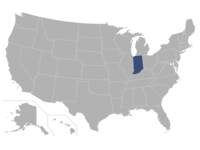
Indianapolis, IN