Will 2026 renew Ohio’s battleground status?
Oct 21, 2026 | 3:35 am ET
Description
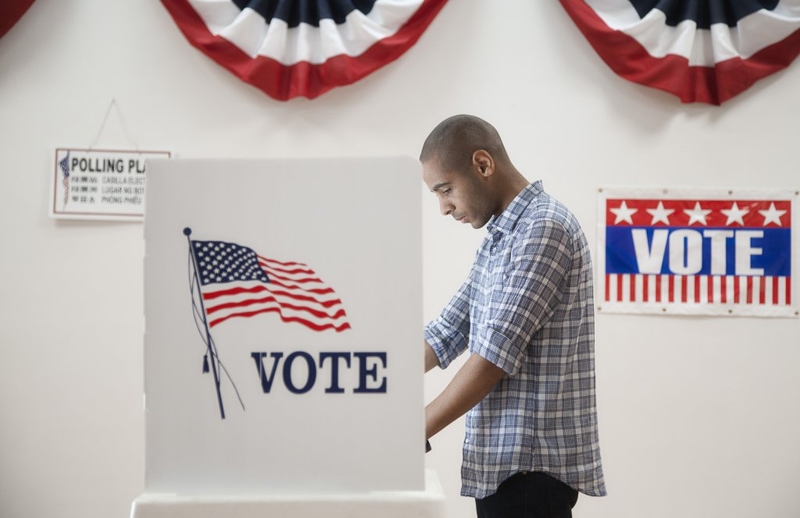
Photo by Hill Street Studios/Getty Images.
Ohio enjoyed the benefit of being on the national stage in politics for well over 100 years. Indeed, the state voted for the winner of the presidency in 30 out of 31 elections from 1896 to 2016. That number grows to 37 out of 40 if you go back to the Civil War.
In three consecutive elections beginning in 2016, Donald Trump’s dominance in the Buckeye State has led most to question whether Ohio should be written off as a purple state and categorized as reliably red.
After all, the state voted to the right of the nation by 5.4 points in 2016, 6.4 points in 2020, and 5.3 points in 2024.
Republicans have controlled the Ohio House of Representatives since 2011, and many voters weren’t even alive the last time Democrats controlled the Ohio Senate in 1984 (though some of this dominance can be explained by Republican-led gerrymandering of Ohio’s General Assembly districts).
Yet, you don’t have to squint your eyes too much to see Ohio is in play in 2026.
October visits from President Trump, Vice President JD Vance, former President Barack Obama, and an expected $750 million in campaign dollars being spent in the state strongly suggest competitive statewide contests.
A recent BGSU/YouGov poll gives an edge to Democrats by 6 points in both the gubernatorial and U.S. Senate races. The Cook Political Report now rates both races as “toss-up” despite both having started in February 2025 as “likely Republican.”
So what’s going on here? Is Ohio suddenly a swing state again or is this a typical rebuke of a president’s party in a midterm election? The answer likely lies somewhere in between and has major consequences for the competitiveness of Ohio beyond 2026.
While it is true that Republicans have been dominant in the state as of late, a strong streak of independence also moves many Ohio voters.
They are often less ideological than political observers believe and more motivated by kitchen table topics.
Polling tells us that Ohioans value economic security, fairness, and whether candidates understand their concerns. They also have a deep distrust of political and economic elites. Successful statewide campaigns have typically resonated with voters along these dimensions.
The October 2026 BGSU/YouGov Poll shows deep economic anxiety. Sixty-five percent of Ohioans say the national economy has gotten worse over the past year, while only 17% believe it has improved.
The economy remains the top concern of voters, followed by inflation, government corruption, and health care.
Like the rest of the country, Ohioans are frustrated by the status quo and that only serves to hurt Republicans–the party in unified control of both the national and state government.
President Trump remains the dominant figure in Ohio politics, but his coalition is showing signs of strain. His approval rating in the BGSU poll stands at 39%, with 58% disapproving, nineteen points under water.
Among voters who supported Trump in 2024, 24% now say they regret their vote to some degree. Among independents who voted for Trump, that number rises to nearly one-third.
This voting bloc has always been critical in Ohio elections and we are seeing a surge of early voting by those who are non-affiliated.
The BGSU poll finds that independents support Democratic gubernatorial candidate Amy Acton over Republican Vivek Ramaswamy (54%-22%) and Democratic Senatorial candidate Sherrod Brown over Republican Jon Husted (49%-21%).
A sizable number of independents currently say they are voting for a third party or someone else (24% in the gubernatorial race and 30% in the Senate race). Of course, we won’t know whether these preferences translate to actual votes until after the November election.
Notably, we are not seeing some emphatic embrace of Democrats in this cycle.
A majority of independents think neither party stands up for working people (53%), fights for working families (59%), puts Ohio workers first (56%), understands everyday Ohioans (64%), keeps promises (77%), or cares about people like themselves (69%). This presents a future opportunity for Democrats to regain some lost ground with these voters.
Indeed, when party labels have been less obvious, Ohio voters have supported Democrat-aligned policies.
For instance, in 2023, voters protected abortion access through the state’s Constitution (57%-43%) and legalized recreational marijuana (57%-43%).
Given that Republican leaders in the state urged voters to reject both policies, the results are telling. Absent party identification, voters in the state prefer self-determination and limited government, over simple culture war binaries.
Parties matter but candidates and context matter too. In addition to concerns over the economy, Buckeye voters want candidates they can trust and who they believe best understands their concerns. And this is where Acton and Brown do particularly well among independents.
Acton leads Republican gubernatorial candidate Vivek Ramaswamy on every single trait among independents. Her biggest strengths are caring about ordinary people (+34), sharing my values (+32), honesty (+27), and keeping promises (+25).
Likewise, Brown leads U.S. Sen. Jon Husted, the Republican candidate, on every single trait among independents. We see wide margins when it comes to caring about ordinary people (+43), honesty (+41), sharing my values (+31), and good judgment (+26).
If these poll results end up being accurate, they will go a long way in explaining how Democrats were able to overcome the partisan advantage Republicans have had in the state.
If Democrats are victorious they will need to continue to focus on economic concerns, reject political extremes, and speak to the frustrations of everyday Ohioans.
Ohio remains one of the best tests of where American politics is headed.
The results of this election will not only determine control of the governor’s office and a U.S. Senate seat, but will reveal whether Ohio is once again a battleground or will continue to be a reliably red state.
If it’s the former, then be prepared for a barrage of campaigning in the Buckeye state for the 2028 presidential election.
If it’s the latter, expect a respite from political advertising by the presidential campaigns for the foreseeable future.
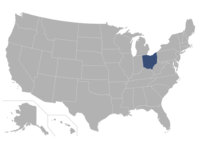
Columbus, OH