Alaskans should decide the future of Alaska seabed mining
Oct 20, 2026 | 7:00 pm ET
Description
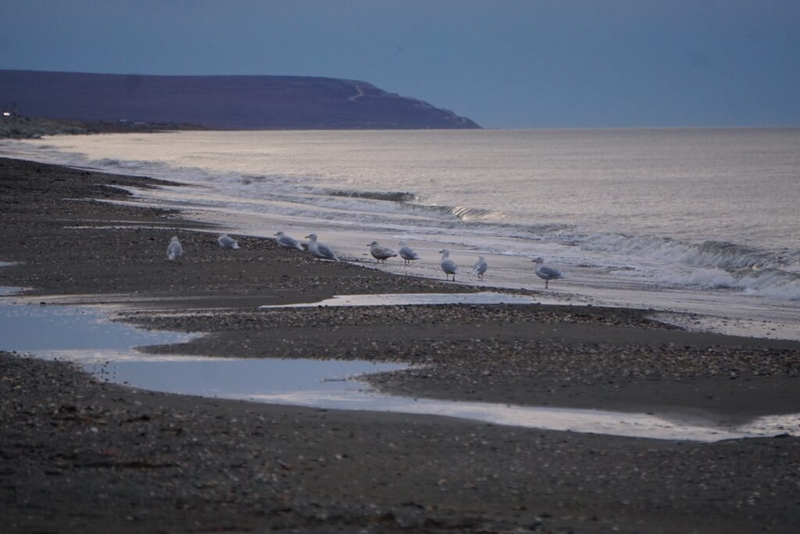
Gulls on the Nome beach, Oct. 2, 2020. (Photo by Yereth Rosen/Alaska Beacon)
What happens when an experimental industry tears up vast swaths of the seabed and everything that lives on it? What happens when it dumps everything back into the water except a few minerals that are immediately taken out of our state? What happens when we don’t know what technology will be used, when there’s scarce environmental analysis, when the financing is unclear and when there’s no chance to engage? This is the future of offshore seabed mining that the federal administration and industry interests want to force on Alaska. All under a regulatory framework that has hardly been updated since its creation before Alaskan statehood.
As people who eat from the ocean, as people whose communities rely on both commercial and subsistence fisheries and as Alaska Native leaders, we say that the process is too fast, the potential impacts too risky and the unknowns too large. We are Presidents of Kawerak Inc, a nonprofit tribal consortium, and Sealaska, an Alaska Native Corporation, and the people we serve depend on healthy oceans and fisheries and live on the coasts where seabed mining is being considered.
We want a moratorium on the exploration, leasing and extraction of seabed mineral resources in Alaska federal waters and on the Alaska Outer Continental Shelf. We want to see the Department of the Interior suspend further consideration of seabed mineral lease sales during this moratorium. And we want this moratorium to hold at least until environmental, socioeconomic, subsistence, cultural and cumulative impacts are evaluated and understood and affected Alaska Native Tribes have been fully and meaningfully consulted.
Seabed mining could wreck parts of our ocean — and our culture and food security are connected to it. In January 2026, the Bureau of Ocean Energy Management put over 113 million acres of Alaskan seafloor under consideration for this risky industry, including Norton Sound, Goodnews Bay, Aleutian Arc, Gulf of Alaska seamounts, Chukchi Borderlands and Canada Basin. Over 80% of those acres are already under restrictions that limit bottom trawling or all commercial fishing to safeguard critical seafloor habitat and the fisheries and ecosystems they support. Why should those areas then be opened to mining?
And if these areas aren’t near where you fish, hunt or live, the federal government could add new areas, as they did near the U.S. Pacific Territories under this same process.
As Alaskans, we depend on a healthy ocean. Tens of thousands of Alaskans rely on our multi-billion-dollar seafood industry for their livelihoods. For many of us, our seafood is a primary food source. We refuse to jeopardize our sustainable, renewable fisheries and subsistence harvests with experimental, nonrenewable, speculative mining.
Commercial mineral extraction has never occurred on U.S. federal seabeds, and most types of mining being considered have never occurred anywhere in the world. Yet, the federal administration wants to hold Alaska offshore lease sales for this unproven industry as soon as next year. Leases would last a minimum of 20 years, and our oceans could take centuries to recover from mining operations. And the federal government continues streamlining the process. No environmental impact statement is required before leasing, and the opportunity for public comment closed in April with no guarantee of another before leases are sold.
How do you as an Alaskan benefit from this rushed, reckless and restricted federal process? Why should we as Alaskans trust that others know enough about Alaska’s oceans, culture, socioeconomics, subsistence and fisheries to make these decisions without us? Alaskans must be the ones to decide whether seabed mining should occur here. Not DC. Not the industry.
Proponents of seabed mining would suggest the most valuable parts of our ocean are a few minerals of unproven worth. We Alaskans know that the most valuable parts are everything else.
Alaskans deserve the time and information it will take to figure out if we want this industry in our waters.
Juneau