What a new fight over chemical safety reveals about our changing politics
Oct 21, 2026 | 3:30 am ET

Description
Drinking water photo from the Ohio Governor's Office.
For years, the politics of chemical safety seemed trapped in the same old argument. Environmental advocates called for stronger regulations. Industry warned about costs and government overreach. Democrats and Republicans returned to familiar corners, while families continued to wonder what was in the food they ate, the water they drank, and the products they brought into their homes.
That old pattern is changing.
Across the country, a new and increasingly cross-partisan coalition is forming around a simple idea: Americans shouldn’t have to choose between a strong economy and healthy people. Parents, workers, farmers, doctors, veterans, small-business owners, environmental advocates, and consumers are finding common ground in the demand for cleaner food and water, safer products, and greater accountability from the companies that put chemicals into our lives.
This isn’t just a theoretical alliance. It’s already exerting power.
Earlier this year, 73 Republicans joined Democrats in the House to vote for consumer safeguards involving agricultural chemicals in the farm bill, going against their party’s leadership. That vote reflected something larger than a single legislative dispute. It showed that elected officials are beginning to recognize what their constituents already know: defending people from harmful exposure is not a left-wing or right-wing concern. It matters for everybody.
We know this movement because we represent different parts of it. One of us served in Congress for 20 years as a Democrat from Northeast Ohio. The other has worked across public health, environmental, and consumer-safety efforts as the leader of MAHA Ohio. We don’t come from identical political traditions, but we share a conviction that has become increasingly difficult to ignore. That defending human health can unite Americans across the political spectrum.
That is the heart of the emerging left-right convergence.
The debate now before Congress over the Toxic Substances Control Act, or TSCA, is one place where this new politics is taking shape. TSCA governs many chemicals used in manufacturing and everyday products. The law gives the Environmental Protection Agency authority to gather information, require testing, evaluate risks, and restrict or prohibit certain uses. Food, drugs, cosmetics, and pesticides are generally regulated under other federal laws.
The law is complex, but the question at its center is not: Who bears the burden when a chemical may harm people?
In 2016, Republicans and Democrats came together to strengthen TSCA. Their changes required the EPA to evaluate chemicals already on the market, established deadlines, and increased transparency.
Today, lawmakers are again considering changes that could weaken toxic chemical regulation. Supporters of changes say the EPA needs a more predictable process so manufacturers can plan ahead. But, as health advocates on the left and right warn, weakening requirements could make it harder to identify dangerous exposures and defend Americans.
While it’s increasingly clear that the EPA needs staff, information, and the money to do its job, the larger story is about whether our political system can respond to what families are experiencing in their everyday lives.
People are tired of being told that concern about toxins in food or products is partisan. People are tired of learning that a substance was widely used before anyone fully understood its effects. People are done with discovering that the products marketed as convenient, modern, or profitable may carry risks that fall most heavily on children, workers, pregnant women, farmers, and communities already facing pollution.
A parent who wants safer products for a child may not use the same political vocabulary as an environmental lawyer. A farmer concerned about soil and water may not describe the problem in the same terms as a public health researcher. A conservative voter who wants less crony capitalism may not frame the issue like a progressive advocate. But they can still arrive at the same conclusion: companies should not be allowed to put people at unnecessary risk, and government should not be blocked from action when evidence demands it.
A new movement for human health is giving people from different backgrounds a reason to stand together.
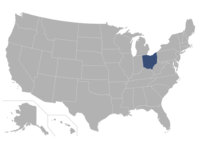
Columbus, OH