Dems eye the Yakima Valley legislative district as one to flip in WA. Turnout is the challenge.
Oct 21, 2026 | 5:35 pm ET
Description
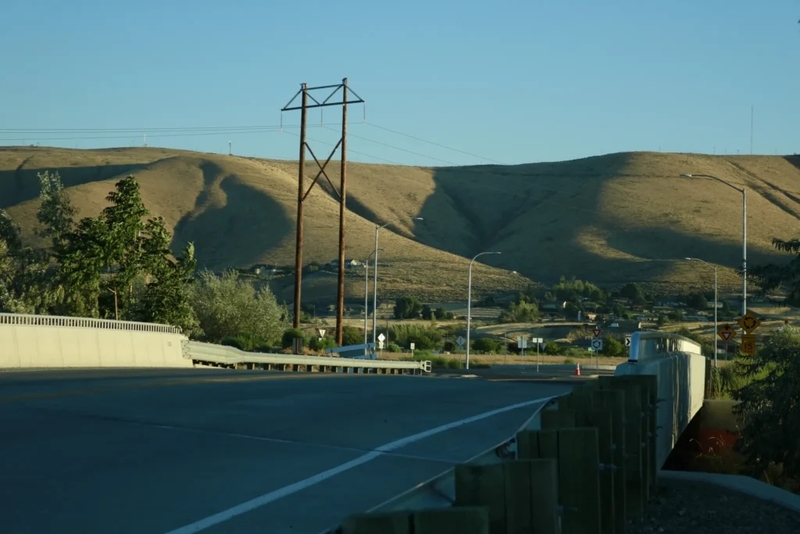
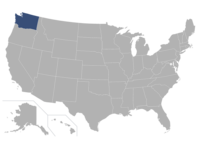
Just east of the Cascades, Washington’s Yakima Valley is at the center of a lengthy court battle over the region’s legislative boundaries. This year, the district is entering its second election since the it's map was redrawn and Latino voters became the majority. (Photo by Aspen Ford/Washington State Standard)
Washington state’s 14th Legislative District is coming up on its second House election since a redistricting order put Latino voters in the majority.
Democrats are vying to flip two of the district’s state House seats long held by Republicans, but low voter turnout could be a problem.
Reps. Gloria Mendoza, R-Grandview, and Deb Manjarrez, R-Wapato, represent the district with both taking office in 2025.
Mendoza, who serves as the assistant ranking minority member of the transportation committee, is facing off against Democrat Chelsea Dimas. Dimas is the daughter of farmworkers and serves on the state’s Commission on Hispanic Affairs.
Manjarrez serves as the assistant ranking minority member of the housing committee. She’s running against Democrat Ezequiel Morfin, an electrician who’s advocated for farmworker protections for years.
In the 2024 general election, the district had the lowest voter turnout in Washington with 56.5% of registered voters casting ballots.
In 2023, U.S. District Court Judge Robert Lasnik ruled that Washington’s legislative map violated the federal Voting Rights Act by diluting Latino voting power in the Yakima Valley. A new map was adopted the following year creating a Latino-majority 14th District stretching from East Yakima to Pasco. It includes Wapato, Toppenish, Grainger and Sunnyside, as well as the Yakama Nation Reservation.
Redistricting opened up an opportunity for Democratic candidates in the historically Republican-held district. But turning that possibility into electoral victories has proved challenging.
Community organizers are trying to change that.
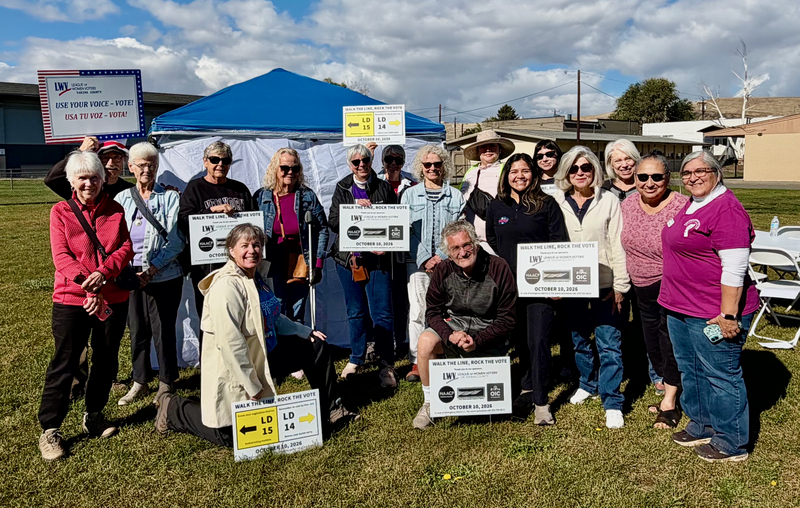
Poder LatinX, a nonprofit organization, hosted events this election season to encourage voting and educate residents about district boundaries. In August, the group hosted a Poderosas Summit where local Latina leaders spoke about their experiences in politics and urged residents to turnout. Earlier this month, the League of Women Voters of Yakima County walked the 14th District’s boundary line and provided residents with information on how to vote.
When the new map was adopted ahead of the 2024 election, it was “the first time in a long time, community-rooted candidates actually had a shot at flipping these districts blue,” said Sunnyside Mayor Vicky Frausto.
In the months leading up to that election, Democratic candidate Maria Beltran went door-to-door in the Lower Yakima Valley, campaigning for a seat in the state Senate. The first-time candidate said that canvassing turned into teaching voters how government works. Many people didn’t know what district they lived in nor who represented them, she said.
“I came in with the aspiration of giving people hope,” Beltran said. “Folks like us can step up and run for office, and we could run strong campaigns.”
Beltran narrowly lost to her opponent, Sen. Curtis King, R-Yakima, by 1,219 votes, but it was the closest a Democrat had ever come to unseating King.
“Sometimes it is really challenging for elected officials to understand how we struggle,” Beltran said. “I’m a native Spanish speaker, and that’s what the campaign was about. It was about our future and what folks wanted to see.”
Progressive Democratic leaders say this year the political environment might work in their favor. Cuts to Medicaid and other social services by the federal government could motivate voters to turnout, they say. District 14 is among several that would have to flip to create a state Democratic legislative supermajority.
“As Trump’s approval ratings continue to plummet and voters realize that Republican policies are making their lives harder, we have a great opportunity to build Democratic strength, organize new communities, and build support for the Democratic values and policies that will empower the Yakima Valley to thrive,” said Shasti Conrad, chair of Washington’s Democratic Party.
Republicans aren’t buying it.
“This idea that Lasnik’s gerrymander is suddenly going to work where it has already failed is wishful thinking,” said Jim Walsh, chair of Washington’s GOP. “I would say the chances of impeaching and disbarring Lasnik are probably greater than the chances of flipping the 14th.”
Dimas may be closing in. In 2024, she lost to Mendoza by around 3,000 votes. In this year’s primary, she took the lead for the first House position by 200 votes.
In this year’s primary, Manjarrez led with 45% of votes while Morfin received 34% and Tony Sandoval, another Democrat, received nearly 20%.
The legislators have outraised their Democratic opponents. Mendoza pulled in more than $164,000 while Dimas has raised $113,000 as of Oct. 21.
Manjarrez has outraised Morfin by more than $100,000. Morfin raised $57,000, while Manjarrez has over $194,000.
Manjarrez said she’s not worried about the possibility of the district flipping.
“If you look at the quality of the candidates in both Gloria and myself and how we represented the 14th, we’re very good representatives,” she said.
It’s not guaranteed that the new legislative boundaries will stay in place. The redrawn map remains the subject of a lengthy legal battle.
On Oct. 5, the U.S. Supreme Court accepted a legal challenge to Washington’s new boundaries, then remanded it to a lower court to determine if the 2024 redistricting complies with this year’s ruling in Louisiana v. Callais that made it harder to challenge voting maps on the basis of race.
A decision will not affect this year’s election, but it could lead to the boundaries changing again before they’re next scheduled to be redrawn in 2031.
Olympia, WA