Democratic lieutenant governor primary attracts Assembly leader, fire dancer, and ICU nurse
May 11, 2026 | 8:00 am ET

Description
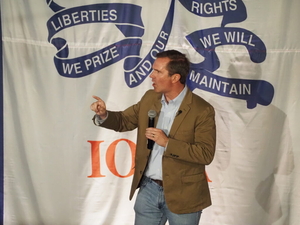
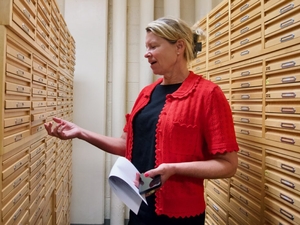
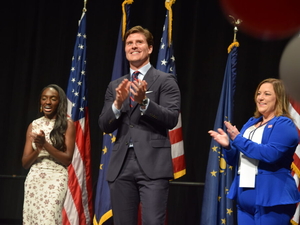
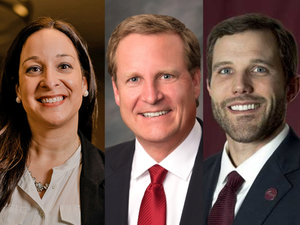
Sandra Jauregui, BridgieNix Scheiner, and Courtney Burke. (Candidate photos)
Nevada’s lieutenant governor doesn’t helm the state like the governor or control spending like lawmakers, but officeholders still wield power and influence — and are on the ballot.
A lieutenant governor is first in line to lead the state if a sitting governor can’t fulfill the top spot’s duties. However, that scenario has not played out since 1989 when Bob Miller took the job after Gov. Richard Bryan had been elected to the U.S. Senate. Before that, a lieutenant governor hadn’t assumed the duties of governor since 1945, when Vail Pittman became governor after Gov. Edward Carville was appointed to fill a vacant U.S. Senate seat.
The more immediate duties of lieutenant governor include presiding over the state Senate, where they can cast tie-breaking votes, although opportunities to do that are exceedingly rare since Nevada Senate has an odd number of members. The lieutenant governor also commissions on tourism and outdoor recreation, and has a seat on several state boards.
Three Democratic candidates — pediatric ICU nurse Courtney Burke, Assembly Majority Floor Leader Sandra Jauregui, and veteran performer BridgieNix Scheiner — will face off in the June 9 primary for the opportunity to compete in the November election against Republican Lt. Gov. Anthony Stavos, who is running unopposed in the Republican primary.
Fundraising and endorsements
Jauregui, who was elected to the assembly in 2017 and has served as the majority leader since 2023, has the largest fundraising advantage. In the first quarter, she reported raising more than $177,100 in contributions and has $318,300 cash on hand from previous fundraising.
She received the maximum $10,000 donation from the Clark County Education Association, and various consulting and marketing groups. She also received $5,000 from Illinois Gov. JB Pritzker (D).
All the Democrats in Nevada’s congressional delegation — Reps. Dina Titus, Steven Horsford, and Susie Lee, as well as Sens. Catherine Cortez Masto and Jacky Rosen — have endorsed Jauregui. She’s also been endorsed by various unions including the Clark Country Education Association and the Southern Nevada Building Trades Union.
Scheiner — a veteran performer who has worked in film, live entertainment, and as a fire dancer — reported raising more than $3,200 in contributions and has about $3,600 cash on hand. Scheiner has elicited small dollar donations and said she is not accepting any donations from corporate PACs or lobbyists.
Scheiner has been endorsed by the International Alliance of Theatrical Stage Employees Local 363, a union representing technicians, artisans, and craftspeople in the entertainment industry. She’s also been endorsed by various local entertainment and film companies.
Burke, a pediatric ICU nurse and small business owner, did not report receiving any contributions and has no cash on hand. As of May, she has not received any major endorsements.
Tourism and outdoor recreation
In Nevada, the lieutenant governor’s job is often described as a “symbolic” role that holds little day-to-day statutory authority, but all three candidates said one aspect of the job is especially pressing in today’s economic climate: tourism strategy. The lieutenant governor serves as the chair of the Nevada Commission on Tourism and the Advisory Board on Outdoor Recreation.
Tourism in Nevada has experienced a significant downturn, with visitor numbers dropping nearly 7.4% in 2025, marking the sharpest decline outside the pandemic since 1970.
Jauregui said she aims to expand tourism beyond the Strip, downtown Reno, and Lake Tahoe. That work would include doing more to promote eco-tourism in the state, including Nevada’s dark skies week, Jauregui said.
Promoting eco-tourism would attract more people to rural Nevada and diversify the state’s tourism economy beyond gaming and entertainment in Reno and Las Vegas, said Jauregui.
“People can go to rural Nevada and be in a place where there’s zero light pollution. How do we get more people coming to Boundary Peak, which is the highest mountain in Nevada, and include that in a list of places to hike?” Jauregui said.
Burke, the pediatric ICU nurse and small business owner, also criticized the current tourism strategy’s heavy focus on Las Vegas and called for better promotion of outdoor recreation in rural Nevada and the state’s dark skies week.
“We have a lot of great camping and hiking and lakes, and we have some of the darkest skies in the contiguous U.S.,” Burke said, adding that Nevada must adapt to marketing on social media to attract younger generations.
Scheiner, the veteran performer, said advertising is not enough to attract younger generations to Nevada anymore, adding that the state needs to focus on building cultural experiences that can attract and retain visitors.
“We’ve spent so much advertising in Canada, and they’re not coming. Advertising isn’t going to work. We have to really incentivize them with joy, and we don’t offer that product right now,” Scheiner said. “We have to really look at what is popular about other states that Nevada hasn’t ever offered.”
Scheiner said she would use the role of lieutenant governor to push for a museum and theater district, which she said is more in line with what younger audiences want when picking a vacation spot.
She advocated for a more balanced approach to concert promotion, and avoiding the pitfalls of over-reliance on high-profile headliners. That includes investing in promoting mid-tier concerts to attract a wider range of music enthusiasts.
Working with travel agencies and tour operators to promote dark skies tourism is also key, said Scheiner. However, she added that outdoor recreation must be more accessible for both tourists and locals to make Nevada a top tier destination, including offering free shuttles and affordable public transport.
“Advertising alone is not going to do it like, if it’s not accessible, it’s kind of pointless. I think people really underestimate the power of convenience,” Scheiner said.
Transportation
The lieutenant governor serves as the vice chair of the Board of Transportation.
The lieutenant governor, as vice-chair of the Department of Transportation, should also prioritize working with local transportation authorities to understand their unique needs, said Jaurugui, including removing regulatory red tape to speed up infrastructure projects.
“I met with an organization who had been waiting three years for a permit from the Department of Transportation,” Jauregui said. “We have to go in and clean up the regulatory red tape that keeps us from doing the work of building housing or building transportation or building roads.”
In the long term, Scheiner said the state should prioritize bus routes and high-speed rail to outdoor recreation, like national parks and nature excursions. In the short term, Scheiner said she would use the position to push casinos and resorts to offer complementary shuttles to airports and eco-tourism destinations.
“We have Mount Charleston, we have Red Rock here in Vegas, and that’s great for locals. But the reality is, unless people drive here from LA and have their own car, that’s not accessible for tourists,” Scheiner said.
Burke echoed the need for high-speed rail in Nevada, especially between Las Vegas and Reno, which she said would help boost the rural economy.
“Our bus system is pretty good, but it is not ideal that we do not have any high speed trains between our urban centers,” Burke said, adding that one major project should would advocate for is more robust public transportation between Reno and the Tahoe Regional Industrial Complex, which has created notable traffic for Nevadan’s traveling between the two locations.
Economic development and film tax credits
Nevada policy for attracting businesses and industry relies on providing tax abatements, credits, and other incentives to business, which are reviewed and approved by the Governor’s Office of Economic Development (GOED). The lieutenant governor serves as one of 11 voting members on that board.
During the 2025 special legislative session, Gov. Joe Lombardo asked legislators to expand Nevada’s film tax credit program to $120 million per year, for 15 years, beginning in 2028. It would have been the largest public subsidy in Nevada’s history. The bill ultimately failed, but was supported by several unions and leading lawmakers, including Jauregui, who was one of its chief sponsors.
“Businesses want to come to Nevada,” said Jauregui. “They want to come here. So I don’t even think we need to do a lot to attract them. They’re constantly applying and going to GOED to see if they can get any sort of abatement.”
Jauregui said the next step is ensuring that businesses coming into the state are “good corporate citizens.” The lieutenant governor’s office is an economic leadership role, not just a ceremonial one, said Jauregui.
“If they’re coming here and asking for any types of abatements, we need to make sure that they are also paying, not just a minimum wage, but a living or thriving wage in Nevada. If we’re going to support them, how are they then supporting our community,” Jauregui said, adding that includes any potential data centers applying for abatements.
Nevada’s Assembly Joint Resolution 8, which proposes amending the Nevada State Constitution to establish a dedicated business court similar to the one in Delaware, would also go a long way to create economic development in the state once passed, said Jauregui.
“Once we get a business court set up in Nevada, businesses are going to flock to Nevada in record numbers,” Jauregui said.
Scheiner said she does not support tax abatements for data centers, but sees the benefits for other industries, namely the film industry.
The film tax credit bill received pushback from progressive groups who described it as a “Hollywood handout.” Scheiner, who identifies as a progressive, said her support of the bill lost her endorsements from progressive groups, but said she stood by her support.
Scheiner argued opponents of the bill did not consider the local union jobs the bill would have supported by creating the infrastructure for both large-scale productions and independent filmmakers in Nevada.
“Think of film lots as rental spaces. Sony, and then Warner Brothers, might be the ones who own the lot, but the projects being produced inside there may never, ever actually be one singular Sony project. National tours or global tours, from the auditions to cast rehearsal, are all done in studio lots,” Scheiner said.
Burke said she supported the idea of diversifying Nevada economy through film production, but was more critical of utilizing tax credits for large corporations.
“I think there are more ways than tax credits to incentivize film and TV production to come here, especially through making access to public lands more streamlined, and licensing more streamlined,” Burke said.
Burke said she would use the role of lieutenant governor to support economic development through small businesses by pushing measures like micro loans, grant programs, and workforce development to boost rural economies.
She said her experience as a small business owner has given her insight on how to best streamline licensing for small businesses.
“My husband and I have been small business owners for about 18 years, I know the challenges of the system and where it’s broken and how to fix it,” said Burke, who runs a clinic and ran an automotive detail shop in the past.
Legislative priorities
In Nevada, the lieutenant governor has the power to introduce legislation, and can cast tie-breaking votes. All three candidates said they plan to use that power to move their priorities forward.
If elected, Jauregui said she plans to make the role, which is officially a part-time job, a full-time commitment and work on issues beyond statutory and constitutional duties.
“I’m going to work on housing, I’m going to work on health care, I’m going to work on job growth and I’m going to work on safe communities,” Jauregui said.
Jauregui said she would also prioritize the reintroduction of Senate Bill 10, which places restrictions on the purchase of residential property by business entities.
She said she would continue working on bills related to zoning and permitting reform to address housing shortages. She pointed to a bill she sponsored in 2025, Assembly Bill 241, which required counties to speed up the process to rezone land currently designated commercial use into residential or mixed use.
Jauregui said she wants to provide more funding for the Nevada Attainable Housing Account, which expands attainable housing opportunities in Nevada through 0% interest loans for developers.
Burke said she wants to propose a bill to decrease the first-year licensing fee for small businesses owners, who often have trouble accessing capital to start a business.
“We are among the top five for the most expensive licensing for small businesses, even though we are one of the best states for taxing,” Burke said.
Scheiner said she wants to propose legislation to remove Nevada’s 9% live entertainment tax exemption for professional sports teams, including NASCAR, Golden Knights and Las Vegas Raiders games, and UFC matches.
“Some of these sports events generate anywhere from 50 to 200 times more revenue than music concerts and theatre productions can generate,” Scheiner said, adding that funding could be used to fill a portion of the state’s funding needs.
Democratic State Sen. Dina Neal has proposed similar legislation to amend the live entertainment tax.
If elected, Scheiner said she also plans to reintroduce a tax credit bill for the entertainment and media industry. After conversations with opponents of the bill, Scheiner said she believes she can create a better bill to support the entertainment industry. The bill would support a broader range of entertainment, said Scheiner, including tax credits for live theater, music, film and local producers.
“There are so many producers in the state of Nevada. None of them can produce their own show because they do not have the financial backing,” Scheiner said.
(This story was corrected to note that Vail Pittman was elevated to lieutenant governor in 1945 before Bob Miller was in 1985)
Las Vegas, NV