Delayed by budget talks, NC legislature still has plenty to do
Jul 09, 2026 | 6:01 am ET
Description
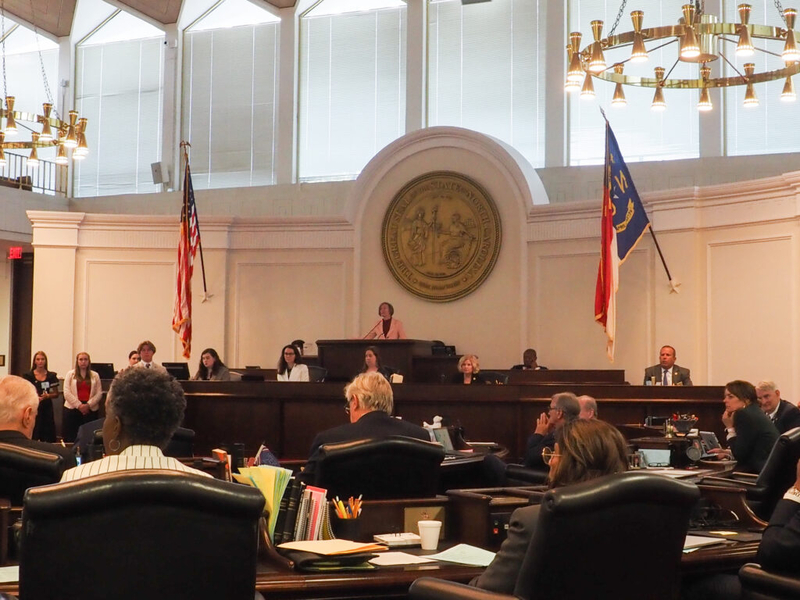
The North Carolina Senate in session on June 10, 2026. (Photo: Claire Michal/NC Newsline)
When North Carolina lawmakers headed home for the Fourth of July weekend, they left a lot of unfinished business on the table — a result of long-delayed budget discussions that dragged out until the final days of voting before this month’s recess.
Set to return on July 27, the General Assembly could continue debate on several key issues that legislative leaders have said they want to take action on. Among them are election law changes, hemp regulations, veto overrides and constitutional amendments to limit the governor’s powers.
Stein signs $34B North Carolina budget with pay raises, lower taxes
The Senate must decide whether to proceed with House Bill 958, which would significantly expand election auditing and ballot challenge mechanisms among other reforms. The proposal garnered controversy in the House, including protests on committee room floors from voters who say it risks sowing further doubt in the election process and endangers legitimate ballots.
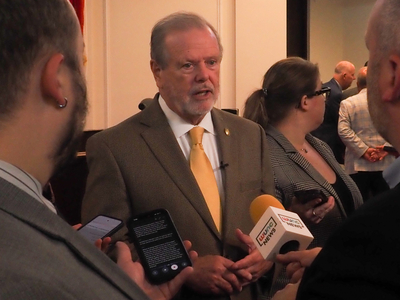
State Senate President Pro Tem Phil Berger (R-Rockingham) declined to commit to passing the House election bill when asked by members of the media. But he reiterated that his policy priority is shortening the early voting period for primary elections, a change that does not currently appear in the House bill.
House Speaker Destin Hall (R-Caldwell) said budget talks delayed the process for passing an elections bill.
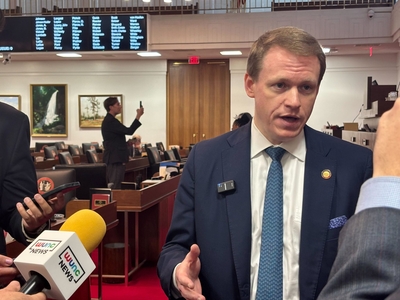
“As always, we’re talking to our Senate counterparts about ideas they have for an elections bill, and so we, especially on something like that, try to at least have a general understanding,” Hall said ahead of the House passage of the bill last month. “Part of the delay has been, I’m sort of taken up with the budget every second that I’m not in here, and so it makes it difficult for me to also work on the elections bill.”
In one of their last acts before departing earlier this month, Senate Republicans passed House Bill 328, a bill that would ban almost all cannabis-derived consumables on the market in North Carolina. Berger said “doing nothing was not an option” after a surge in youth health complications related to hemp.
The House will need to weigh whether they are willing to agree to the Senate’s version of the bill. Previously, House Republicans were contemplating a bill that would have raised the age limit on these consumables to 21, but otherwise allowed them to remain on the market.
‘Doing nothing was not an option’: NC Senate votes to crack down on hemp
Senate Democratic Leader Sydney Batch (D-Wake), who voted for the bill despite reservations over the hemp restrictions’ impact on North Carolina business owners, said she is glad there will be more time for House lawmakers to make changes to it — hopefully giving Democrats the chance to have input on the final version of the bill, she told reporters on the last day of session.
“What I hope that we can do is move forward,” Batch said. “Sit down, give them our ideas, see if they can incorporate it in a conference report that addresses a lot of North Carolina farmers who are growing hemp so that they don’t go bankrupt.”
The Senate also has yet to vote on an override of Gov. Josh Stein’s veto of House Bill 171, a measure to prohibit diversity, equity, and inclusion policies in state agencies. Vetoes for that bill and three others were overridden by House Republicans last month when two unaffiliated lawmakers chose to remain absent from the floor for those votes.
The House still has an outstanding veto override for Senate Bill 50, a measure to enact a “freedom to carry” law allowing concealed carry without a permit across the state. But that veto may not come to a vote, as several Republicans either voted against it or chose to miss the vote when the House passed it earlier this year.
Legislative leaders may also seek to override Stein’s Wednesday veto of a bill banning “unauthorized camping” — House Bill 437, a major anti-homeless initiative by Republican lawmakers — which received supermajority support in the House, with five Democrats and two unaffiliated representatives voting in favor.
Constitutional amendments also remain on the table for state lawmakers. The General Assembly has passed two so far this year, Senate Bill 1080 to cap the state income tax at 3.49% and House Bill 1089 limiting increases to local property taxes. Those will join a voter ID amendment passed last fall on this year’s ballot.
Four others remain up in the air. Senate Bill 1082, a constitutional amendment enshrining the “right to work” regardless of union membership, has been approved by the Senate but has not yet passed the House. Senate Bill 1081, which does the same for the right to farm or engage in forestry, has yet to pass either chamber.
Berger said the Senate is likely to vote on House Bill 443, an amendment that would require the governor to fill vacancies on the Council of State with a member of the same party as the departing official. That amendment passed the House in May.
But the fate of House Bill 144, which would allow voters to choose State Board of Education members instead of the governor, is less clear.
“Nothing’s dead as long as we’re still hanging around,” Berger said of that amendment. “I think it probably needs a transfusion or something, but I don’t think it’s dead.”
Raleigh, NC