A $100 million fund could spell more affordable housing in Kansas City
Jul 09, 2026 | 2:44 pm ET
Description
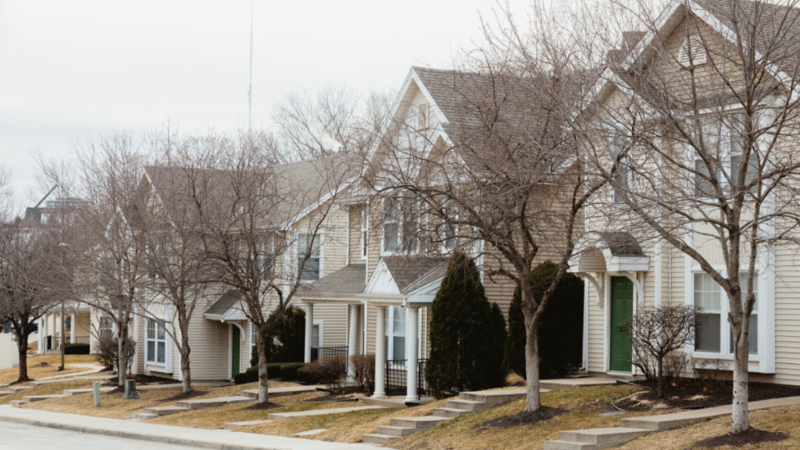
New Regional Housing Fund looks to boost housing stock and affordable housing options across the Kansas City area (Chase Castor/The Beacon).
The math of buying or renting a home in the Kansas City region has gotten increasingly out of hand.
Since 2010, home values in the area have risen nearly twice as fast as household incomes, Mid-America Regional Council Director of Economic Research Frank Lenk told the region’s leaders at a May board meeting. On top of that, the area is building housing at roughly half the pace it did before the Great Recession and has built 29,000 fewer housing units than would have been expected at a pre-recession pace.
Even the affordable housing that does exist often isn’t available to the people who need it, Lenk said.
“There’s just not enough units that are affordable for those with low incomes… half of those units are being occupied by those with higher incomes,” Lenk said. “So what’s actually attainable is a lot less than just the raw supply.”
The people with the least room in their budgets are absorbing the worst of it. By Lenk’s count, roughly 69,000 low-income renters in the region are living in homes they cannot afford, levels not seen since the foreclosure crisis.
“There are people who are paying 40%, 50% and in some cases 70% of their income on a monthly basis for housing,” said Geoff Jolley, executive director of Greater Kansas City Local Initiatives Support Corp., or LISC. “That is unsustainable if we expect them to also pay for child care, health care, educational needs, transportation costs and food.”
It’s a puzzle that will require several pieces to approach a solution.
A new Kansas City area housing fund is being developed to put up to $100 million toward chipping away at the issue.
The Kansas City Regional Housing Fund is a newly planned $100 million pool of capital, assembled by MARC and LISC, designed to lend developers the low-cost, flexible money that helps make affordable housing projects financially viable. Organizers expect it to launch later this year and to create or preserve 3,500 to 5,000 units of affordable housing across the nine-county, two-state area.
It is not a silver bullet, and the people behind it don’t claim it is. The fund is still in the early phases and fundraising will continue even after its initial launch. It will also not exclusively target deeply affordable housing but rather a mix including affordable options.
A nearly identical fund in Cleveland — launched 15 months ago — shows a model with positive early returns but also one that works one project at a time, against a shortage measured in the tens of thousands.
But it is a serious attempt at one specific piece of the problem: In Kansas City, the housing shortage is less about land availability or willingness to build than it is about money.
Local housing problem, by the numbers
The regional housing shortage is well documented. Lenk’s May presentation to the MARC board put updated numbers on nearly every piece of it.
Home values in the area are up 97% since 2010 while median household income grew just 55% — a gap that has widened mostly since the pandemic.
The squeeze shows up fastest at the entry level of the market. In the last five years the number of owner-occupied homes in the region worth less than $150,000 has been cut roughly in half, while the number of homes worth $400,000 or more has nearly tripled.
The shortfall is most severe for people trying to buy. The region has an estimated 56,000 fewer owner-occupied homes than it would if homeownership rates held at early 2000’s levels. The people who can’t buy rent instead. That drives up rental demand too, and the number of rentals under $1,000 a month has also dropped by half.
“A lot of times the institutional investors are blamed for the shortage of supply, and they contribute,” Lenk said. “But they’re only 9% of the market, so they’re not the ones driving the cost increases. The cost increases are being caused by the lack of supply.”
Lenk also noted that the same affordability gap can be addressed by boosting incomes. That underproduction is a major source of the affordable housing gap the area faces.
Lenk pointed to a menu of experiments local governments are trying to address the supply issue — such as faster approvals, accessory dwelling units, more flexible building codes and more innovative funding mechanisms.
The last item is where MARC and LISC have been digging. Through the Regional Housing Partnership, the two organizations built a regional housing data hub, studied similar funds in other markets, interviewed local governments and conducted a developer needs assessment to hear directly from builders about what was stopping them.
The needs assessment’s bottom line finding was that one of the main drivers of the region’s housing shortage and affordability challenges is “limited access to low-cost capital for housing production and preservation.”
Jolley described the “capital stack” that many housing developers must work out to make a project come to fruition. They get roughly 70% of the cost of their projects financed by a traditional bank, then need to fill the remaining with a blend of other financing — often including equity investors who invest in exchange for a share of returns — that is increasingly difficult or expensive to obtain.
“If I’m paying 7% on the (traditional bank) debt, and I’m paying 17% on equity… and the equity is making up 20% to 30% of my capital, that starts to bump those numbers up pretty high, which then causes them to not make sense if I’m trying to still rent the units out at an affordable price point,” Jolley said.
How the Regional Housing Fund would work
Think of the fund as a blender.
Money comes in from three places: philanthropic grants, low-cost loans from banks and foundations, and equity investments. Banks offer low-cost loans to LISC because they can earn federal Community Reinvestment Act credit for investing in a certified community development financial institution.
“What we want to do is stir it all up, put it out the door as cheaply as possible,” Jolley said.
Money then gets doled out to developers in three main forms.
The workhorse is expected to be construction loans — including subordinate loans that can be tacked on to traditional bank loans to help close a project’s financing gap.
Second is preferred equity, which would see the fund receive a percentage of profit from a project as it comes until the fund is paid back with interest. This is more attractive to developers because of its flexibility rather than a set repayment schedule that a traditional loan would require or a percentage of profit paid out forever like common equity investors expect. Jolley said that the fund’s expected return rate — how the developer pays the fund back — would often be half that of a traditional equity investor.
“We give them the cheaper capital, they build more affordable housing as a result,” Jolley said.
The third tool, forward purchase agreements, is a newer idea. The fund would agree up front to buy finished homes — say, 10 single-family houses — giving the builder a guaranteed buyer, which makes banks far more willing to lend on the construction.
As for what kind of housing the money backs, the fund is deliberately open-ended. Jolley described the fund as agnostic to whether the project is single or multifamily, rental or owner-occupied, new or rehabbed construction or put forth by a for profit or nonprofit.
“We’ve intentionally built flexibility into the fund,” Jolley said.
That flexibility includes preservation — keeping existing affordable units affordable, not just building new ones. It’s a piece of the strategy Jolley argues is chronically underrated. He says a community that builds 5,000 units a year but loses 1,000 affordable ones to market-rate conversion nets only 4,000.
“Typically with preservation, you can normally keep them at an affordable price point for half to a third (of the cost) of what building new is,” Jolley said.
Choosing among projects will come down to a scoring matrix set by the fund’s investors. Jolley described some of the priorities as proximity to transit, diversity in sizes of units, mixed-income buildings and geographic diversity, so the money doesn’t pool in a handful of ZIP codes. Beyond that, he said, the fund would generally operate first-come, first-served, and it will revolve — as early loans get repaid, the money goes back out to new projects.
The fund itself will be administered by LISC based on its national model. The target is $100 million, which organizers say would leverage at least $300 million in total development. The fund has early commitments from foundations including the Hall Family, Bloch Family, Health Forward, Menorah Heritage and Sosland Foundations.
The pitch, Jolley told the MARC board, is already piquing interest beyond the usual affordable housing developers.
“Even market rate developers who traditionally don’t do affordable housing can make it (work),” Jolley said. “When we start to walk through the numbers with them, they can make it pencil.”
Who the housing is actually for
Here is where the fund’s fine print matters.
The fund’s one hard affordability rule is that at least 51% of the units in its own overall portfolio must be affordable to households earning 80% of area median income or less. One project might be 20% affordable, another 100%, as long as the whole book balances out.
To understand the jargon and what this definition of affordable is, it takes a little math.
For the greater Kansas City area, the median family income for a household of four is $113,400 in 2026. According to the U.S. Department of Housing and Urban Development, households making up to 80% of that figure — $90,700 — are low income. At that rate, the highest a household could pay for housing without being cost-burdened — housing cost at more than 30% of income — would be $1,587 and $2,267 a month for a household of one and four, respectively.
So while the fund is expected to have a wide range of project types, the housing cost to the person living there will need to be affordable by this definition on average for more than half of the fund’s portfolio.
“The ultimate beneficiary is that you start to have families and individuals whose housing cost burden goes down as a result of these additional units coming online,” Jolley said.
The majority-affordable structure is partly what makes the bank money possible — Community Reinvestment Act credit is tied to the 80% median income standard. But the 69,000 cost-burdened low-income renters Lenk counted can skew far below 80% of area median income, and the fund isn’t targeting the most burdened families exclusively.
Jolley said the average median income in his neighborhood, the Historic Northeast, is $30,000. A home priced for a family making $90,000 would technically meet the affordable definition, but “it’s going to be three times too expensive for people in my neighborhood.”
That, he said, is part of why the scoring matrix pushes geographic diversity. In neighborhoods like his, the market itself forces prices well below the 80% ceiling because that’s what residents can pay.
Deeply affordable housing — the kind serving households with very low or extremely low incomes — isn’t the fund’s explicit target, but it isn’t walled off either.
“Hitting deep affordability is a challenge generally, and oftentimes it is more reliant on public investment — like grant dollars to provide a direct subsidy,” Jolley said. “But if you have a nonprofit partner who applies for the regional housing fund, we’d certainly be looking at that as an opportunity.”
What it looks like elsewhere
Fifteen months of results in Cleveland suggest that’s not just a hypothetical. There, the first wave of deals skewed toward the lower end of the income range — largely low-income housing tax credit projects that had won their credits but couldn’t close their financing as construction costs and interest rates climbed.
The Cleveland Housing Investment Fund, launched in March 2025, is also managed by LISC Fund Management, also targets up to $100 million and also focuses on households at or below 80% of area median income. Its goal is 2,500 to 3,000 affordable units.
Fifteen months in, LISC Cleveland Executive Director Kandis Williams said the fund has invested about $11 million across four projects, leveraging more than $75 million in total development. That represents roughly 200 to 225 units, 55 of them homeownership, all serving households at or below 80% median income.
The fund’s role, in her telling, is the difference between projects existing or not.
“These projects would not have gotten to the closing table, would not have been constructed, if it wasn’t for the investments that we’ve made,” Williams said.
Much of that first-year work was rescue work — tax credit deals racing the clock before their credits were clawed back.
“They’re going to die on the vine,” Williams said of projects in that position. “We were able to save several projects.”
She has also seen the dynamic Jolley is counting on in Kansas City: market-rate developers folding affordability into their projects because the cheaper capital makes it worthwhile.
“It is changing the landscape in terms of how we think about new construction,” she said.
There is one structural difference between the two funds. Cleveland’s launched with an $18 million grant from the city and a $20 million anchor investment from KeyBank, according to the city of Cleveland — nearly $40 million on day one.
Kansas City’s fund, so far, has no public dollars. It is being built entirely from philanthropy and private capital. (Notably the city of Kansas City, Missouri, has a Housing Trust Fund that is a separate city program.)
Jolley frames the absence as a feature, not a bug — a consequence of trying to serve 119 jurisdictions across nine counties and two states.
What tends to happen in other markets, he said, is that a city offers money with strings, such as limiting where the money can be used.
“There becomes an administrative challenge to that,” he said, “but it also becomes, well, now there are folks who get access to resources and folks who don’t.”
Williams, for her part, doesn’t see the public anchor as essential to the model.
“It can work with or without,” she said. “Obviously, it’s great to have public investment when possible, but private philanthropy, other private sources are just as important.”
Cleveland’s experience also shows the limitations of the program. Two hundred units in 15 months is real housing for real families — but it is humbled when compared to Cleveland’s shortage of roughly 58,000 homes for the city’s lowest-income renters. At full buildout, 2,500 to 3,000 units would chip at that deficit, not close it.
The same arithmetic applies here. Even at the top of its range, 5,000 units measured against Kansas City’s 69,000 cost-burdened renters — or MARC’s broader estimates of the regional shortage — is another chip, not a full fix.
Where things stand — and what success would look like
Kansas City’s fund isn’t active yet — no Kansas City dollars deployed, no local units financed. As of early July, Jolley said the fund had roughly $12 million in secured grant capital from five foundation partners, with close to $60 million pending with banks and foundations.
The plan is to launch once solid commitments hit $40 million — which Jolley anticipates will happen by October — then keep raising funds toward $100 million over the following 12 to 18 months.
Once it launches as a fund regulated by the Securities and Exchange Commission, with a public unveiling event planned for the fall, the first checks could move quickly.
“I would really like to see our first project closed by the end of the year,” Jolley said. “There’s a couple projects that I think we’re ready to invest in as soon as the fund is officially online.”
Failing that, he expects the first closing by the end of the first quarter of 2027.
If Cleveland is the guide, the first year will look modest with a handful of developments, a couple hundred units and a long fundraising tail.
Jolley’s own measuring stick reaches further back — to his years as a Kansas City firefighter, walking into apartments where the only furniture was a couch and mattresses on the floor.
“You saw folks who were literally having to make choices between, do I go refill my kid’s asthma inhaler, or do I pay rent this month,” Jolley said. “If we can start to do something that drives down the cost of housing for folks, so they can have a little bit more means to pay for that asthma inhaler — then we’ve done our job.”
Disclosure: This story covers an initiative funded in part by the Health Forward Foundation, which is a financial supporter of The Beacon. The Beacon maintains editorial independence. Funders do not dictate what we cover or how we report news.
This article first appeared on Beacon: Kansas City and is republished here under a Creative Commons Attribution-NoDerivatives 4.0 International License.


Jefferson City, MO