Lawmakers weigh more regulation amid mistrust in Oklahoma’s marijuana testing
Oct 13, 2026 | 5:33 pm ET
Description
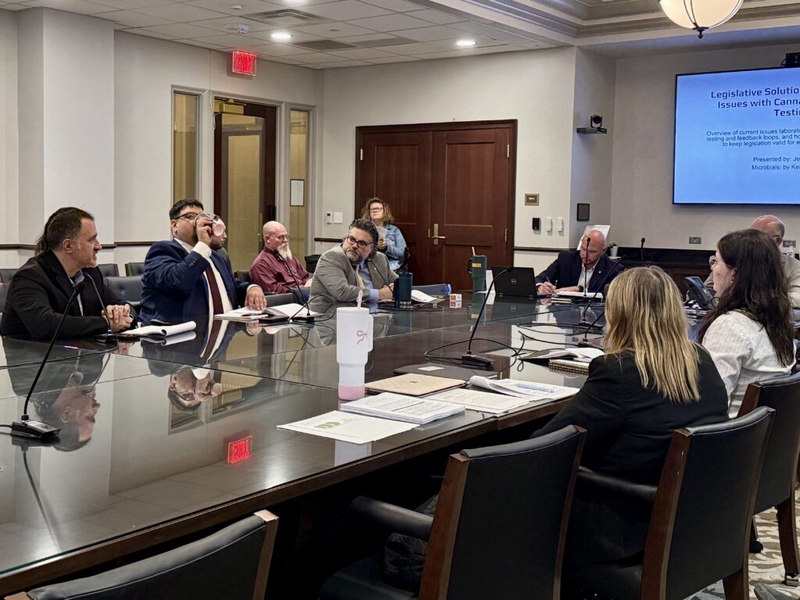
House lawmakers and medical marijuana industry stakeholders listen to a presentation on potential regulatory solutions at the Oklahoma Capitol on Oct. 13, 2026. (Photo by Emma Murphy/Oklahoma Voice)
OKLAHOMA CITY — The Oklahoma Legislature should hit pause on further regulating the state’s medical marijuana industry to allow recent laws to take full effect, one legislator said Tuesday.
Rep. T.J. Marti, R-Broken Arrow, said lawmakers have created enough cannabis laws since voters first legalized medical marijuana in 2018, and everyone would benefit from waiting to pass any additional regulations. Marti has taken the lead on various marijuana regulatory bills over the past few years and currently chairs the House Alcohol, Tobacco and Controlled Substances Committee.
“I’ve been saying let’s see what shakes out from the things that we’ve done the first six years,” he said. “Give the industry a break and give it time to show us if the changes we made are beneficial.”
Still, House lawmakers heard from medical marijuana patients and industry advocates, laboratory testing businesses and the state’s regulatory agency at an interim study on Tuesday. They proposed over a dozen more ways the industry could be further regulated amid mistrust in cannabis testing and safety. The Legislature has retroactively passed regulations since voters approved legalization of the industry.
The medical marijuana industry needs to work together to say what it needs from lawmakers, Marti said, because conflicting solutions are being proposed.
“We need you guys to come together with things that the industry wants help with solutions,” he said. “And we have a lot of offers today. I’m guessing if I posted, ‘This is what we’re going to take up this year,’ there would be at least 50% hate out there for all of these issues. So again, that’s not normal across any other industry, other than maybe oil and gas.”
Mistrust in medical marijuana testing
Marion McNabb, a cannabis and policy researcher, said a recent report on Oklahoma’s medical marijuana industry revealed that 30% of surveyed patients have some level of distrust in the accuracy of laboratory testing in Oklahoma.
The surveyed business owners also said there’s a lack of transparency and communication on requirements and that testing can be unreliable, she said.
Currently, the state relies on about a dozen independent labs to confirm safety and quality of marijuana products.
Rep. Jacob Rosecrants, D-Norman, said he thinks the Legislature needs to focus further regulation on expanding test labs’ capabilities to identify pesticides and other hazardous substances through new technology and approved methodology.
Rosecrants, who hosted the interim study, also said the state needs to prepare itself for the federal government’s change in its classification of marijuana.
These priorities could also potentially be achieved through the administrative rules process, he said.
“We’ve got to get a hold of what we’re ingesting,” Rosecrants said. “Plus, not only have I spoken to patients that have ingested or smoked something that made them sick, it happened to me too.”
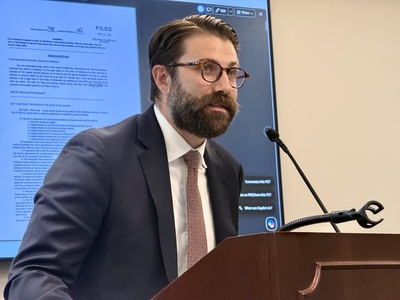
Rosecrants said his constituents are questioning why it’s taken the Oklahoma Medical Marijuana Authority so long to get its quality assurance lab fully up and running.
Barrett Brown, the chief administrative officer for the agency, said the lab is operational but still awaiting accreditation for certain testing capabilities. The lab is intended to regulate the independent, licensed testing facilities.
Suggestions on improving marijuana testing ranged from aligning testing criteria with existing national standards to targeting families of compounds when testing marijuana rather than listing out every harmful pesticide in state law.
Gillian Schauer, executive director of the Cannabis Regulators Association, said the testing model in Oklahoma is high stakes because products are only tested at the end of the process, so failing a test means losing high quantities of a marijuana product.
Testing ends up being the only marker of whether or not something is safe, she said.
“There’s pressure on labs to falsify things, there’s pressure from licensees sometimes to try to get something through because they don’t want to lose the inventory,” Schauer said. “And this creates, again, some incentives that can be misaligned. We need better methods.”
Oklahoma City, OK