Criminal justice reform takes back seat in 2025 legislative session
May 23, 2025 | 8:01 am ET
Description
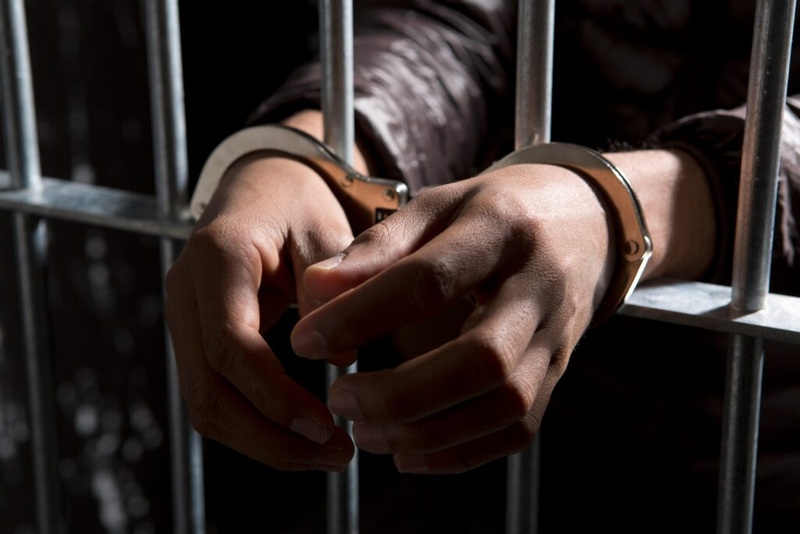
A pair of handcuffs poking through prison bars. Most bills aimed at reforming the criminal justice system failed in the session, though advocates were encouraged by the progress of some proposals. (File/Getty)
It was the same story for criminal justice reform in the Alabama Legislature this year as in previous years: bills got filed, but most never made it to Gov. Kay Ivey’s desk.
Legislators did enact laws making incremental changes, such as a bill to make it easier for people who were formerly incarcerated to obtain occupational licenses and create more opportunities for diversion programs were approved.
And advocates said they were encouraged that legislation they continue to support moved further along in the process than in the past.
“Giving a grade on criminal justice reform in Alabama is always a challenge because the steps that are taken forward are, oftentimes, minimal, although they are impactful to certain segments of the population,” said Jerome Dees, policy director for the Southern Poverty Law Center. “However, what we as a collective community need to do is change the narrative around what actually is public safety and what drives making neighborhoods and communities safe.”
Bills to reform the parole and bail system in the state; allowing reconsideration of sentences for nonviolent offenses imposed before reforms of the Habitual Felony Offender Act, and delaying sentencing for those who are pregnant failed within their committees or stalled and were not considered by either the full House or Senate.
“There wasn’t any legislation passed for criminal justice reform, but there were still some very meaningful conversations about it that did move the needle forward, including a very frank discussion about the parole board to make sure there is oversight and attention to that fact that the parole board is not in compliance with the law,” said Rep. Chris England, D-Tuscaloosa.
The Republican-dominated Legislature instead approved measures that increased existing penalties or provided an advantage to law enforcement in some way, including a bill enhancing immunity protections for law enforcement.
Reforming parole and bail was a focus of advocates, particularly as Republican legislators had shown growing impatience with the Alabama Board of Pardons and Parole missing deadlines to implement parole guidelines.
“I think one of the many things that we hoped to see coming out of the 2025 legislative session was legislation that created more accountability and transparency around the parole process,” Dees said. “There were a number of bills that were filed to specifically address that.”
HB 40, sponsored England, would have created a commission to create updated parole guidelines and require the board to stick with them. Under the bill, if the board deviated from the guidelines, it would have to publicly state why.
Parole applicants would also have been able to appeal denials to the Alabama Court of Criminal Appeals.
Another bill, SB 324, sponsored by Sen. Clyde Chambliss, R-Prattville, would have increased the number of members who serve on the Parole Board from three to five and require the Senate to confirm the appointments. It would also have changed the timeline that an applicant who has been denied can reapply for parole.
The Senate approved the measure by a vote of 16-8 in April and the House Judiciary Committee approved the bill soon afterward by the narrowest of margins. The bill did not come out for a House vote.
Chambliss later amended the state’s 2026 General Fund budget, which goes into effect on Oct. 1, to withhold the Board of Pardons and Parole’s funding until they develop parole guidelines.
Lawmakers have scrutinized Alabama’s parole system since 2019 when the state’s parole system decreased dramatically. The figure has increased to about 25% recently but remains below the original rate.
Legislators also turned away proposals to allow Alabama judges to issue a percentage bond to those in pretrial detention.
HB 42, also sponsored by England, would have left much of the Alabama Bail Reform Act of 1993 in place except to add three words, “a part of” to current statutes to give judges the authority to allow defendants to pay a portion of the total bond amount they owe so that they can be released from jail as their cases proceed through the court system.
The bail bond industry strongly opposed the legislation during two public hearings at both the House and Senate Judiciary committees.
The bill passed the House in April. But the Senate Judiciary Committee deadlocked on approval of the measure along party lines.
The Alabama Legislature also allowed another bill, SB 156, sponsored by Sen. Will Barfoot, R-Pike Road, to fail.
The bill allows some of those incarcerated in Alabama’s prisons to have their sentences reconsidered by a judge if their crimes did not involve physical injury to others.
The bill would have allowed people who were convicted and received lengthy sentences before the state made substantial changes to the Habitual Offender Law in 2000 to give judges more discretion regarding sentencing. Defendants who were convicted of homicides, sexually based offenses and violent offenses were not eligible for reconsideration.
The bill required two rounds of voting in the Senate chamber after members of the Senate Judiciary approved it in February.
In March, Senate Republicans rejected the legislation with a tie vote 16-16. Hours later, senators approved a motion to reconsider the legislation, and after discussing the bill, passed it by a vote of 17-8.
The House Judiciary Committee then approved the legislation in April, but it never came to a vote in the House.
“We were of course disappointed to see the Second Chance bill fail to pass the House, especially in light of the broad, bipartisan support it had this time around,” said Elaine Burdeshaw in a statement, policy director for Alabama Appleseed Center for Law and Justice, a criminal justice reform organization. “Despite the bill’s failure, we saw legislators across the aisle, all the way up to Gov. Ivey, understand this issue and why it matters– why it really is smart on crime policy.”
Montgomery