The Constitution is the real key to protecting our elections
Oct 27, 2026 | 6:25 pm ET
Description
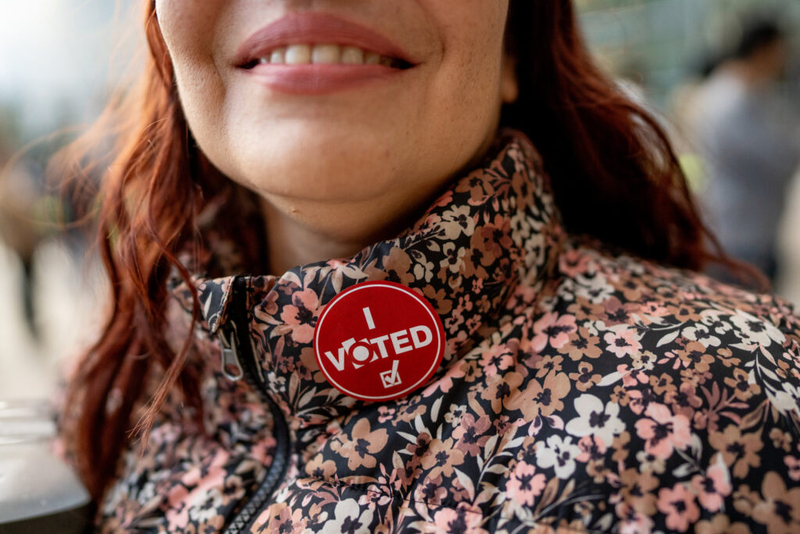
Brigitte Romoleroux proudly wears her “I Voted” sticker after voting at the Main Library in Salt Lake City on Election Day, Tuesday, Nov. 5, 2024. (Photo by Spenser Heaps for Utah News Dispatch)
The Justice Department has struck out again after U.S. District Court Judge David Barlow dismissed a lawsuit against Utah Lt. Gov. Deidre Henderson. While Judge Barlow correctly interpreted federal law, it is important for Americans to know that the ruling helps ensure our elections remain fair and secure.
The Trump administration, to its credit, wants to root out election fraud. But you do not do that by just demanding that states hand over sensitive voter data. The best way to fight election fraud is by following the system outlined in our Constitution.
Article I, Section 4 of the U.S. Constitution says that state legislatures shall determine the time, place and manner of elections to federal office. It also empowers Congress to alter some state election laws. In other words, states take the lead in running elections, Congress plays a secondary role as needed, and the president does what Congress tells him or her to do.
Nowhere does this give the executive branch the authority to make demands beyond those authorized by Congress. Nor does it allow for new election policy to be made via executive order or federal regulation, as recent executive orders and federal regulations around vote by mail (also paused by the courts) would do.
Widespread election fraud is prohibitively difficult to perpetrate in the United States because there are plenty of opportunities to catch it. That is the genius of our constitutionally designed system.
We have 50 state-led election systems administered by thousands of local election officials. These local election officials collect ballots and count votes, while state election officials provide oversight, add local vote tallies together and announce results.
Think about it: To perpetrate voter fraud on a scale that could change the outcome of a federal election, fraudsters would have to overcome the safeguards of dozens of election systems, while getting hundreds (perhaps thousands) of state and local election officials in on their schemes. Even in state races or smaller districts, dozens of state and local election officials would need to be in on the plot for election fraud to sway those elections. Persuading that many individuals from different geographies and independent jurisdictions to get on board with that deception is so difficult it is practically impossible.
Look at Utah if you want to see how difficult pulling off something like that would be.
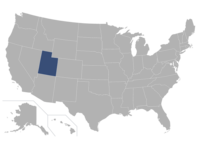
In the Beehive State, a voter’s identity is verified several times, including when they return a ballot. Ballots themselves contain scannable barcodes so they can be tracked. They also have barcodes on the envelope that, once scanned, can determine whether a voter has already voted in that election. If a signature on the ballot doesn’t match, a voter may also be required to provide a driver’s license or the last four digits of their Social Security number to prove their identity.
In addition, machines are audited for accuracy, have many levels of encryption and are not connected to the internet. There is 24/7 surveillance of ballots, ballots must be handled by at least two election workers, ballots are counted in public and voter rolls are regularly checked and updated to remove ineligible voters.
Federal executive orders that centralize election authority in one or a few federal agencies, by contrast, would mean the number of anti-fraud safeguards shrinks from thousands to a relative handful. This would make election fraud easier to commit because only a single federal system needs to be corrupted instead of dozens of individual state systems, and it can be done from the comfort of Washington, D.C. — far from the eyes of the thousands of state and local anti-fraud checkpoints that safeguard election integrity today.
Both political parties have tried to expand the federal government’s involvement in elections in recent years. Those advocating for these policies should ask themselves a question: Do I want the opposing political party to have greater influence over elections when they take power? If the answer is no, that is a good sign that those federal election policy reforms will not accomplish their goals.
Rather than pursuing proposals that make election fraud easier by centralizing election authority in Washington, D.C., we should strengthen election integrity by enacting measures that further uphold and protect state-led, locally administered elections.
Salt Lake City, UT