Conservationists worry Endangered Species Act changes could threaten recovery efforts
Jul 27, 2026 | 5:00 am ET
Description
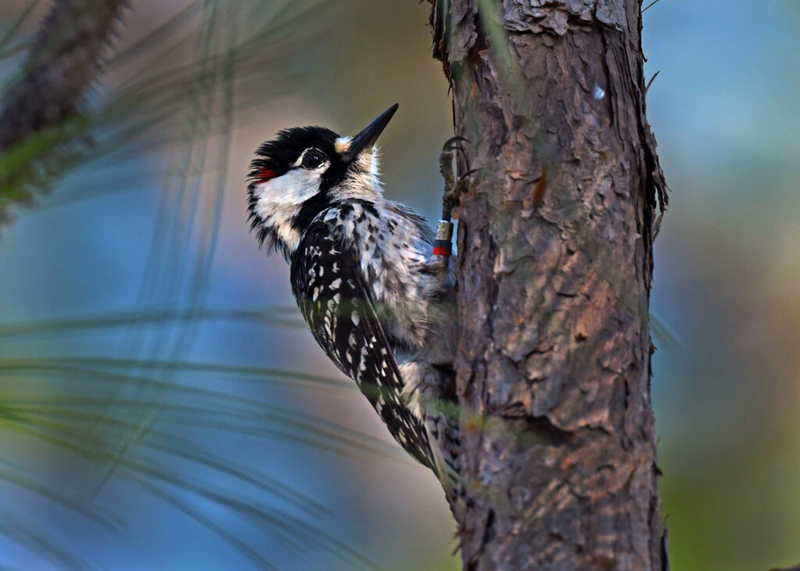
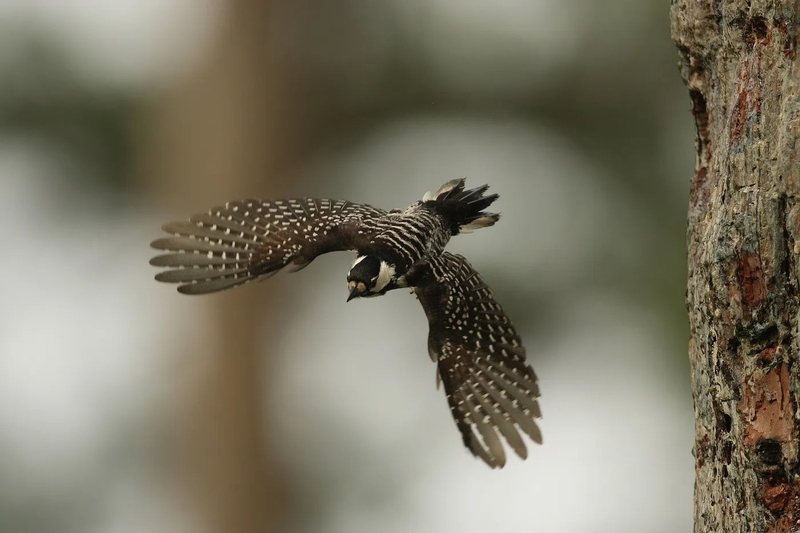
The red-cockaded woodpecker seeks out mature longleaf pine trees to build its home. (Renee Bodine/USFWS)
The continuous rattle of a red-cockaded woodpecker’s bill against a pine tree used to be a much more common sound throughout Louisiana forests. The plucky bird makes its home by burrowing into the hearts of longleaf pine trees, and the sound of its repeated efforts to make a home for its young was once nearly ubiquitous across the region.
Longleaf pine ecosystems historically spanned hundreds of thousands of miles in the Southeast. Today, they’ve been reduced to only 3% of that area, largely the result of logging and development. As a result, woodpecker populations have dwindled dramatically.
Conservationists credit the Endangered Species Act for the species’ limited rebound, but they fear new Trump administration policy could erase that progress as well as other efforts to protect threatened plants and animals.
The slow comeback
Red-cockaded woodpeckers were once abundant, with their historic range extending from as far south as Florida to as far north as New Jersey.
The woodpeckers live in clusters, anywhere from two to eight birds in one nest. Its numbers dwindled to their lowest point in the 1960s, with only 10,000 birds or about 1,500 to 3,500 clusters scattered among increasingly isolated portions of pine forests, according to the U.S. Fish and Wildlife Service.
Scientists estimate the species’ numbers had dropped 99% from what they were at the time Europeans first settled in the U.S.
In 1973, the red-cockaded woodpecker was among the first species to receive federal protection when Congress approved the Endangered Species Act. The landmark law protected listed animals from actions that either kill them directly or destroy their habitat.
“Protecting habitat is a key part of the Endangered Species Act,” said Karrigan Börk,
a law professor and Endangered Species Act expert at the University of California, “It’s been on the books since the act itself was passed in the ‘70s.”
The red-cockaded woodpecker has rebounded somewhat from its dire lows. As of 2020, the U.S. Fish and Wildlife Service estimated there were around 7,800 clusters, representing anywhere from two to five times the numbers from the 1960s. The agency used this population increase as justification to change the woodpecker’s status from endangered to threatened in 2024.
But legal experts and conservation biologists worry about how a new federal rule could affect the red-cockaded woodpecker and other imperiled species.
What does ‘harm’ mean?
The U.S. Department of Interior announced in July it would no longer consider habitat destruction as direct harm to a species. This goes directly against the conclusions of conservationists who work to bring species back from the brink.
“We cannot avoid extinction without protecting habitat,” said Vicky Meretsky, a professor at Indiana University’s School of Public and Environmental Affairs. “You can’t save a species that is becoming homeless without providing a home.”
Merestky worked for years with the U.S. Fish and Wildlife Service to revive numbers of the California condor, which had fallen to 22 birds in 1982. Habitat loss was among the factors that caused the species, which now numbers more than 600, to nearly go extinct.
Meretsky said it is impossible to separate habitat protection from endangered species protection.
“Well over two-thirds, probably closer to 80% of species, have habitat loss as at least one of their major reasons for endangerment,” Meretsky said. “It has been the leading cause of endangerment for a very long time.”
While the red-cockaded woodpecker is still known as a success in conservation terms, its comeback is slow in comparison to other species. For example, the once endangered bald eagle now numbers more than 400,000 across North America, according to the Fish and Wildlife Service.
Louisiana’s state bird, the brown pelican, was gone entirely from the state federal before protections were put in place. The USFWS estimate for the species now reaches 650,000 birds when taking into account its entire range from the U.S. to Central America and the Caribbean.
The red-cockaded woodpecker’s recovery struggles are, in part, because of how severe its habitat problems are. They are also extremely territorial and don’t migrate, making the search for suitable habitat competitive even in the best of circumstances.
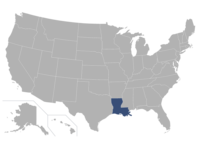
Longleaf pine forests are found in Southeast, Southwest and Central Louisiana, with the biggest concentration in the Kisatchie National Forest. All areas have seen the impact of logging and development, and longleaf pines take nearly 60 years to mature enough for a woodpecker to find it suitable for a home. The birds seek out the oldest, sturdiest trees, ideally free of sap and infected with red heart fungus, which softens the wood enough to allow for easier nest building.
Conservation confusion
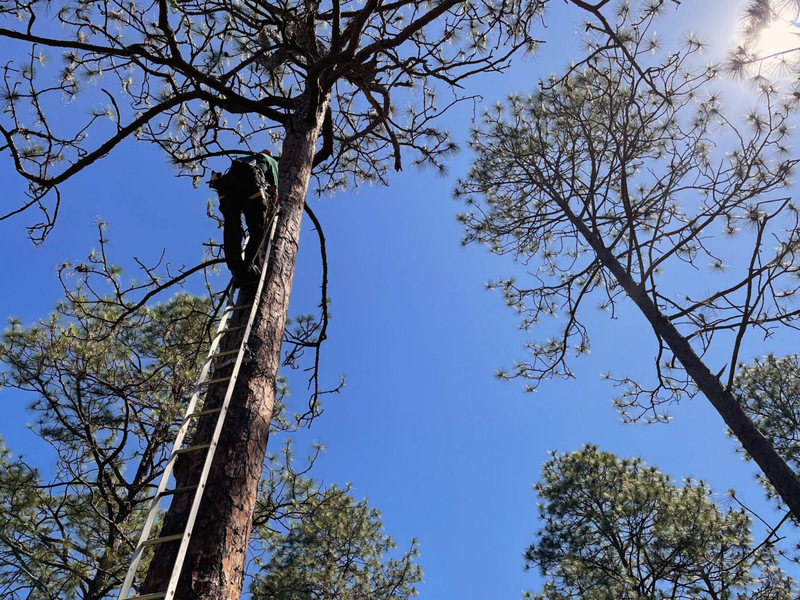
The Fish and Wildlife Service, with help from the U.S. Forest Service, works to conserve the species by building nesting boxes and undertaking programs to grow other native trees such as slash and loblolly pines. These trees don’t take as long to mature as longleaf pines, and the birds will sometimes use them to nest.
In Louisiana, private landowners can enter into agreements with the Louisiana Department of Wildlife and Fisheries and federal wildlife officials to preserve habitat for red-cockaded woodpeckers. Called the Safe Harbor Program, landowners commit to management activities that enhance, restore or maintain habitat for the birds. In return, they get official assurance from the state and federal agencies that there won’t be increased restrictions on the use of their land if conservation efforts attract more red-cockaded woodpeckers.
“There’s a whole bunch of safe harbor agreements across the country that have that same structure and that provide that same protection for the landowner,” Börk said, adding that they became common under the Clinton administration to promote conservation on private lands.
Property is surveyed when a landowner agrees to enter the program to assess how many red-cockaded woodpeckers already live there. When a base number is reached, landowners are responsible for maintaining at least that count. But if more woodpeckers move into the area, the landowners can remove their nesting trees and habitat without any consequences. They just have to give state or federal officials 60 days written notice so the agencies can attempt to relocate the affected woodpeckers.
Börk said changing the definition of harm under the Endangered Species Act could render these programs ineffective.
“If the way this administration is interpreting harm is to mean that habitat destruction doesn’t actually kill the species … those landowners don’t need that safe harbor protection anymore, because they can just go out and cut those trees down anyway,” he said.
“This is actually going to result in a lot more confusion,” Börk added.
The rule change fits into a larger scheme of Trump administration actions to roll back protections for the environment and wildlife long respected under the law, he said.
“This is a slapdash move by the administration that doesn’t have a lot of clear thought behind it,” Börk said. “This is part of the administration’s very broad effort to break as many things as quickly as possible, in terms of environmental regulation, in hopes that some of it will stick.”
Baton Rouge, LA