Congressional delegation to Forest Service: Sheep Creek mine needs transparency, engagement
Dec 10, 2025 | 7:04 pm ET
Description
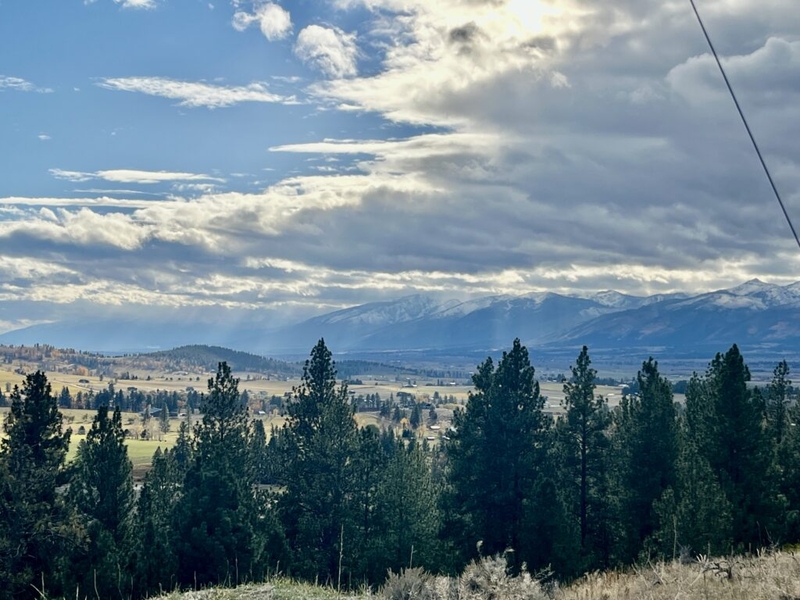
A view of the Bitterroot Valley. (Keila Szpaller/The Daily Montanan)
A Sheep Creek mine would bring economic development to the Bitterroot Valley, but the U.S. Forest Service should ensure the mine exploration moves forward with “needed transparency,” Montana’s congressional delegation said in a letter to the agency chief.
“We have been ardent supporters of new mines and mine expansion in Montana, including the Libby Exploration Project and the Sibanye-Stillwater Mine, both located on Forest Service land,” said U.S. Sen. Steve Daines and the Montana delegation in a letter Monday.
The letter said the delegation saw at Sheep Creek the potential to “greatly expand U.S. critical mineral production” and its ability to bring jobs and important revenue to the community.
However, the delegation said federal land use decisions need the support of local communities, and, “importantly, county commissions,” which the project does not have. The letter called for “ample local engagement.”
U.S. Critical Materials has proposed a controversial 3.9 acre mine exploration project for “rare earth” minerals at the headwaters of the Bitterroot River to see if a fullscale operation is feasible.
Company representatives argue the project could support national security and bring jobs to the area, but local residents have decried the lack of communication and doublespeak from mine officials and raised concerns about impacts to water, critical for local agriculture, tourism and recreation.
Last week, Ravalli County Commissioners unanimously voted to send a letter to the Congressional delegation asking the Sheep Creek mine exploration be removed from the FAST-41 list of federal projects to be expedited, citing lack of public engagement.
FAST stands for Fixing America’s Surface Transportation Act.
The commissioners did so at a meeting they estimated drew 700 people. During public comment, not one person spoke in favor of the mine, and many raised concerns, including whether the mine should ever operate in the area.
The letter from the Congressional delegation was addressed to U.S. Forest Service Chief Tom Schultz and Emily Domenech, director of the Federal Permitting Improvement Steering Council, which oversees FAST-41 projects.
In the letter, the delegation did not ask the Forest Service or permitting council to remove the project from the FAST-41 list, or “fast track,” although U.S. Sen. Tim Sheehy and U.S. Rep. Ryan Zinke made such calls earlier, but it called for the chief and director to ensure transparency from U.S. Critical Materials or any successor companies.
“Unfortunately, it has become clear to us that the developers of the proposed Sheep Creek deposit have not engaged with community leaders and gained their trust to proceed with the development of this deposit,” the letter said. “As such, we cannot support the project and urge the Forest Service and the Permitting Council to ensure full transparency and increased local engagement in the permitting process.”
The letter was signed by Daines, Sheehy, Zinke and U.S. Rep. Troy Downing, all Republicans.
Wednesday, Ravalli County Commission Chairman Dan Huls said the Commission had not heard from either of the U.S. Critical Materials mine officials since they presented at the meeting last week.
The project is still named on the FAST-41 project list for Montana, and Huls said it’s frustrating to be in “hurry-up-and-wait mode” regarding its status.
“I hope that our congressional delegation has the horsepower to get this thing off of the fast track,” Huls said.
The letter he and Commissioners Greg Chilcott and Jeff Burrows signed also requested full environmental reviews for any work at Sheep Creek.
The Permitting Council has not responded to requests for comment about the status of the Sheep Creek proposal. Wednesday, U.S. Critical Materials also did not respond to messages from the Daily Montanan.
In the letter this week, the Congressional delegation thanked the Forest Service chief and permitting council director for their work “expanding mineral production in Montana” and on other FAST-41 projects, like the Stillwater Mine and Libby Exploration Project.
“The Sheep Creek deposit has the potential to greatly expand U.S. critical mineral production and reduce our dependence on China for rare earth elements that are vital for the US economy,” the letter said. “Future development of the Sheep Creek deposit will bring jobs, economic development, and important revenues for the local community that can be used to increase public safety, fix roads and infrastructure and fund schools. This can be done while also protecting environmental assets, water quality, and wildlife.”
But one piece is missing at Sheep Creek compared to the projects at Libby and Stillwater, the delegation said.
“Unlike the proposed Sheep Creek mine, both (the Libby and Stillwater projects) enjoy strong support of the local community and the confidence of county commissioners and stakeholders,” the letter said. “We hope that the lack of engagement will be rectified promptly and urge the Forest Service and the Permitting Council to ensure the project receives the needed transparency and ample local engagement.”
Huls, though, said he remains skeptical about the project in the Bitterroot, and he sees better opportunities to mine the same minerals elsewhere in Montana.
“I very much wish that everything the proponents said was true,” Huls said of the mine officials. “But what they lined out for us, in my opinion, was a project that’s too good to be true.”
Huls said he wasn’t necessarily speaking for the other commissioners. He also said he agrees the U.S. is under China’s thumb when it comes to rare earth minerals, and it concerns him.
“There’s no doubt about that,” Huls said. “But my understanding is there’s a tremendous amount of those minerals that are in the tailings of the mines that were in Butte and Anaconda where that processing took place.
“And if we could get our critical minerals from those places, that would be much better, and it would probably improve the landscape over there instead of placing the mine at the headwaters of the Bitterroot River and potentially having an incident.”
An incident, he said, would be a matter of when, not if, and a question of severity of impacts, whether a truck full of minerals wrecking into the river or water pollution from washing tools.
Sheep Creek letter Dec 9 2025
Helena, MT