Child abuse case involving Hope Scholarship students illuminates oversight challenges in WV
Oct 20, 2026 | 6:00 am ET

Description
The West Virginia state Capitol in Charleston, West Virginia. (West Virginia Legislative Photography)
A Kanawha County child abuse case involving students using the Hope Scholarship poses questions about how public schools can follow up on thousands of students using the program, including children missing school and in potentially dangerous situations.
Public schools like Kanawha County Schools are currently tasked with handling records and reporting for Hope Scholarship students learning elsewhere. More than 25,000 students are using the program this school year.
A malnourished 12-year-old girl was found alone Oct. 15 at a doughnut shop in Charleston, West Virginia, more than a mile away from her home and wandering the neighborhood for several hours.
A criminal complaint said the girl weighed 40 pounds. The average weight for a 12-year-old girl is 92 pounds.
WCHS reported that her parents, Nuwna Overton and Clarence Spotsville, both 33, were charged with child neglect creating risk of bodily injury.
Five children found in the couple’s home were enrolled in the Hope Scholarship program, Kanawha County Schools confirmed. The Hope Scholarship is the state’s education voucher program that provides around $5,400 per student for private school tuition, homeschooling and more.
The State Treasurer’s Office, which runs the Hope Scholarship program, couldn’t confirm or disclose whether the students utilized the Hope Scholarship under current law.
“Under current law, information regarding an individual student’s participation in the Hope Scholarship Program is protected,” said Carrie Smith, communications director for the Treasurer’s Office.
The 12-year-old girl was found by law enforcement on Thursday, a school day.
“Questions regarding school attendance monitoring and student check-ins fall outside the scope of our office’s responsibilities and would be more appropriately directed to the West Virginia Department of Education or the applicable county school district,” Smith said.
An email conversation with Kanawha County Schools Communications Director Chris Williams revealed a loophole in attendance monitoring of Hope Scholarship students.
A Notice Of Intent form, which parents fill out to notify Kanawha County Schools that they’re withdrawing their child for the Hope Scholarship, only requires the parent to list “participating school” for where the child will attend.
“The only thing they are required to put down is ‘participating school,’” Chris Williams said.
In Kanawha County, officials review attendance at the end of the year.
“At the end of the school year, all participating schools (those that accept the Hope Scholarship) send KCS progress reports for students who attended using the scholarship. Our attendance office reviews those lists and records each student’s progress in the Hope Scholarship Portal,” Chris Williams said. “If a student does not appear on any of those lists, our attendance office records ‘no progress report’ in the Hope Scholarship Portal.”
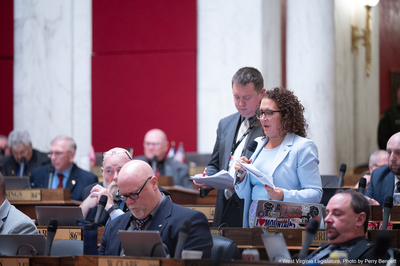
Del. Kathie Hess Crouse, R-Putnam, is one of the Legislature’s leading school choice advocates. She said the Kanawha County situation showed there could be more work to do on communication between those involved with the program.
“I think we need to look where there are gaps somewhere — it seems like there may be some gaps — and fill those in,” Hess Crouse said on Monday. “I will be speaking to the Treasurer’s Office to see what gaps they’re seeing and the West Virginia Department of Education.”
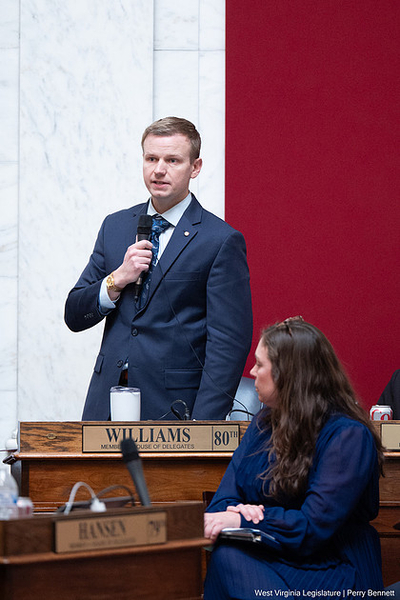
Del. John Williams, D-Monongalia, questioned if changes to the Hope Scholarship regarding children’s safety would get traction after his and other lawmakers’ proposed financial guardrails to the program didn’t move forward this year. Those proposals came from both Republican and Democratic House members.
“It would make common sense to improve the communication between public schools and Hope to know what’s going on, but I’ve heard a lot of commonsense guardrails that would help kids with the Hope Scholarship, so I don’t know if this would have any success or not … In the Legislature, common sense is rarely seen,” John Williams said.
“I think that we have to do better than what we’re doing at keeping track of where these kids are,” he continued. “Obviously it’s a safety issue. It just makes you wonder how many kids are out there like this.”
The Hope Scholarship has its own checks and balances for students and education providers participating in the program this school year.
Participation in the program has surged this year since program eligibility expanded to all West Virginia students for the first time since its launch in 2021.
“We do monitor when students select a school or IIP in our system to help us indicate where the student is being educated,” Smith said. “We also work closely with our participating providers to make sure that Hope Scholarship funds are being used for services rendered, so if a student was not actually attending the school, we would be working with the school on the refund process.”
Smith said that the Education Service Provider agreement holds schools and providers accountable for only charging services rendered.
“While this is not an academic progress ‘check-in,’ this is a way that we work with parents, schools and providers to help ensure attendance,” Smith explained.
Hope Scholarship not notified of parents’ criminal charges
Hess Crouse is in the process of setting up a school choice portal for homeschoolers through the state education department that will track forms, progress and more. Adding Hope Scholarship students to the portal in the future could help alleviate some oversight challenges, she said.
She has also proposed a School Choice Office, potentially run through the Governor’s Office, to handle attendance and monitoring rather than public schools.
“Child safety is paramount. Bad actors are everywhere, but by numbers alone there are more bad actors in public schools than in homeschooling, charter schools, private schools and microschools,” Hess Crouse said. “I’m not saying there aren’t ever abusers in home (schooling), private and charter … There are more in public. We need to make sure there is follow through no matter where the child is placed.”
Under current state law, the Hope Scholarship Program is not notified when a participant or account holder faces criminal charges, nor is there a statutory requirement for an account holder to report such charges, according to Smith.
If a parent or guardian becomes unable to be the account holder due to incarceration or loss of temporary or permanent custody, the program allows another individual who is not the student’s parent to serve as the account holder.
“Such determinations are made on a case-by-case basis and are subject to legal review,” Smith said.
“If lawmakers believe additional notification requirements are necessary to strengthen student protections and accountability, it is incumbent upon the Legislature to address those gaps in the law. The Treasurer’s Office must operate within the authority granted to it under current legislation,” she added.
- 10:05 amThis story has been updated to correct that Carrie Smith's title is communication director.
Charleston, WV