Marijuana legalization won’t fix Iowa’s budget
Aug 06, 2026 | 5:04 pm ET
Description
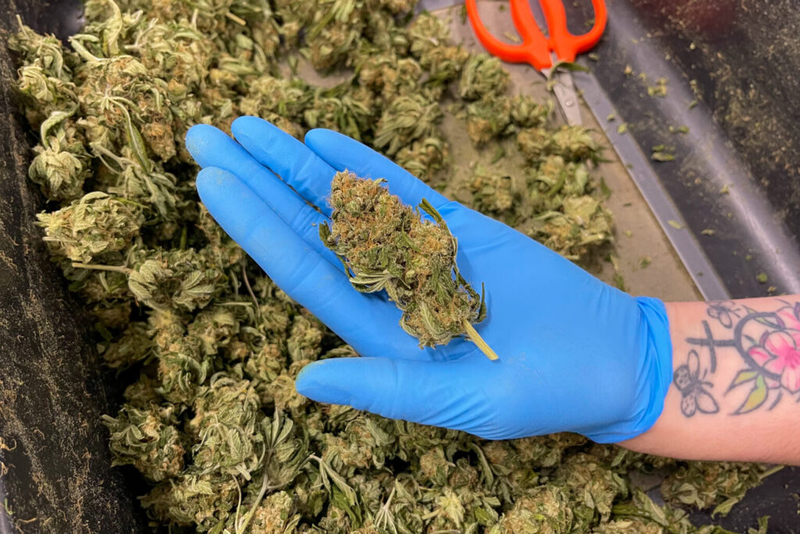
Legalizing marijuana is an issue in Iowa's 2026 gubernatorial election. Shown here is marijuana from Robust Cannabis in Cuba, Mo. (Photo by Rebecca Rivas/The Missouri Independent)
One of the arguments made for legalizing marijuana has little to do with marijuana itself. Instead, it is presented as another potential source of tax revenue.
That approach misses a much larger point, though. Governments are almost always searching for additional money to support additional spending. Whether the proposed tax is on marijuana, gambling, vaping, or something else, the promise is often the same: legalize or expand an activity, collect new tax dollars, and government will have more money to spend.
Those promises often prove more optimistic than reality.
The first problem with relying on marijuana taxes is that the revenue is uncertain. Collections depend on the tax rate, licensing rules, local participation, market prices and the ability of legal sellers to compete with illegal ones. A high tax (no pun intended) may promise more revenue per sale, but it can also drive consumers back to the illicit market. A lower tax may support a larger legal market while producing less money for the state.
Colorado provides a good example. A state with a population roughly twice as large as Iowa’s, it collected about $423 million in marijuana taxes and fees in 2021. By 2024, collections had fallen to roughly $255 million, a decline of about 40 percent. Cannabis can generate meaningful revenue, but “meaningful” is not the same as stable or sufficient.
That experience demonstrates why lawmakers should be cautious about treating marijuana taxes as a dependable source of ongoing revenue. Budgeting based on an unpredictable revenue stream is a risky proposition, particularly when collections can fluctuate significantly from year to year.
The second problem is the conflict created when government becomes financially dependent on the consumption of a product it simultaneously says must be discouraged and tightly regulated.
If maximizing revenue becomes the goal, the state benefits from more customers, more sales, and a larger cannabis industry. Public health goals point in the opposite direction: preventing youth use, discouraging impaired driving, limiting abuse, and enforcing strong safeguards.
This tension already exists with alcohol, tobacco and gambling. That should make lawmakers more cautious, not less. Permanent spending should not be built around activities whose consumption government simultaneously wants to restrict.
If Iowa were ever to legalize marijuana, any resulting tax revenue should first cover the direct costs associated with legalization, including regulation, product testing, enforcement against sales to minors, impaired-driving prevention, treatment and public-health monitoring. Those direct costs would reduce the amount of revenue available for any other purpose.
Even then, any remaining revenue should be treated cautiously. Because collections may fluctuate, it would be far better suited for reserves or one-time expenditures than for ongoing commitments that require dependable funding year after year.
Ultimately, the question of whether marijuana should be legal in Iowa is separate from the question of how state government should be financed. Whatever position someone takes on legalization, it should not be sold as a fiscal cure-all or a convenient way to fund additional spending.
Experience from other states suggests that marijuana taxes are neither as predictable nor as transformative as advocates often promise. Lawmakers should be wary of building budget plans around revenue streams that may prove temporary, volatile, or simply underwhelming.
Des Moines, IA