Byron Donalds unveils proposal to protect Florida waterways
Oct 05, 2026 | 6:07 pm ET
Description
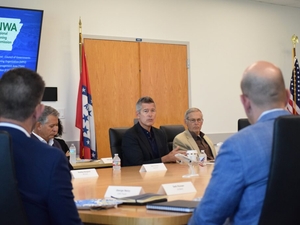
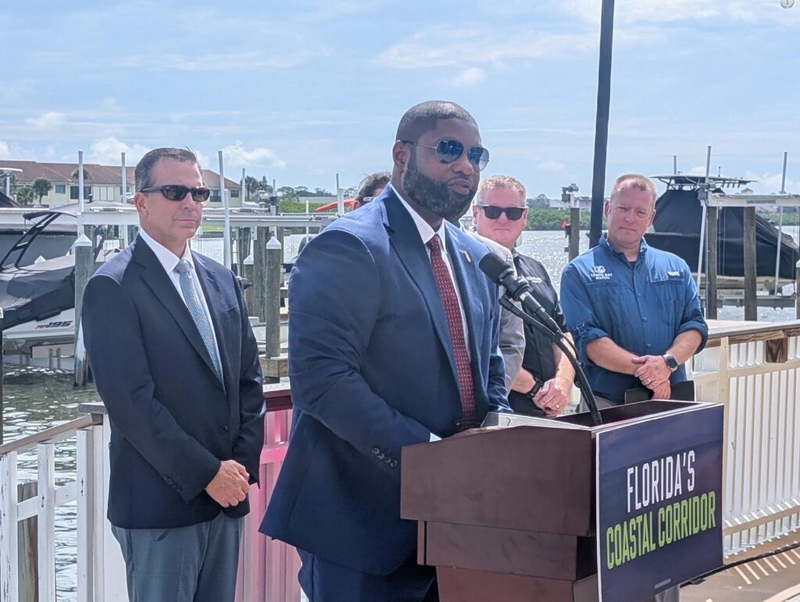
Florida GOP gubernatorial candidate Byron Donalds speaking at Caddy's in Indian Shores on Oct. 5, 2026. (Photo by Mitch Perry/Florida Phoenix)
INDIAN SHORES — While the environment has not taken much prominence in the race for governor, public opinion surveys have consistently shown Floridians place high value on issues like marine protected areas and clean waterways.
Declaring that the issue is important to him, Republican gubernatorial candidate Byron Donalds unveiled a “Florida’s Coastal Corridor” proposal Monday that he promised to enact if he gets elected next month. He calls it the marine equivalent of Florida’s Wildlife Corridor, which state lawmakers passed in 2021 to preserve migration paths for animals like the Florida panther.
“Where the Wildlife Corridor connects inland habitats from the north to the south, the Coastal Corridor links and protects our coastal waterways along the Gulf of America and the Atlantic Ocean. It connects them to inland watersheds that feed them,” Donalds announced at Caddy’s in Indian Shores, a waterfront bar and restaurant with clear views on the Intracoastal Waterway in Pinellas County.
The “Gulf of America” is Donald Trump’s preferred name for the Gulf of Mexico.
Donalds said the proposal doesn’t add layers of bureaucracy or regulations and won’t restrict fishing on public access. “Instead, it brings our existing agencies and existing programs and existing authorities under one coordinated, operational plan,” he said.
As announced on Monday, the proposal would:
- Using Florida’s Seafloor Mapping Initiative and state habitat monitors, “target every taxpayer dollar where it delivers the highest ecological and economic return.”
- Execute scientifically sound habitat investments, deploying artificial reefs, rebuilding oyster bars, replanting seagrass beds, restoring living shorelines, and propagating coral. “These projects restore fish habitat while building natural storm protection for our coastal communities,” he said.
- Future land conservation to protect coastal headwaters would be 100% voluntary, “working through willing sellers to sell the easements under proven tools like Florida Forever.”
Florida Forever has been considered the state’s biggest conservation and recreational lands acquisition program, established by the Florida Forever Act of 1999. Since it began in 2000, it has allowed the state to purchase more than 1 million acres of land.
However, the Legislature declined to provide any funding for the program this year. Instead, lawmakers redirected millions of dollars previously dedicated to land acquisition in the Florida Wildlife Corridor towards other projects, including $425 million for the Rural and Family Lands Protection Program, which allows agriculture landowners to permanently preserve their land from development but doesn’t require public access.
Citizens’ initiative blocked
Concerns about the state’s waterways is what has led a group of environmental advocates to push for a proposed “Right to Clean and Healthy Waters” constitutional amendment. Efforts to get that proposal on the 2026 ballot were scuttled in 2025 following passage of legislation (HB 1205). That law created major barriers to citizen-led initiatives gathering the required signatures, the result being that no citizen-led constitutional amendments made it to the November 2026 statewide ballot.
The campaign behind the Right to Clean and Healthy Waters says participants hope to regroup to restart a similar campaign for the 2028 fall election.
Democratic gubernatorial candidate David Jolly has spelled out some of his plans for those who live in coastal communities and Florida’s water quality crisis on his campaign website. It says his plan “ties water quality to broader environmental investment.”
“Blue-green algae crises are addressed by reducing discharges of nutrient pollution to our coastal waters, and springs degradation is addressed through septic to sewer conversations, agriculture runoff rules, and groundwater protection. Protecting Florida’s coast requires changing what flows into it.”
A number of mostly Pinellas-based state and federal lawmakers joined Donalds at his press conference, including U.S. Rep. Anna Paulina Luna, state Sen. Nick DiCeglie, and state House members Berny Jacques and Toby Overdorf.
Tallahassee, FL