Bill to regulate kratom sales and ban synthetic compounds passes Pa. House
Oct 05, 2026 | 6:27 pm ET
Description
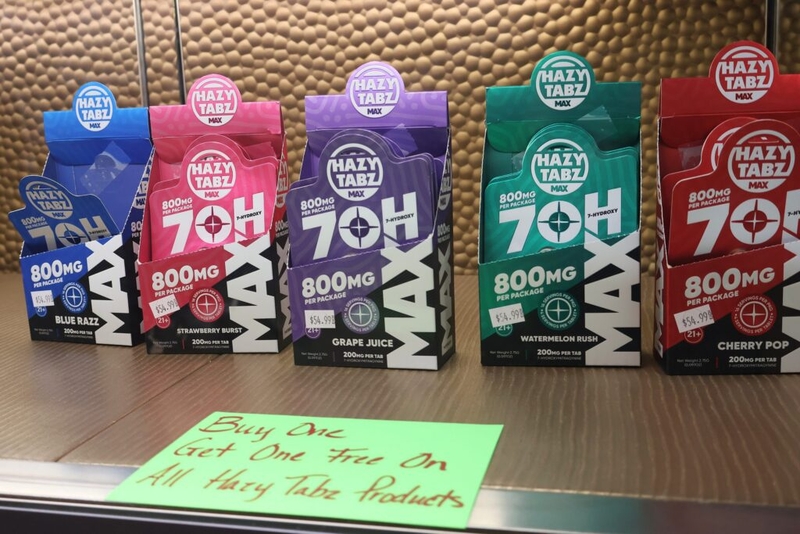
7-OH products, a concentrated synthetic kratom derivative, are displayed at a retail store in Bismarck on Aug. 5, 2026, hours before a state ban took effect. (Photo by Michael Achterling/North Dakota Monitor)
Members of the Pennsylvania state House voted unanimously Monday to pass a bill that would regulate natural leaf kratom products and ban the sale of synthetic compounds derived from the substance.
“This legislation is not about pretending that kratom is risk-free,” said the bill’s sponsor, Rep. Bridget Kosierowski (D-Lackawanna). “It is about acknowledging the reality that kratom is already here, and establishing rules that make the marketplace more transparent and accountable. We should not have to choose between doing nothing and criminalizing use. There is a responsible middle ground we can establish.”
Kratom is an intoxicating substance that can be purchased at gas stations, smoke shops and corner stores across Pennsylvania and much of the country. In recent years, its popularity in America has exploded, as has the number of states that regulate its sale.
It’s made from the leaves of a tree native to southeast Asia, where its been used for medicinal, ceremonial and recreational purposes for centuries. Its primary active ingredient, mitragynine, acts on the brain’s mu-opioid receptors, much like painkillers and other narcotic opioids.
Health experts, lawmakers push for Pa. kratom regulation; proponents warn they’ll fight a ban
Kratom leaves also contain trace amounts of a more powerful psychoactive compound called 7-hydroxymitragynine, or 7-OH, which also produces opioid-like effects.
In small doses, kratom acts as a stimulant, but in large doses more as a sedative. Public health experts and addiction treatment specialists warn that, while it appears to be far less likely to cause overdoses than more regulated opioids like heroin, it can still be addictive. And little research is available on the long-term health impacts of ingesting kratom or its interactions with other drugs.
In recent years, the number of kratom-related calls to poison control centers and overdoses involving the substance, whether taken alone or in combination with other drugs, have grown.
That’s in part because of the increasing availability of products containing synthetic compounds derived from kratom that are designed to be far more potent than the leaf itself. Products containing high levels of 7-OH, made by extracting it from kratom leaves, have also grown in popularity and availability.
But experts warn even in natural leaf form, kratom can still be addictive. Treatment specialists say it is becoming more common to receive patients seeking help with kratom addiction, even experiencing withdrawal symptoms that resemble other opioid users. It is not clear how many of those patients are using natural leaf kratom or more powerful, synthetic compounds.
Some kratom advocates, however, say the product has been beneficial for people seeking to wean themselves off more dangerous opioids. But doctors warn there is little data on its efficacy compared to other treatments that can be prescribed by doctors like suboxone or buprenorphine. Compared to those medications, kratom’s halflife is far shorter, meaning users may begin to experience withdrawal every three to six hours after ingesting it.
What would the regulations do?
The legislation passed by the house would continue to allow only the sale of products made from natural kratom leaf in powdered or capsule form by vendors who register with the state. It would also ban the sale of the kratom to anyone under 21 years old.
The bill also contains strict packaging requirements.
Packages would have to include the manufacturer’s name and address, a warning that the products have not been evaluated by the U.S. Food and Drug Administration (FDA) and not contain any medical claims. They would also have to be child resistant and not designed to appeal to minors.
As it stands, a lack of labeling standards means it’s not always clear what users are receiving when they purchase products labeled as kratom.
Kratom products would be taxed at 12%, and the revenue would be directed into funds to ensure the legislation’s enforcement.
The measure would establish criminal penalties for would-be sellers who violate the new rules, as opposed to individual users.
The bill would still have to work its way through the state Senate before the end of the legislative session and receive the governor’s signature to become law.
Spokespeople for Senate Majority Leader Joe Pittman (R-Indiana) and Senate President Pro Tempore Kim Ward (R-Westmoreland) did not immediately respond to requests for comment.
The state Senate has only seven days scheduled for the rest of the legislative session.

Harrisburg, PA