Child dies from bacterial infection, state health department reports
Oct 05, 2026 | 6:52 pm ET
Description
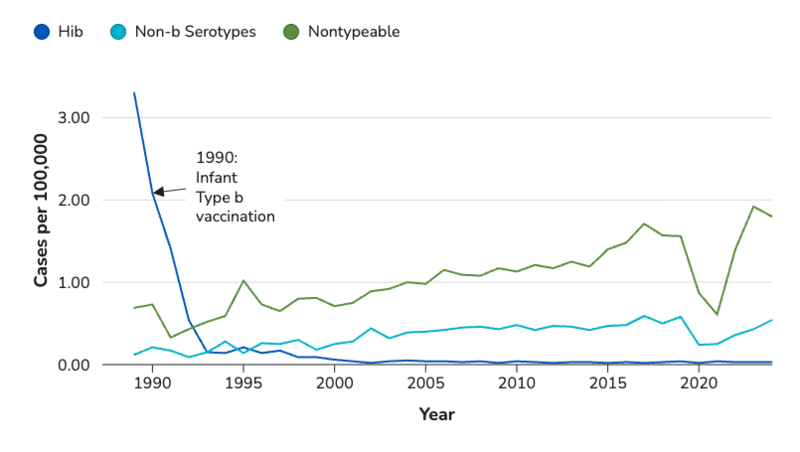
CDC data on H. influenzae disease cases. A vaccine exists for Hib, or type b. (Screenshot of CDC site on Hib)
A child died last month from complications of the invasive Haemophilus influenzae type b (Hib) infection, the Montana Department of Public Health and Human Services reported Monday.
H. Influenzae is a bacterium that can cause mild ear infections and also severe infections, including ones in the bloodstream, pneumonia and meningitis, the health department said.
It spreads through coughing or sneezing, according to the U.S. Centers for Disease Control and Prevention.
The CDC said Hib vaccination began for children in 1987 and for infants in 1990, and since then, type b cases in children decreased by 99%.
In a statement from the health department, Douglas Harrington, state medical officer, said the tragedy in Montana is a reminder the disease still exists “and can have devastating consequences.”
“I encourage Montana parents to consult with their medical provider to keep their child up to date on all recommended vaccines, including the Hib vaccine,” Harrington said.
The health department is not releasing the age, gender or county where the child lived.
“Vaccination protects against one type of H. influenzae, commonly called Hib,” the news release said. “This patient had not received the Hib vaccine. Hib vaccination recommendations vary based on age, vaccination history, and certain medical conditions.”
A news release said Montana has recorded four other pediatric deaths since 2012 due to the invasive H. influenzae, but none of those were identified as type b. It said vaccines are not available for other strains.
The CDC recommends Hib vaccination for all children younger than 5 years old. The news release said older children and adults usually don’t need the Hib vaccine unless they have certain medical conditions.
“Hib and other recommended childhood vaccines are available at no cost for eligible Montana children through Vaccines for Children providers statewide,” the news release said.
To find a Vaccines for Children provider, contact the Montana Immunization Program at (406) 444-5580.
Helena, MT