Nonprofits to erase $34 million in medical debt for 21,000 Kansans
Oct 05, 2026 | 6:15 pm ET
Description
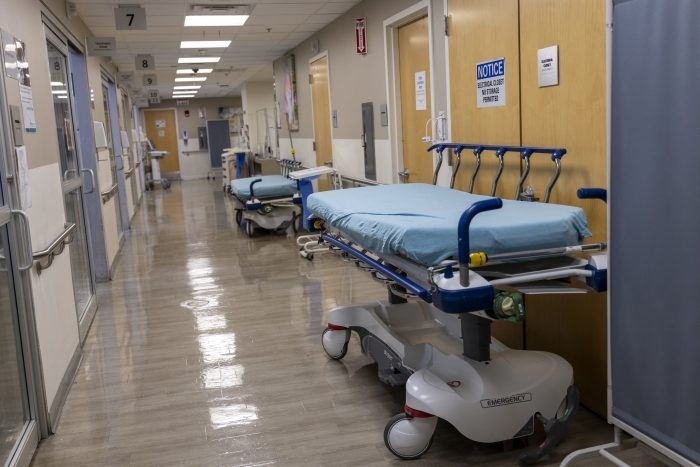
A pair of nonprofits announce sweeping medical debt relief for nearly 21,500 Kansans. (Photo by Anne-Marie Caruso/New Jersey Monitor)
TOPEKA — More than 21,000 Kansans are set to receive a letter this month notifying them that their medical debt has disappeared.
A pair of nonprofit organizations announced they will abolish nearly $34 million in medical debt for 21,490 Kansans who meet certain criteria in a large-scale, one-time economic relief initiative.
“This isn’t actually about medical debt,” said Melissa Morales, founder of Somos Votantes and a native Kansan. “This is about a broken healthcare system that people can’t afford.”
The mechanics of erasing $33.9 million in medical debt in Kansas began with a partnership between the national nonprofit Undue Medical Debt, which acquires medical debts in bulk from providers and collection agencies for pennies on the dollar, and Somos Votantes Education Fund, a nonpartisan civic engagement organization that donates to abolish the debt. On average, one dollar donated erases $100 in medical debt, according to an announcement from the two organizations.
Kansas is the first in the partnership’s history to receive statewide medical debt relief for low-income Kansans. The two organizations abolished $133 million in medical debt for more than 128,000 people in select counties in Nevada in 2025 and this year are expected to eliminate $240,000 in utility debt in Michigan. Each effort is part of the education fund’s Seeds of Relief program.
Eligible people in Kansas include those with medical debts that are 5% or more of their annual income or people who earn less than four times the federal poverty level, which totals about $100,000 for a family of three.
They will receive letters branded with Undue Medical Debt’s information beginning the week of Oct. 19 that will indicate which debts have been forgiven. No action has to be taken.
“Nobody chooses to have medical debt,” Morales said. “Nobody chooses to get sick.”
She said she hopes the debt relief brings “a little bit of breathing room” for Kansans. Morales, who is from Liberal, founded Somos Votantes, a Latino voter outreach organization. The medical debt initiatives from the organization’s philanthropic arm, Somos Votantes Education Fund, is nonpartisan, Morales said, helping families regardless of party or affiliation.
“At Somos, we believe a medical bill shouldn’t be the reason someone can’t pay rent or put food on the table, but that’s the reality for too many hardworking Kansans right now,” Morales said in an announcement. “Somos will step in for working families when no one else will.”
She said additional relief in other states is planned for next year.
As of 2024, 36% of U.S. households had medical debt, according to research published in the University of Oxford Press. Healthcare costs have remained in 2026 near the top of people’s list of financial worries, according to polling by KFF, a health policy research and news organization. Six in ten people told the organization they are “very” or “somewhat worried” about affording healthcare for themselves and their families, which included insurance and out-of-pocket costs.
In Kansas, medical debt has become a political hot topic after the New York Times reported in September that U.S. Sen. Roger Marshall, a Republican running for reelection in November and a former OB-GYN in Great Bend, sued hundreds of patients for medical debt and had dozens arrested for failing to respond to their collections cases in court. Kansas Reflector reported in July about aggressive collections actions by a Topeka hospital against people who qualified for free care.
Allison Sesso, president and CEO of Undue Medical Debt, said families are increasingly squeezed between bills, groceries and rising costs.
“Medical debt, or fear of accruing it, shouldn’t prevent anyone from seeking the care they need,” Sesso said, “and I’m hopeful that removing these burdens in Kansas empowers families to re-engage with the healthcare system and put their health first.”
Topeka, KS