Build pathways home: Why Michigan’s college-in-prison expansion matters now
Apr 22, 2026 | 12:31 pm ET

Description
Epic Images/iStock Getty Images
Michigan can show the country what it looks like to treat higher education in prison as a public good, one that strengthens families, communities, and the workforce. We know that not as a slogan, but as people who have had to build our lives on the other side of incarceration. We are both justice impacted, and we’ve both seen what happens when someone is finally offered a real opportunity to learn.
For Dr. Kinzel, that opportunity started late in his criminal sentence, when he got access to a few college courses. He didn’t walk in thinking he was destined to be a scholar. What he did have was resilience. And when he started earning A’s, something shifted: proof, that he could excel in a space society had told him wasn’t for him. Education didn’t erase what he’d been through, it opened a door he could walk through with purpose and restore the agency he’d lost.
For William too, the stakes were personal. He was incarcerated and today he leads EdTrust’s Justice Fellows program, directly supporting justice impacted leaders across the country who are changing how institutions, policymakers, and funders think about education and workforce opportunities for justice-impacted Individuals. Education isn’t just “information in books.” Its value is connected to human beings and what learning makes possible in their lives.
That’s why Michigan’s moment right now matters so much. The Michigan Consortium for Higher Education in Prison (MiCHEP) reports that 1,300 incarcerated college students are enrolled across 14 Michigan colleges operating in 17 correctional facilities and, just as importantly, that another 3,000 prospective students are on waiting lists.
Power concedes nothing without demand and thousands of Michiganders have raised their voices.The public conversation often treats education in prison as a debate about whether people “deserve” it. This framing misses the point and lets systems’ off the hook. The better question is whether Michigan is serious about building communities where more people come home ready to contribute, provide, and thrive. One of the most cited analyses, a RAND meta-analysis of correctional education, found that people who participate in correctional education have 43% lower odds of recidivating than those who do not, translating to a 13-percentage-point reduction in the risk of returning to prison.
Michigan’s own Department of Corrections has reported a 21.0% recidivism rate, the lowest on state record, measuring how many people return to prison within three years of parole. Real equity requires quality and follow-through.
Richard Ray, who chairs MiCHEP’s steering committee, offered a standard that should guide the next chapter of this work: whether an incarcerated student’s college experience is “more like than unlike” that of his/her non-incarcerated peers on the main campus. Do incarcerated students have advising and career counseling? Do they have meaningful library and technology access? Michigan is already making choices that push toward that standard. Ray described an approach that is still too rare nationally: “Michigan’s system emphasizes in-person instruction and relationships with professors, not a downloadable model.”
He also pointed to creating student-centered policies that help people actually reach degree completion, including transfer pathways to state colleges and universities upon release.
We also heard directly from Heather Gay, Education Manager at the Michigan Department of Corrections, and her message was clear: “MDOC isn’t treating higher education in prison as a side project, it’s building for scale and signaling long-term commitment.” Gay framed MDOC’s approach as “an equity and quality commitment, not a watered-down version of college,” saying “The Department ensures incarcerated students are going to get the same education that they would if they were on their other campus, including face-to-face instruction.”
Michigan is also attracting investments to build durable capacity. In January 2026, the Michigan College Access Network announced a three-year, $750,000 grant from the Mellon Foundation to strengthen and expand higher education in Michigan’s prisons and support MiCHEP as a statewide leader.
From where we sit, as formerly incarcerated and as people working every day alongside justice-impacted leaders, Michigan has to do three things at once: expand programmatic access so the waiting list of students shrinks and protect quality, so expansion doesn’t turn into watered-down programming that fails students.
Michigan also must connect education to real post-release opportunity, because education without fair access to employment is a broken promise. As William put it bluntly; “We can educate people 5,000 times over, but if they can’t get hired, and can’t earn enough to live, then what was the point?”
Michigan is leading the way. Now the state must decide whether it will lead with scale and equity, or whether it will leave thousands of ready students on the sidelines. The demand is visible. The evidence is strong.
Michigan can keep building an education system that doesn’t end at the prison gate but invests in human potential and true workforce outcomes.
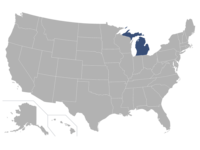
Lansing, MI