A bridge, a stadium, a leadership center: How the SC House spends more than $300M locally
Jul 10, 2026 | 9:00 am ET
Description
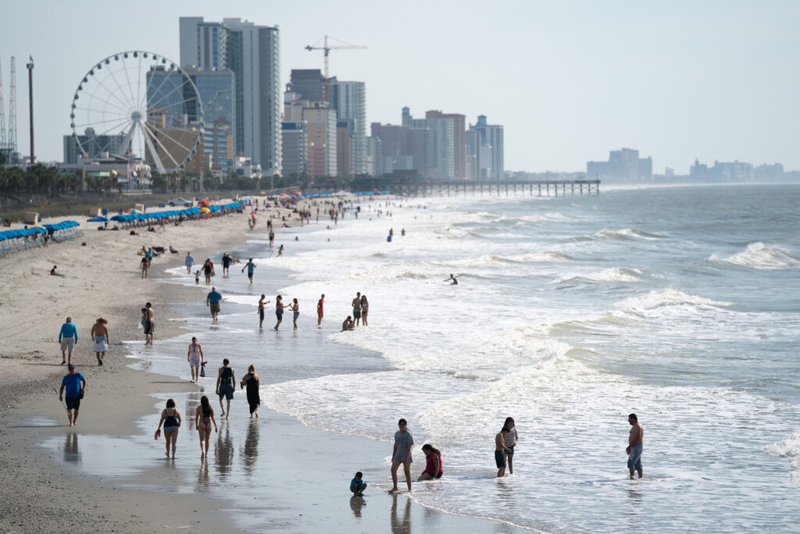
Money to revitalize downtown Myrtle Beach is again one of the House's largest earmarks in a state budget that legislators are still negotiating. In this photo, people walk along the beach the morning of May 29, 2021, in Myrtle Beach. (File photo by Sean Rayford/Getty Images)
COLUMBIA — A historic bridge, improvements to Myrtle Beach’s downtown and a center to learn about Medal of Honor recipients are the top recipients of more than $300 million the House wants to spend on local projects.
The House’s list of legislator-sponsored allocations, called earmarks, is a major sticking point in the ongoing negotiations over state spending. More than a week after the new fiscal cycle began, the state has no new budget in place, relying instead on amounts approved last year.
Senators, who set aside more than $130 million for their own projects, want to use at least part of the House’s earmark money to expand a property tax break for homeowners 65 and older. House members, who declined to take up a bill doing just that, would rather that money go toward projects in their districts.
A six-person negotiating committee is expected to return Tuesday, with the intention of having a budget deal. If they manage to sign a compromise, it’s still unclear when the entire Legislature would return to vote.
What’s in the House earmarks?
The largest single item on the House’s list of 303 projects is $10 million to resurface the Socastee swing bridge, a nationally recognized historic structure in Horry County that pivots around a horizontal axis to allow boats to pass.
The 91-year-old bridge, which helps connect Conway to the Grand Strand, is due for regular upkeep that takes place every decade or so, said Rep. Val Guest, who sponsored the project alongside fellow Horry County GOP Rep. Heather Crawford. Since people who live on either side of the Intracoastal Waterway rely on the bridge to get back and forth, making sure it stays up to code is essential, he said.
“It’s an earmark to keep that open and safe,” Guest said.
Just one other project could get the same amount: Columbia’s planned development alongside the Congaree River. The House and Senate each put $5 million toward plans for a public park and shopping center that city leaders plan to build on roughly 100 acres of untouched property.
But on the House list specifically, six of the 10 most expensive projects are on the coast.
Its second biggest amount is nearly $8.3 million for continued improvements to Myrtle Beach’s downtown area. Two years ago, the House and Senate spent a combined $10 million to revitalize the city’s downtown and partner with companies to test new technologies.
Rep. Case Brittain, a Myrtle Beach Republican who again requested money for the project, said in 2024 he asked for $75 million to go toward a complete overhaul of the area, including fixing roads, laying new sewer pipes, renovating historic theaters and revamping the now-closed Myrtle Beach Pavilion amusement park.
It’s among the “infrastructure and streetscapes” projects on the House list, which tally about $58 million total — making it the highest category of proposed spending.
Other projects include $4 million for improvements to city buildings in Inman, near Spartanburg, and $2.5 million to expand the Sumter County Airport’s terminal.
Recreation projects rank second by category, with nearly $42 million total of spending that includes public parks and community centers. Nearly $38 million is proposed for water transmission improvements.
Nonprofits and regional spending
Unlike the Senate’s list of earmarks, which designates money to local governments only, the House renewed state spending to nonprofits.
Nonprofits have faced particular scrutiny, with some money going toward groups with little history.
Cities and counties tend to have more oversight and experience to ensure the money is spent the way legislators intend, Senate Majority Leader Shane Massey, R-Edgefield, said previously.
The budget approved last year contained no earmarks. A stunning declaration from Senate Finance Chairman Harvey Peeler that he would not approve any was followed by a joint statement with House Ways and Means Chairman Bruce Bannister supporting a hiatus from the local spending.
SC Senate budget includes $130M for local projects, but zero earmarks for nonprofits
This year, while Peeler didn’t want to spend money in the budget on charities, there was no joint commitment from the chambers’ chief budget writers.
Some mainstays from past spending plans again made the list. Among them are zoos in Greenville and Columbia, which could collectively receive $3.3 million; New Morning Foundation, which offers free and low-cost birth control, could get $1 million; and United Way of the Midlands, which could receive $500,000.
The nonprofit set to receive the most funding is the National Medal of Honor Center for Leadership, which the House plan gives $7.9 million to help build a center at Patriots Point in Mount Pleasant, home to the USS Yorktown and the Congressional Medal of Honor Society.
The organization has fundraised for years, including receiving $11 million in state funds, to build a $75 million educational center where recipients of the nation’s highest award for valor in combat can share their stories and the skills that got them to where they are.
Rep. Joe Bustos was one of five legislators to sponsor funding this year for that project, but when reached this week, he questioned whether earmarks in general were the best use of taxpayer dollars.
When legislators return, they should scrutinize their spending to determine whether projects benefit the state as a whole or just one area, the Mount Pleasant Republican told the SC Daily Gazette. He declined to say whether he felt the projects he requested met that standard.
“I, for one, feel that if it’s monies collected for the state budget, everyone should get a share of that,” the Mount Pleasant Republican said.
State funding can be a boon for smaller, more rural communities, said Rep. David Vaughan of Greenville County, who is sponsoring about $8 million in projects. Some of them, such as a stadium in Mauldin set to receive $6 million, can have an outsized impact on the surrounding area, he said.
Previous budgets included $10 million for the Upstate stadium. The House plan includes the full amount Vaughan requested this year, which should get the project across the finish line, he said.
The stadium, which will act as the home field for the Greenville Triumph and Greenville Liberty soccer teams, opened last month. Work continues to complete the 6,300-seat venue and make the place suitable for high school championships, concerts and any other events that want to stop there, Vaughan said.
“It’s not just for Mauldin and Simpsonville, even though they’re the immediate beneficiaries,” Vaughan said.
Vaughn said the money he sponsored won’t make or break projects in the state’s most populous county, but infusions of cash can speed up projects, saving taxpayers money as costs rise.
For instance, he sponsored $1 million to improve roads in Simpsonville as the once-rural area near Greenville grows in population. The city will find some way to get the work done, but the price of roadwork grows with each passing year, he said.
“It’s not like we’re asking the state to build it because we have no money,” Vaughan said. “It’s just a little help. We’re just asking for some help in getting it done and maybe getting it done quicker.”
As legislators argue over property taxes and earmarks, SC begins fiscal year with no new budget
A budget sticking point
The property tax cut and earmarks are far from the only difference between the two spending plans, but lead budget writers called them the biggest sticking points during a June 30 meeting.
The additional break for older homeowners is expected to cost about $248 million in its first year. That money would be distributed to counties to make up for their lost revenue, since property taxes go to counties, not the state, for local government expenses.
Legislators don’t have enough money to fund both that and more than $450 million collectively in local projects after paying for other needs, senators said.
Because of how the budgeting process works, legislators looking to cut down on earmarks face all-or-nothing decisions on which projects to slash, leaving little room for compromise, Sen. Tom Davis, a Beaufort Republican on the negotiating committee, told reporters June 30.
Senators also raised concerns about transparency, saying they had to guess based on several-word descriptions what the money would pay for.
Bannister declined to delve into the specifics of the debate over earmarks when talking to reporters June 30, pointing to the ongoing negotiations between the House and Senate. The Greenville Republican didn’t respond to a call from the SC Daily Gazette to discuss his own projects included on the list, which totaled about $21 million.
Part of Peeler’s insistence last year to skipping earmarks altogether was to rein in spending on local projects. In 2024, legislator-sponsored spending in the budget tallied more than $430 million, and the year before that, earmarks hit $713 million.
Guest, who is not a member of the negotiating committee but signed onto $14 million in projects, said the Senate’s reluctance to include the House’s earmarks surprised him, since both chambers agreed to include the spending again this year.
“I’d say it’s the twelfth hour, but that’s passed,” the Murrells Inlet Republican said. “Now, we’re on the fourteenth hour.”
Columbia