Bribery Case: What It Would Take To Extradite Lobbyist Back To Hawaiʻi
Sep 16, 2026 | 6:01 am ET
Description
Photo courtesy of Honolulu Civil Beat
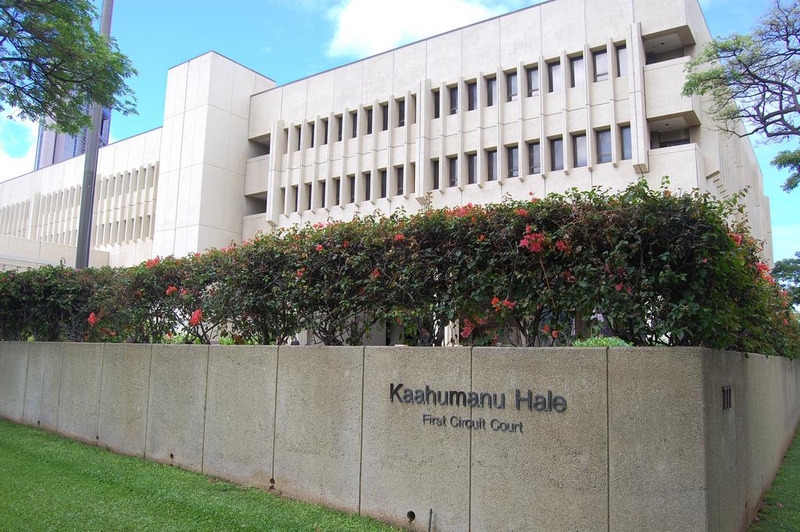
When Lt. Gov. Sylvia Luke and her co-defendants were arraigned on bribery charges and related counts in July, one key player was missing from the courtroom — Tobi Solidum.
Solidum was indicted along with Luke and three other political figures in the latest state corruption scandal, this one centered on alleged bribes to influence lucrative Covid-19 contracts.
Solidum, a lobbyist and businessman who profited greatly from those contracts, is the one who did the bribing, prosecutors say. But he is in the Philippines and has not returned to face charges: conspiracy to commit bribery and three counts of bribery of a public servant.
Prosecutors could initiate an extradition process that would have Solidum arrested and brought back to the United States to face charges, experts say, but that's far from a guarantee. Toni Schwartz, spokeswoman for the AG’s Office, declined to comment.
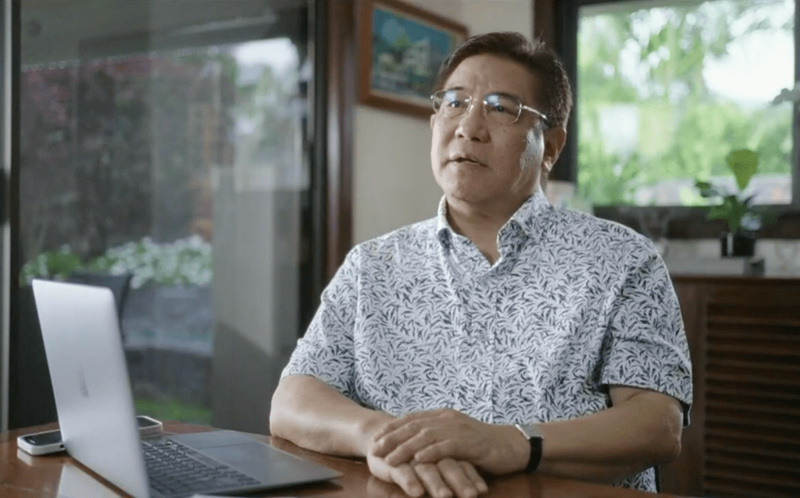
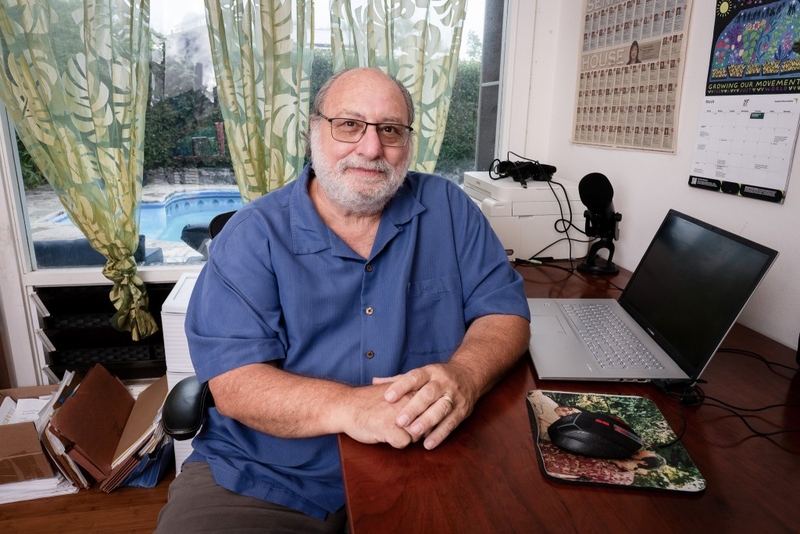
Ali Silvert, a former federal public defender who called on the Legislature to open an investigation into the bribery allegations, said Solidum’s presence or absence during a future trial could greatly influence the outcome. Whether he comes back to the U.S. voluntarily or through extradition, it’s in the state’s best interest to have him here, Silvert said.
Solidum, according to the indictment filed by state prosecutors in July, is accused of bribing Luke, then state-Rep. Ryan Yamane and Ford Fuchigami, who at the time was working for the Senate Ways and Means Committee. The bribes, given between 2020 and 2022, were allegedly meant to spur the officials to act on bills and budget appropriations that would direct millions of dollars in Covid-19 funds toward a foundation Solidum was involved with.
Luke, who at the time was a state representative and chair of the House Finance Committee, is charged with accepting campaign contributions in return for actions she took to arrange state money for a Covid-19 testing effort run by Solidum, according to the indictment. Solidum and his stepdaughter contributed $10,000 to her campaign for lieutenant governor. Solidum also promised to give her $35,000 in donations, part of a total of $70,000 he said would come later, though it’s unclear from the indictment if that money ever materialized.
Yamane is charged with personally accepting about $4,500 in bribes from Solidum to influence legislation. Fuchigami is charged with taking $7,000 prosecutors say Solidum gave him to spur him to act on budget appropriations. Fuchigami was a budget analyst for the Senate Ways and Means Committee, a position that gave him in-depth knowledge of the state’s general fund budget. Leo Asunción, Luke’s former campaign treasurer, is also charged with filing false campaign finance reports that failed to disclose the $10,000 in donations Luke received from Solidum and his stepdaughter during a 2022 dinner.
Victor Bakke, a Honolulu attorney representing Solidum, declined to comment.
The trial, which was originally set for Sept. 28, has been delayed nearly a year, to Aug. 2.
Extradition is a lengthy, often costly process that would depend on approval from the U.S. Department of Justice and the Philippines, said Diane Peress, an adjunct professor at John Jay College of Criminal Justice in New York City and a former prosecutor in New York.
“The state owes it to its citizens to pursue a case, especially of public corruption, as far as it can,” she said. “If the federal government, for whatever reason, decides not to do it, or the Philippines decides, ‘We're not sending this guy back,’ it's out of our hands.”
How It Works
All requests for extraditions, whether from state or federal prosecutors, must go through the Department of Justice’s Office of International Affairs.
The office evaluates extradition requests based on a number of criteria, including whether the U.S. has an extradition treaty with the country and whether the crime the defendant is charged with in the U.S. is considered a crime in the other country, Peress said. The Department of Justice also needs verification that the person is in that country.
Prosecutors must submit documents including an affidavit explaining the facts of the case, copies of the statutes that have been violated, the defendant’s arrest warrant and evidence they used to build their case against the defendant, according to the Department of Justice.
Ultimately, the Department of Justice will have to decide if the extradition is worth pursuing, Peress said. If so, the request goes to the Department of State, which also has to sign off.
If the other country agrees to cooperate, it’s up to its local law enforcement to arrest the defendant and hold them in custody until agents from the U.S. Marshals Service can take charge. How fast the arrest happens often depends on the severity of the crime or the political will of the country to track down the defendant.
James Siugpiyemal, a former Maui correctional officer charged with sexually assaulting a female inmate, fled to the Federated States of Micronesia around the time of his indictment in 2014. It took two years for authorities to track him down in the state of Yap.
Police in Yap arrested him in 2016, according to HNN, and he was extradited to the U.S. for trial. He was found guilty of three counts of sexual assault in 2017.
The Cost Of Extradition
The cost of extraditions can vary widely and how much of the bill is covered by the federal government depends on the case.
In federal cases, the U.S. Marshal’s Service usually pays some of the cost, according to the Department of Justice. But in state cases, the states themselves are usually responsible for the costs, which can include translation services, shipping of documents and flights.
In the case of Siugpiyemal, the extradition cost the state just $685 for airfare and living expenses for two police detectives to accompany U.S. Marshals on the trip, according to court records. That total doesn’t include any costs incurred by the federal government.
But other extraditions have been much more expensive.
In 1994, Raita Fukusaku became the first Japanese national to be extradited to the U.S. He was charged with fatally shooting a Honolulu fortune teller and her 20-year-old son.
The cost of his extradition isn’t available in court records, but attorney Myles Breiner, who represented Fukusaku, said it may have added up to more than $10,000. The extradition involved sending two police detectives and then-prosecutor Keith Kaneshiro to Japan to negotiate the terms, he said.
Before Fukusaku’s extradition to the U.S., it had been Japan’s policy to try its citizens on their home soil for crimes committed in another country, Breiner said.
Fukusaku was ultimately convicted and sentenced to two consecutive life terms. He was found dead at Halawa Correctional Facility in 2024 after being beaten and stabbed by another inmate.
Whether a person is extradited can also be influenced by diplomatic relationships and internal politics in the other country, Peress said.
One example is the case of Apollo Quiboloy, a mega-church pastor with ties to Hawaiʻi who was indicted on child sex trafficking charges in California in 2021. The Department of Justice only asked the Philippines for his extradition last month after a change of leadership there.
Quiboloy was arrested by Philippine authorities in 2024 following a dramatic, two-week standoff at his compound in Davao. Throngs of his supporters formed a human wall to try to prevent police and military officials from arresting him. He ultimately surrendered and has been in custody in Manila ever since.
Quiboloy is also facing sex trafficking charges in the Philippines. Defendants normally have to finish their trials and serve their sentences in the Philippines before they can be extradited, but the county’s treaty with the U.S. says they can be temporarily surrendered to the U.S. before their Philippines case is resolved if the court allows it.
Honolulu attorney Michael Green, who is part of Quiboloy’s U.S.-based legal team, said Quiboloy is much more likely to be extradited now that former Philippines President Rodrigo Duterte is no longer in power.
Quiboloy was a close friend and spiritual adviser to Duterte, who stepped down from the presidency in 2022. Duterte himself was arrested in 2025 on murder charges by the International Criminal Court in connection to his violent crackdown on drug dealers in the Philippines that led to thousands of deaths.
The current president, Ferdinand “Bongbong” Marcos, is likely to favor extraditing Quiboloy because Marcos has a much friendlier relationship with the U.S., Green said.
Bringing Solidum Back
The state has other options besides extradition, Silvert said.
As things stand now, if Solidum entered the U.S., he’d be arrested on a warrant that orders him to be held without bail. But prosecutors could offer him a deal to come back to the U.S. and testify as a cooperating witness, he said.
“Come back, we’ll give you probation if you testify and cooperate,” Silvert said. “Now, that might be a strong incentive for him to come back.”
But Solidum may want guarantees from federal prosecutors as well. They have been investigating the bribery scandal since 2022, and their statute of limitations to bring charges does not run out until next year.
It’s possible that federal prosecutors, too, could ask the Department of Justice for Solidum’s extradition, which would give the request more weight, Silvert said.
Peress said she isn’t sure if the Department of Justice under the administration of President Donald Trump would prioritize an extradition on corruption charges.
The Department of Justice last year slashed its public corruption division, and leaders of the unit had already resigned after a top official directed them to drop a case against then-mayor of New York City Eric Adams. Adams was charged with accepting more than $100,000 in bribes from Turkish business executives and government officials and soliciting illegal campaign donations from foreign nationals.
Considering the administration’s seeming unwillingness to go after corruption defendants, department officials may not see Hawaiʻi’s case against Solidum as serious enough to warrant an extradition, Silvert said.
“I've been told by a lot of people involved in federal prosecutions and on the mainland that, why are we making such a big deal over $35,000?” he said. “That in the scheme of corruption, and we've seen it on the national level, this is small potatoes, and the DOJ might see it the same way.”
If Hawai’i can’t get Solidum back for the trial, it could have negative implications for the state’s case against the other defendants, Silvert said.
“We’re led to believe that Tobi Solidum is the most culpable person involved, that he’s at the center of this,” Silvert said. “If he's not at the trial, the jury's always left with, well, why should we convict these lesser players if the main player isn't going to get convicted?”
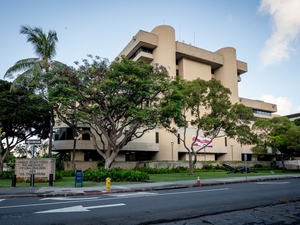
Honolulu, HI