‘We Were The Guinea Pigs’: How Smokable Meth Made Its U.S. Landfall In Hawaiʻi
Sep 17, 2026 | 6:01 am ET
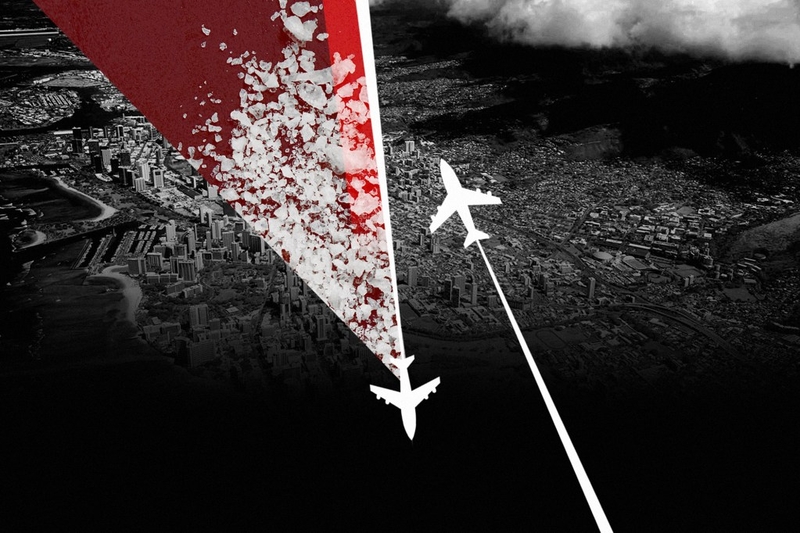
Description
Photo courtesy of Honolulu Civil Beat
This is the second part in an ongoing series exploring Hawaiʻi’s methamphetamine crisis. Read the first story here.
In 1983, police in Hawaiʻi warned that the Hells Angels might be trying to get a toehold in the islands.
No one was sure why the notorious biker gang wanted to come here – but one possibility was summarily rejected by a California expert quoted in a story in the Honolulu Advertiser.
“There doesn’t seem to be a big Hawaiʻi market for the methamphetamines the Angels are said to manufacture.”
The Angels didn’t appear. But a new kind of meth pioneered by organized crime rings in Asia soon did.
A few years later, Joseph Giannasio witnessed what happened next as the medical director of the 20-bed Castle Alcoholism and Addiction program in Kailua.
Most of the patients in the years before had been struggling with cocaine or alcohol addiction. Now, that started to shift. More and more were showing up because of their compulsive use of a new, smokable form of methamphetamine.
It was called batu, shabu, chandeliers – and, most commonly, ice.
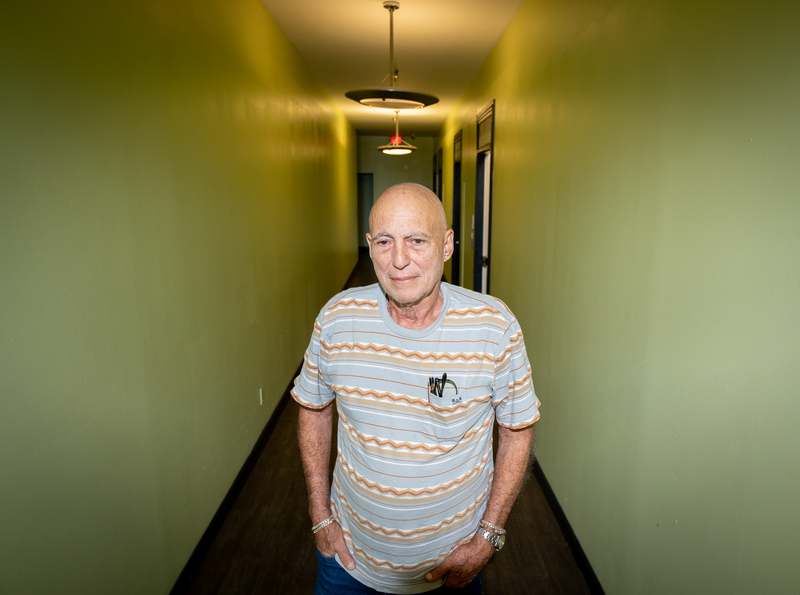
The new drug was putting pressure on the capacity of the Castle inpatient program, and Giannasio could see its devastation everywhere.
“At one point, I believe, every hostage situation in Hawaiʻi, where people would lock themselves in their apartments threatening to kill everybody – all methamphetamine,” Giannasio said.
Soon the entire U.S. was riveted by what was happening in Hawaiʻi, bracing for this pernicious new drug to hop the Pacific Ocean to the continent. The Los Angeles Times, Rolling Stone, the San Francisco Chronicle and the influential investigative columnist Jack Anderson all wrote about it.
About two years into Hawaiʻi’s epidemic, the National Institute on Drug Abuse did what it called an “outbreak investigation.”
While meth in pill and powder form had been around for decades on the continent, “at this time the widespread smoking of methamphetamine appears to be unique to Hawaiʻi,” the drug institute concluded in 1989.
Law enforcement officials were flooded with calls from their counterparts on the mainland asking about the new drug. So was Giannasio.
“I was doing interviews in Europe …,” Giannasio recalls. “They did recordings of me for the national police academies, and I was constantly going to the FBI.
“It got to be extraordinary how much time I had to spend doing that kind of stuff.”
Eventually, Giannasio had to stop saying yes to those requests — they were cutting into his ability to treat addicted patients, more and more of them hooked on ice.
In a few short years, Hawaiʻi had gone from being an unpromising market for meth to the epicenter of this easily used, more potent form of the drug.
Four decades later, the consequences are piling up.
Meth users are dying at unprecedented rates, often from the way years of use have ravaged their hearts. In 2024, 275 people died here as a result of using meth, more than twice as many as seven years earlier. Many more likely died from the ill effects of the drug even though they had not used it in the days before they succumbed and it did not show up in their blood.
A Civil Beat analysis of 100 autopsies of deaths caused wholly or partially by meth found that the victims had interacted with emergency rooms, hospitals, courts and drug treatment programs in the weeks and months leading up to their deaths. Their families sought help — including restraining orders when the drug turned their behavior intolerable — but nothing altered the course of lives careening out of control.
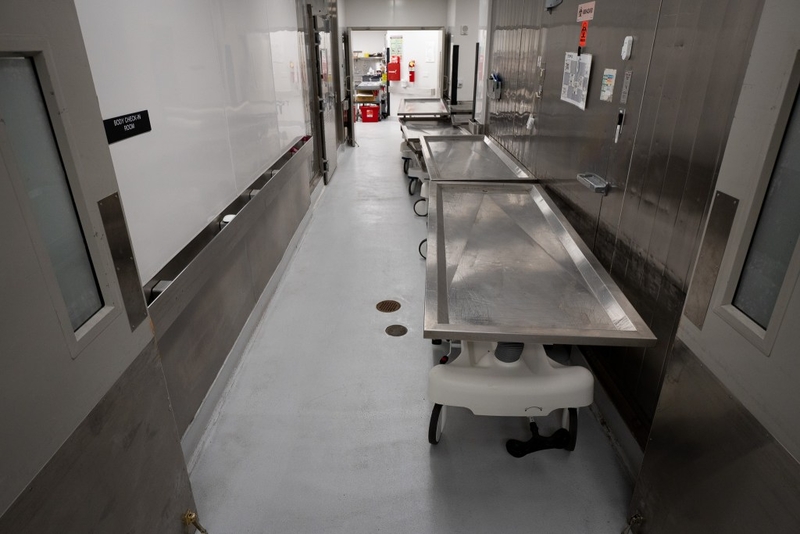
Meth has ripped at the very fabric of life in Hawaiʻi.
It contributes to the state’s stubborn problem of homelessness – both by causing erratic actions that get people banished from their homes, and by rendering others incapable of finding or holding onto sanity, stability and shelter once they’re on the streets, where ice is ubiquitous.
It was identified as a primary cause of the crime wave that prompted the state to start contracting for prison beds on the mainland in 1995. A third of admissions to Hawaiʻi State Hospital in the past year involved patients with a history of meth use.
Drug abuse is a factor in 4 of 10 confirmed child maltreatment cases. More often than not, that drug is ice.
The drug that’s led to decades of social ills in Hawaiʻi took hold seemingly overnight.
‘A Rock-Candy-Like Drug’
A German scientist invented the stimulant amphetamine in 1887, based on the chemical ephedrine found in the ephedra plant that had been used medicinally in China for centuries.
Three decades later, a Japanese chemist streamlined a process to add a methyl group to one of the amphetamine atoms, creating a fat-soluble substance that could pass through the blood-brain barrier more easily, leading to a faster high. It was called methamphetamine.
During World War II, Japanese pilots, soldiers and munitions factory workers took amphetamine and methamphetamine to stay alert, as did combatants from Germany, Britain and the United States. The U.S. alone distributed more than 200 million amphetamine tablets, according to the book “Methamphetamine: Its History, Pharmacology, and Treatment.” After the war, stockpiles of meth became available to Japanese civilians as an over-the-counter drug, no prescription needed.
The Japanese government realized it had a problem and started cracking down on meth production in the 1960s. So Japanese gangs – yakuza – started moving meth labs to South Korea, Taiwan and Southeast Asia, including the Philippines, to smuggle back into Japan.
At one of these labs, an innovator tweaked the recipe to make crystals that could be smoked, delivering more of a punch faster than snorting the powdered form and avoiding the daunting step of injection.
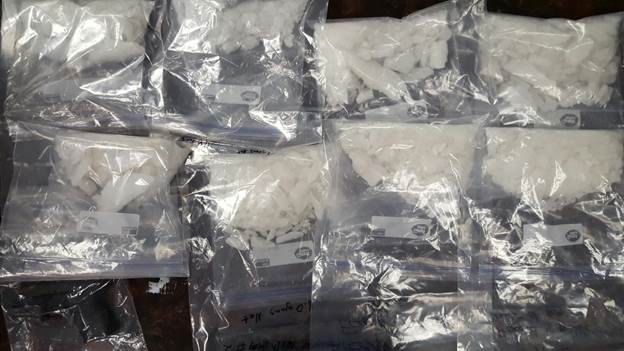
The federal drug institute, in its 1989 investigation, reported that the earliest documented case of someone smoking meth in Hawaiʻi was 1968.
If ice had been around for the better part of two decades, though, it hadn't made an impression on authorities — or anyone else. Its use was confined to very small, secretive groups, researchers concluded. Meth was barely mentioned in Hawaiʻi newspapers through the mid-1980s.
An innocuous police blotter item in late 1987 signaled that was about to change.
“Police seized a machine gun and rifle silencer, ‘crack’ cocaine and crystal methamphetamine, known in street language as ‘rock candy’” in a Waipahu raid, the Honolulu Advertiser reported.
Over the next several months, authorities here started finding large quantities of ice in airline baggage and parcels shipped through the mail, often from the Asian nations where ice was said to be produced and which had cultural ties to the islands.
In 1988, more than 6 pounds were discovered in four parcels of tea shipped to Honolulu from Taiwan. The perpetrator was suspected of having gone to Hong Kong and Taiwan to set up the shipments.
Ice was still new enough that in reporting the tea discovery, the Honolulu Advertiser felt a need to explain what it was: “a rock-candy-like drug said to be rivaling ‘crack’ cocaine in international popularity.”
A Drug Enforcement Administration agent quoted in the same article said he’d only ever seen the powdered form on the mainland. This bust in Hawai‘i was the first time he'd seen it in a smokable form.
He’d soon be seeing a lot more.
Ice In Tubs Of Butter
Bunny Boisjolie got her first taste of meth in those early days when a relative brought some to her house and told her she could use it to lose weight. Boisjolie was in her 30s, living with family in Waimānalo, then mostly sugar cane fields.
She said she didn’t care so much about the weight loss, but because her relative and friends were doing it, she gave it a try.
She realized she’d become addicted when meth supplies dried up for a time. She had so many aches and pains that she couldn’t get out of bed for three days. Eventually, she went to the doctor. But she didn’t disclose she was using meth, and was sent home with ibuprofen.
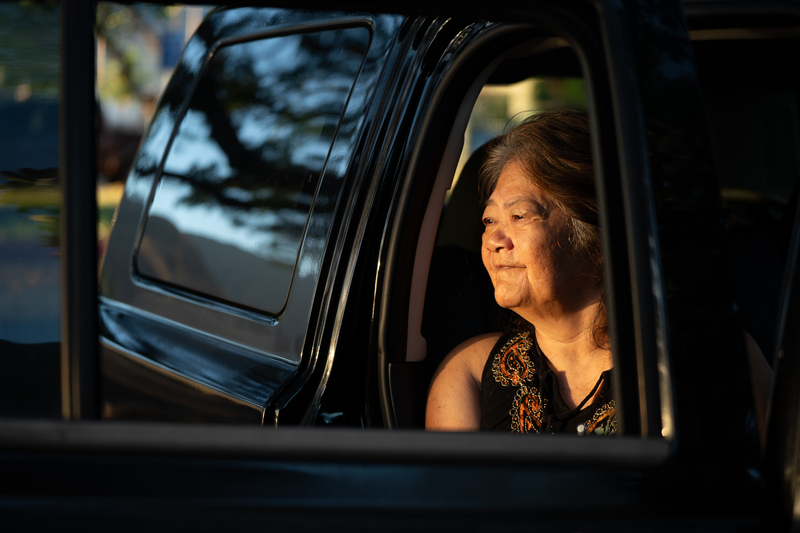
She said the relative was working as a mule, flying to the mainland and bringing back meth. Even though ice didn’t take hold on the continent until later, shipments would often go from Asia to the West Coast and then back to Hawaiʻi because it was easier to get through Customs that way.
Boisjolie joined her relative on one such trip. She strapped bags of meth to her stomach, making it look like she was seven months pregnant. An alarmed flight attendant saw her running through the airport and told her not to rush, she had plenty of time to make the flight.
When they arrived at the Honolulu airport, the relative told her to hand over the meth. But Boisjolie didn’t want the other passengers to see her suddenly not pregnant. She worried that some of them might live in Pearl City, where as a clerk at Longs she was very visible.
Boisjolie made it through the airport unscathed, but bigger and bigger meth busts were starting to be made there. A Customs official at the Honolulu airport in October 1989 reached into two tubs of butter in the baggage of a woman returning from a three-day trip to the Philippines — a mother of four with no criminal record — and pulled out 2 pounds of meth.
Authorities said it had been cooked in Korea, which they described as the major supplier to Japan and Southeast Asia. Then again, they said, it might have been made in the Philippines.
The uncertainty was characteristic. Officials were constantly giving out conflicting information about the main source of ice coming to Hawaiʻi – at various times, Korea, Hong Kong, Japan, Taiwan, Thailand, Burma, Vietnam or the Philippines. Some identified the source simply as “Asia,” an area that covers 30% of the planet’s landmass.
They also clearly had no idea how it was being made. A California narcotics officer told the Los Angeles Times that the DEA had tried to replicate the recipe with no success.
Cookers in Hawaiʻi were working on that, too. Police discovered what was thought to be the first clandestine meth lab in Hawaiʻi in August 1989.
The perpetrators didn’t make the meth from scratch, just tried to grow crystals from the liquid form of the drug, police said. Small-scale “mom and pop” labs like those that became common on the mainland would never really take off in Hawaiʻi.
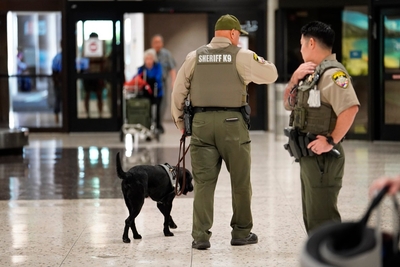
The very day after the butter bust, authorities seized another pound in three packages and a suitcase arriving in Honolulu from Manila.
A neighborhood group in Waiʻanae held its first meeting about ice. The Honolulu Police Department reported that it had seized 38 times more meth in 1988 than it had the year before. In late 1989, HPD said meth-related arrests had doubled in the previous year.
Then-Honolulu Medical Examiner Mary Flynn said only three people had died directly in the prior three years from the toxic effects of meth, but the drug was routinely detected in the bodies of homicide victims, suicides and those who died in traffic accidents.
“The drug makes people bananas,” Flynn told the Associated Press in 1989. That AP story also said 700 Oʻahu ice users had sought emergency treatment in the previous six months.
A bellhop at a Waikīkī hotel told the Advertiser that his department had at one time employed four ice dealers.
Local and federal law enforcement officials, looking to cut off the supply, went after a man considered one of the biggest ice dealers in the islands – Paciano “Sonny” Guerrero. Their investigation tied Guerrero to several shipments seized at the airport and elsewhere, including the parcels of tea from Taiwan.
One big break came when a Guerrero associate overslept in a Waikīkī hotel. A housekeeper came into the room and called police after seeing some “alarming” items, the Honolulu Advertiser reported, including a loaded handgun and packets of ice.
That man later agreed to cooperate with police, and led them to Guerrero himself. The case broke wide open when police discovered that Guerrero had kept a detailed ledger of meth deals over two years.
One of his lieutenants had made 30 trips to pick up ice shipped to the West Coast from Asia. The information led to 21 other people being charged, many of whom pleaded guilty. Guerrero himself pleaded guilty to charges involving 100 pounds of meth.
Because he cooperated, prosecutors recommended 15 years. The judge, calling him perhaps the most significant meth dealer in Hawaiʻi, gave him 25.
But as would become apparent again and again over the years, taking down a big-time dealer did little to stop the flow of ice.
For one, Guerrero had helped create a network that survived him. He had used the Hawaiian Brothers gang based in Kalihi, where according to the federal "outbreak investigation" ice first took hold, to distribute the product.
The head of the gang was deported to the Philippines in 1989, but by that time the webs of distribution were set up all over the islands.
Marketing Ice In Hawai‘i
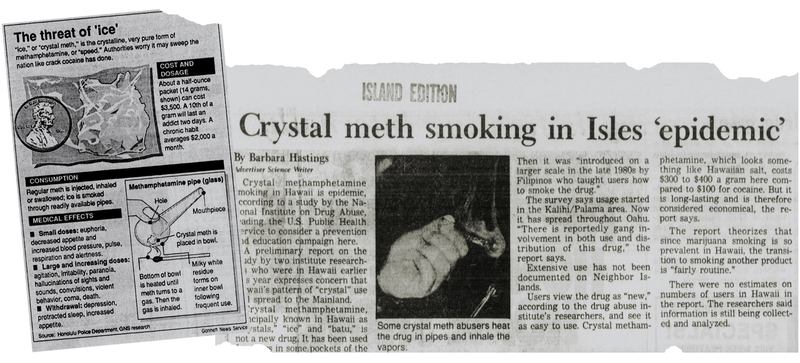
A more complete picture of how meth invaded the islands came in another National Institute on Drug Abuse investigation in 1994, based on interviews with 150 ice users.
The institute concluded that the free flow of the precursor ephedrine in Asia led to large-scale production of meth, first in Korea and then -- when police there cracked down -- Taiwan and the Philippines.
Asian distributors embarked on a well-organized marketing campaign in Hawaiʻi, the federal researchers found, even touting the new product in meetings with prospective dealers -- a jacked-up version of a Tupperware party.
"They had gatherings to advertise the ice," one dealer reported. "It was mostly Filipino immigrants who spoke bad English and you had to try the ice."
Most users, however, knew nothing about these high-level dealers, the researchers said. Instead, they got ice from neighborhood suppliers.
This was a familiar model, as many of the same people recently had been in the business of selling marijuana. But Operation Green Harvest, Hawaiʻi’s effort in the 1970s and '80s to eradicate marijuana farms, had made pakalōlō scarce. To replace the lost income, dealers switched to another smokable drug -- ice -- and users were willing to make the change, unaware of what they were getting into.
"Plenty guys I know use ice because they can't get pot," one Waiʻanae man told investigators. "I'd rather see them smoking pakalōlō cause they were mellow, nice people. On ice, they change into robbing houses and carrying guns in less than one month. Things they never did on weed."
The dealers started using their own product, the federal investigators found, and soon got out of control, with many losing their families and becoming homeless.
Chris Gardner, who grew up on Oʻahu's North Shore, recalls witnessing that very progression.
"I knew pot growers on the North Shore that ended up selling meth and getting addicted to meth," he said in an interview.
‘Everyone’s Staying Up All Night’
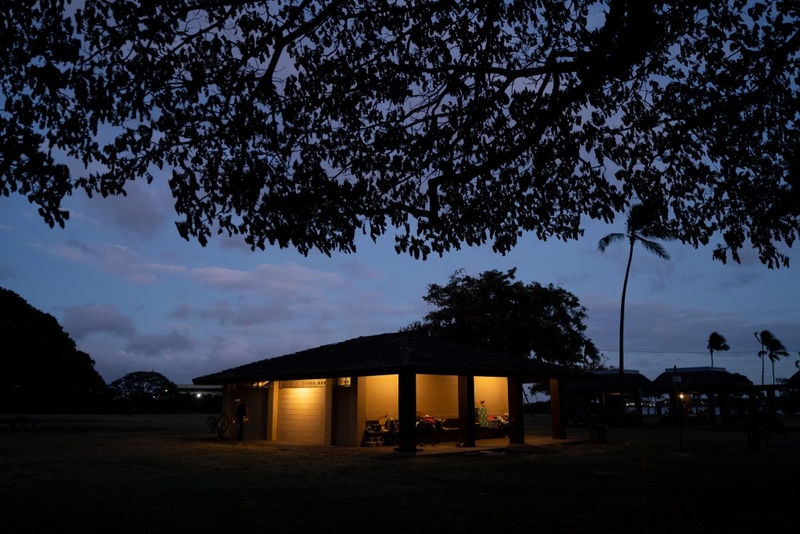
Kapulani Shoaf was only 13 when she ran away from her home in Waiāhole Valley, on the Windward Coast north of Kailua, to hang out on the streets of Waikīkī. She hooked up with a dealer and started smoking the new drug.
When she went back home to the rural valley months later, she was in for a surprise.
“I saw all my friends down there that never did know what town was like — all screwed up on ice. I was like, ‘How’d you get it?’ For a while it wasn’t up there in Waiāhole Valley. Next thing you know, everyone’s staying up all night … By 1990, the whole island was getting fucked up.”
Ice users told federal researchers in the early 1990s about the euphoria they felt when they started smoking.
One woman said her husband got her started. "God, what sex we had! Go! Go! Go! We played cards, too. Went fishing. But mostly sex."
Others described how the good times dissolved into madness.
"The rage is just fucking, flipped out rages, man," one Honolulu man told the researchers. "The people I meet on it that deal it or do it, they're real scary, they have dead eyes. I don't think they feel anything for anybody."
It was just a matter of time before people started showing up at drug rehabs.
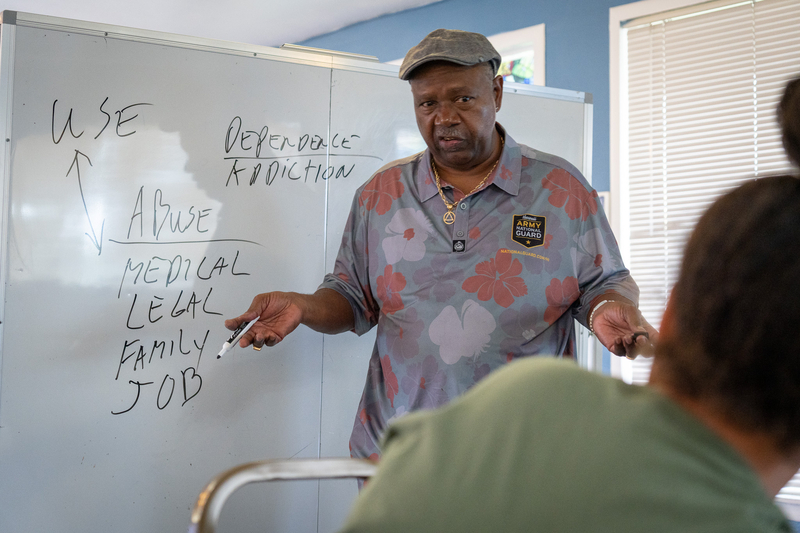
Donnie King had kicked his cocaine habit and was working at the Salvation Army’s rehab when that first wave hit.
Alcoholics and other addicts could start treatment a day or so after arriving, as soon as it became clear that they weren’t experiencing withdrawal seizures. Not meth users.
“When meth addicts would come to detox, it was different than an alcoholic or cocaine addict coming to detox,” King said. “A meth addict hadn’t slept in two or three days. So it became very violent … It was crazy.”
The Salvation Army made a rule that meth users had to be clean for seven days before starting treatment, King said. In the meantime, though, the detox floor had only one worker. The meth addicts were often abusive — arguing and yelling and once even assaulting staff. So they had to add another person to help keep them under control.
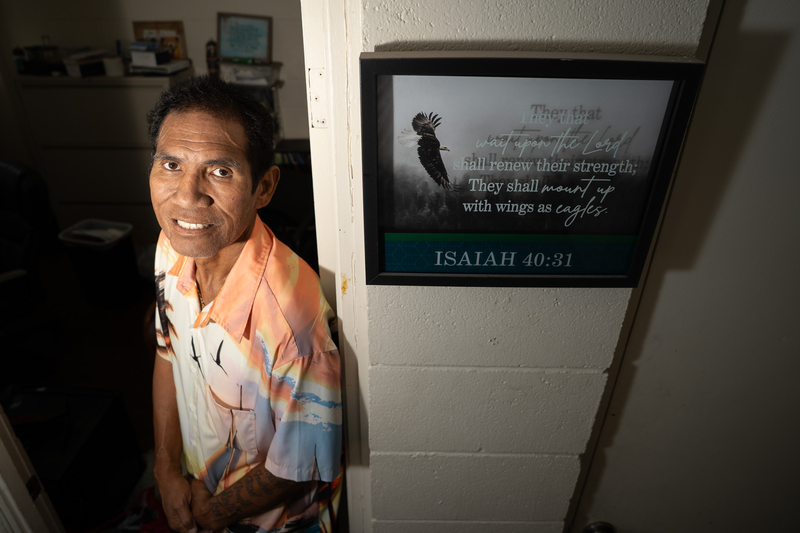
Matthew Taufete’e saw what was happening from a different perspective — inside prison.
When the meth epidemic took hold, Taufete’e was already doing time for manslaughter. He did not use drugs himself. But he was soon joined behind bars by peers who had started smoking ice.
Often their convictions were not for meth itself, but for violent crimes committed under its influence.
“Meth just controlled their life,” said Taufete, who now runs a program for formerly incarcerated men.
‘Bad Things Happening’
But why? Why would a place like Hawaiʻi with a reputation for being laid-back fall so hard for a drug that keeps you wired for days on end?
To this day, many still point to Operation Green Harvest and the scarcity of pakalōlō -- ironically, now being held up by some as a possible treatment for meth addiction.
The speediness might have been alluring in a place where, even then, the high cost of living was forcing people to hustle to make ends meet.
“It was cheap, and people believed they could do two or three things at once,” King said.
Hawaiʻi has deep cultural connections with the Asian countries where ice was first manufactured. Immigrants were still arriving, and travel back and forth was common.
That could explain how it got here, but why did so many succumb?
Once meth washed over the islands, it was just a matter of percentages, according to Giannasio, the Castle addiction doctor. In Hawaiʻi as elsewhere, a certain number of people are just genetically predisposed to become addicted.
“Changes in the chemistry of the brain that lead to physical and psychological dependency are at least 50% genetic,” he said.
In a sense, it was just like any other drug — a certain number who tried it would use it compulsively. What made meth addiction different was how people behaved once they were hooked.
“The other part of methamphetamine abuse that we didn’t fully understand was the amount of violence connected with it ...,” Giannasio said. “If a person has a proclivity for that to begin with and then all of a sudden you fuel them with ice, you start to see really bad things happening.”
One of those bad things occurred a few years into the epidemic, in 1992.
Brian Kikuyama, a house painter in his 30s, strangled his 60-year-old Pearl City neighbor to death with an electrical cord in the midst of a burglary. His only prior crime had been a misdemeanor theft conviction. But about a year and a half before the murder, his family said he’d started smoking ice.
He pleaded guilty, and much of the discussion at his sentencing — to life with the possibility of parole — centered on the role of meth.
“There’s no doubt in my mind that all of this was caused because of his ice addiction,” Assistant Prosecuting Attorney Gary Modafferi said, according to newspaper accounts at the time. “The kids who grew up in the ’80s didn’t want crack … or anything else besides ice. In my estimation, our burglary problem is solely attributable to ice.”
Four years later, the prosecutor himself was arrested and later convicted of using meth. Modafferi got sober and — through years of community service and rehab — regained his license to practice law.
Others would go through their own struggles after their lives were derailed.
Boisjolie, who strapped bags of meth to her stomach to foil Customs, said no one worried about health effects in the early days. She certainly did not.
In 2014, after a fight with her mother, she moved out, lived in her car for a while, then ended up in Blaisdell Park in Pearl City. Everyone was using meth.
A few years ago, she started becoming listless — all she ever wanted to do was lie down on the good mattress a friend had gotten for her.
One day in November 2024, she felt funny and someone called an ambulance. It turned out one of her coronary arteries was completely blocked, stopping the flow of blood to her heart. Doctors put a stent in her artery that day, and afterwards she could only get around in a wheelchair.
Despite her health scare, Bunny didn’t try to quit the drug. She’d lie on the ground with her dog and roll one way or the other when she needed to reach something — it was easier than sitting up. Getting out of her electric wheelchair was a daily ordeal that could take an hour. She’d put soft things on the ground to break her slump out of the chair, trying to visualize what would happen if she fell this way or that.
Many of her meth-using friends were also sick. Or dead. It did start to weigh on her.
“I was afraid I was going to die,” she said.
And so, several months after her health scare, after 40 years of using, she quit.
After another stint in the hospital, Bunny started feeling much better. It was easier to get around in her wheelchair. And she started walking again.
Shifts In Supply Lines
Over time, Hawaiʻi’s ice pipeline evolved as manufacturers in Mexico took over the market from Asian suppliers, with most of it coming by way of California.
In 1999, for instance, a 27-year-old woman was arrested on suspicion of possessing more than 2 pounds of meth thought to have been made in Mexico and routed to Hawaiʻi via San Jose, Calif. Thirteen years earlier, that amount would have been a shock, but by then, a state narcotics office called it “not that unusual.”
A few months earlier, several people had been charged with smuggling 30 pounds of ice into Hawaiʻi inside Harley-Davidson motorcycles and crates. They were said to be making a profit of $580,000 a week.
One suspect was alleged to be a Hells Angel. Sixteen years after that first scare, the outlaw biker gang had apparently arrived after all.
And just as feared, ice eventually made inroads on the continent, too, especially the West Coast.
By 2024, eight states had higher death rates from meth toxicity than Hawaiʻi: Alaska, West Virginia, Arizona, Washington, New Mexico, Oregon and Oklahoma.
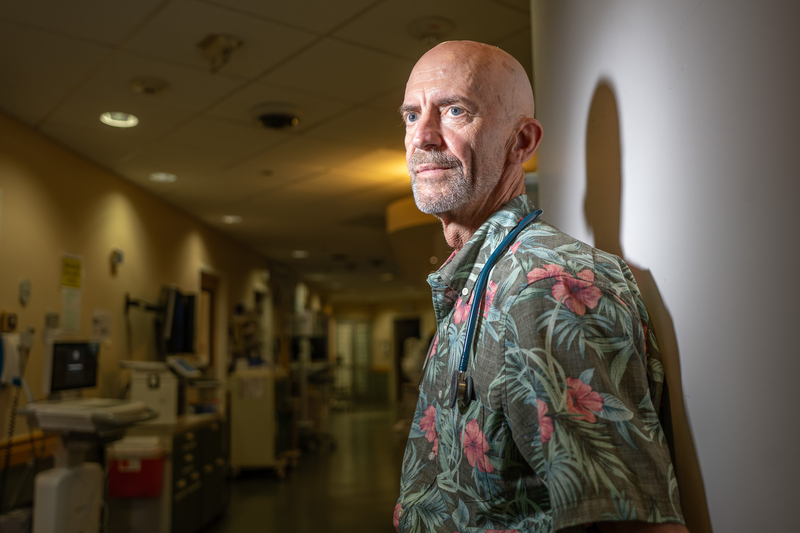
When the meth epidemic was just getting started in Hawai‘i, Mark Baker, an emergency room doctor, only saw a trickle of repeat patients whose meth use was causing heart or psychiatric problems.
“Over the years it’s just gotten to where there’s too many to count,” he said.
When an intern from Ohio visited his ER several years ago, a third of the patients were there for ailments related to meth. Though Ohio has an opioid problem, the intern said she’d never seen anything like it.
The grisly parade of suffering left Baker feeling that he had to do something. So he organized a conference that has taken place every year since 2023 as part of the fight against the scourge. Speakers talk about how meth attacks the vital organs, rips apart families, ravages those living on the streets.
“We were the guinea pigs here,” Baker said at the most recent one. “And it did spread. And it hasn’t stopped.”
Honolulu, HI