Billionaire Diane Hendricks helps Wisconsin Republicans defend legislative majorities
Oct 07, 2026 | 4:45 am ET
Description
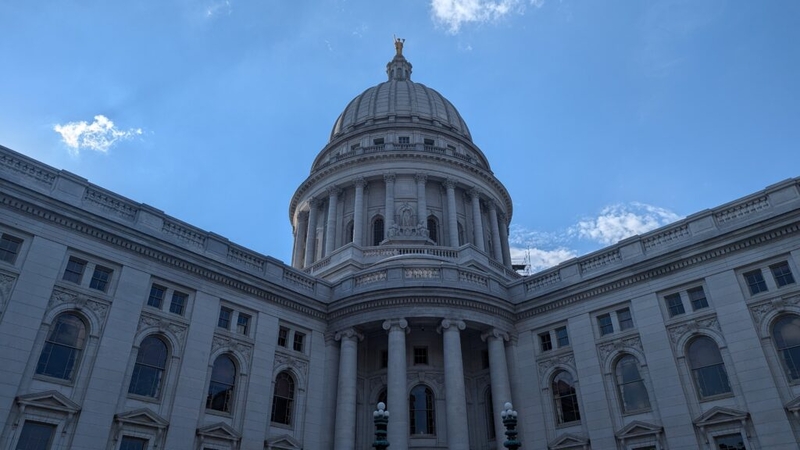
Wisconsin State Capitol (Wisconsin Examiner photo)
Billionaire Diane Hendricks recently contributed millions to help Republicans in their efforts to defend their legislative majorities, which are in jeopardy for the first time in more than 16 years.
Hendricks and the billionaire couple Elizabeth and Richard Uihlein have flooded Wisconsin’s midterm elections with money this year. According to a recent WisPolitics analysis, the three billionaires have given more than $73 million to Republican committees and candidates in 2026.
Individuals in the state of Wisconsin can only give $1,000 each to state Assembly candidates and $2,000 to individual candidates for state Senate. However, there is no limit on the amount donors can give to party committees, meaning an unlimited amount of money can be sent to and spent on behalf of candidates through the parties.
Hendricks’ contributions are part of an effort to help Republicans maintain control of both houses of the state Legislature, which they have held since 2011. They currently hold a 54-seat majority in the 99-seat state Assembly and a 17-seat majority in the 33-seat state Senate. Democratic lawmakers are looking to hold all of their current seats and pick up five additional seats in the Assembly and at least two seats in the Senate.
Sen. Patrick Testin (R-Stevens Point) told the Examiner in August that the billionaires have been strong supporters of Senate Republicans and “despite the criticism leveled against those individuals, what never gets a light shined onto it is the money that comes in from states like Illinois, New York, California, billionaires and multi-and mega-millionaires from the liberal elite who have flooded Democrat coffers for years.”
But the WisPolitics analysis found there was no comparable donor to the Democratic committees or campaigns in 2026 and no one donor has contributed as much over the past 17 years as each of the three GOP billionaires have donated in 2026 alone.
The Republican Assembly Campaign Committee reported raising $6.17 million from July 1 through Sept. 23. The majority of the funds — $5.5 million — were contributed by Hendricks.
The committee reported spending $9.5 million and having $11.16 million in the bank at the end of the fundraising period. It also provided $4.87 million in in-kind contributions to candidates across the state.
The Assembly Democratic Campaign committee reported raising $6.01 million during the same time period and spending about $3 million. The committee reported having $5 million on hand at the end of the fundraising period. Top Democratic contributors were Wendy Munger, who contributed $1 million and Lynde Uihlein, a family member of the Republican donors, who provided $250,000.
In many races, Republican candidates are not receiving large cash donations to their campaigns, but are receiving in-kind contributions of mailing, TV and online advertising.
In Assembly District 85, Rep. Pat Snyder (R-Weston) reported raising $31,870. His Democratic opponent, John Kroll, reported raising $84,294. However, Snyder outpaced Kroll in in-kind contributions receiving $642,899 from the Republican Assembly Campaign Committee and the Republican Party of Wisconsin. Kroll received $271,317 in in-kind contributions, which were contributed by the candidate, the Assembly Democratic Campaign Committee and the Democratic Party of Wisconsin.
In Assembly District 88, Rep. Benjamin Franklin reported raising $20,030. His Democratic opponent, Brandy Tollefson, reported raising $53,650. However, Franklin received $675,043 in in-kind contributions, while Tollefson received less than half of that amount — $307,172 — in in-kind contributions. Franklin spent $39,411 and Tollefson spent $93,277.
The Committee to Elect a Republican Senate reported raising $2.28 million. Hendricks contributed $1.75 million of that. The committee reported spending $2.6 million and having $4.96 million on-hand at the end of the period.
The State Senate Democratic Committee reported raising $1.24 million and spending $2.03 million. It had $1.3 million in the bank at the end of the report. The top donations were $500,000 from Sarah O’Neill of New York and $225,000 from the Democratic Party of Wisconsin.
In the four most closely watched state Senate races, the contributions of the Committee to Elect a Republican Senate are playing a large role in the GOP campaigns, including through cash donations and in-kind contributions.
In Senate District 21, Republican candidate Jim Croft reported raising $1.1 million, but only raised $15,000 from individual donors; the majority of the $1.1 million was contributed by the Committee to Elect a Republican Senate. He spent a little more than $1 million.
Democratic candidate Trevor Jung reported raising $816,707 and spending $1.05 million. About $725,000 of his total came from the State Senate Democratic Committee.
In Senate District 5, Rep. Robyn Vining (D-Wauwatosa) raised $79,321, more than Republican candidate Mike Roberts, who raised $34,092. Roberts received more in-kind contributions than Vining, however, totaling more than $145,000 from the Republican Party of Wisconsin and the Committee to Elect a Republican Senate.
Will Karcz, spokesperson for the State Senate Democratic Committee, said in a statement that “Wisconsin voters have shown us that their votes cannot be bought by the billionaire donors Republicans rely on to prop up their failing candidates.”
According to a July analysis of past races by Marquette Law School fellow John Johnson, money does matter in these races, but “it’s clear that money doesn’t ‘buy elections’ in any crude way. Candidates routinely win after being outspent by their opponent — a fact not limited to the Wisconsin legislature.”
Johnson wrote, “the hypothesis is that in districts where the Democrat accounts for more of the spending, that Democrat will do better relative to the performance of the Democratic candidate for governor or president in that district.”
More important than the relative amount of money each candidate has, according to Johnson, is the name at the top of the ticket in any given election.
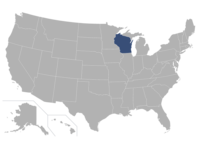
Madison, WI