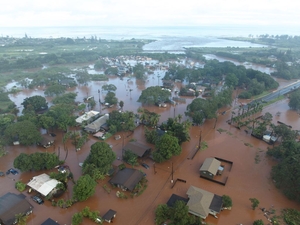
In A Big Hurricane, Don’t Count On Hawaiʻi Shelters To Protect You
Aug 25, 2026 | 6:01 am ET
Description
Photo courtesy of Honolulu Civil Beat
As Hawaiʻi recovers from Hurricane Lala and forecasters warn of a future with stronger storms, the state is making no promises that it can adequately shelter everyone who would need protection in the event of a direct hit.
There are not enough shelters to meet likely demand in the event of an extremely strong storm, and county officials won’t say whether most of the shelters available are strong enough to withstand even a weak hurricane.
"Those are the questions that I think somebody needs to answer,” said Rep. Kim Coco Iwamoto, a legislator representing Ala Moana and Kaka‘ako.
“Every day or every year that we choose not to build a hurricane shelter, we’re saying, ‘We’ll take our chances.’”
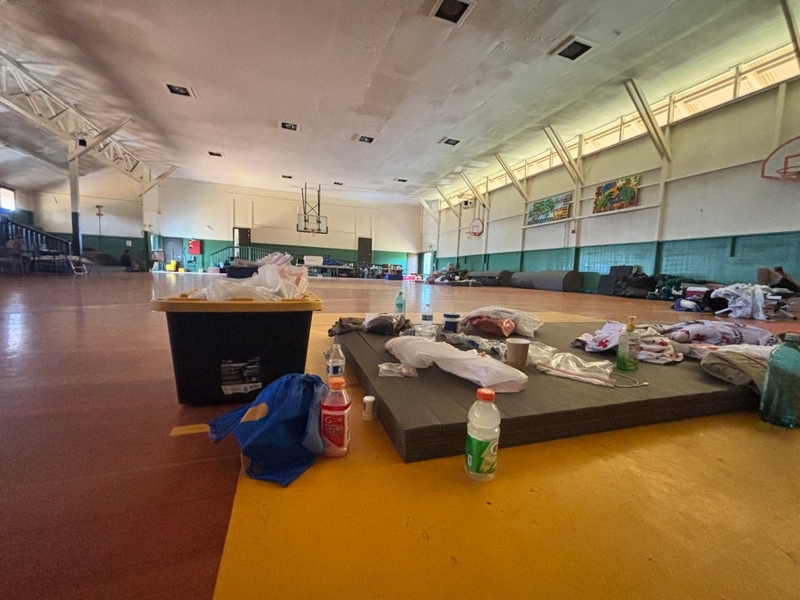
Civil Beat contacted each county’s emergency management agency to inquire about the strength of their shelters. Only Hawaiʻi island responded to say two facilities were built to withstand Category 3 hurricane force winds: Hilo High School Gym and Robert N. Herkes Gymnasium and Shelter in Pāhala. No projects are underway to fortify the others.
Honolulu, Maui and Kauaʻi counties said information on the strength of their islands’ facilities is not being tracked or was not readily available. Oʻahu’s emergency manager, however, told the Honolulu Star-Advertiser in March that 20 of the island’s 25 shelter sites were retrofitted to stand up to only a Category 1 hurricane — the weakest classification on the five-step scale.
The Hawaiʻi Emergency Management Agency, or HIEMA, said it was unable to provide a breakdown of island storm shelters and their level of fortitude. Jeffery Hickman, director of public affairs at the Department of Defense, said counties are responsible for tracking that information.
Hawaiʻi residents are being left in the dark eight years after a Civil Beat investigation found that the island’s shelters are unable to withstand even a moderate hurricane. What exactly has been done to address the issue since 2018, officials wouldn’t say.
Hawaiʻi Rep. Diamond Garcia, who represents West Oʻahu, said he was surprised officials did not have this information readily available.
“Especially in light of the recent Hurricane Lala that barely missed us,” he said. “That should be made public."
The lack of information puts residents at disadvantage when making a risk assessment during a storm: Should they stay at home or go to a shelter? Where would they be safer?
Many Hawaiʻi residents live in single-wall structures at severe risk of collapsing in a heavy storm. Category 2 storms are marked by winds of over 96 miles per hour, which are capable of tearing through single-wall construction, ripping off roofs and shattering windows. Those living in newer high rises may be unsure whether to stay or go.
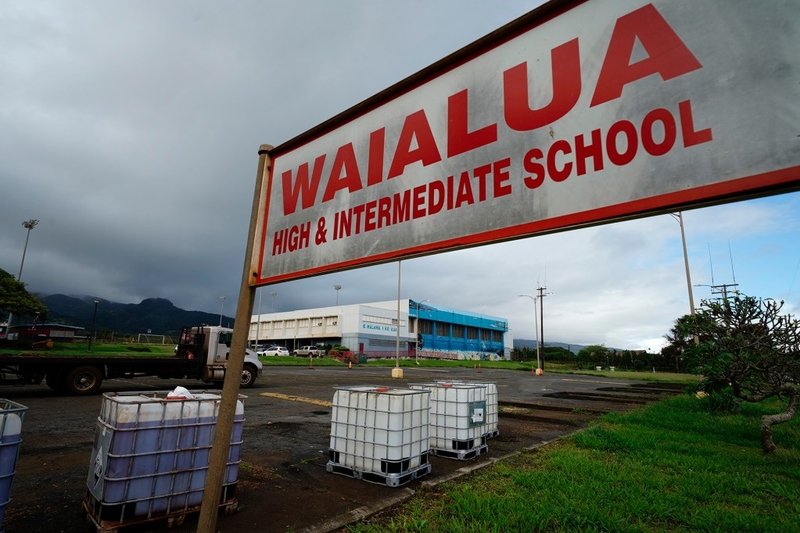
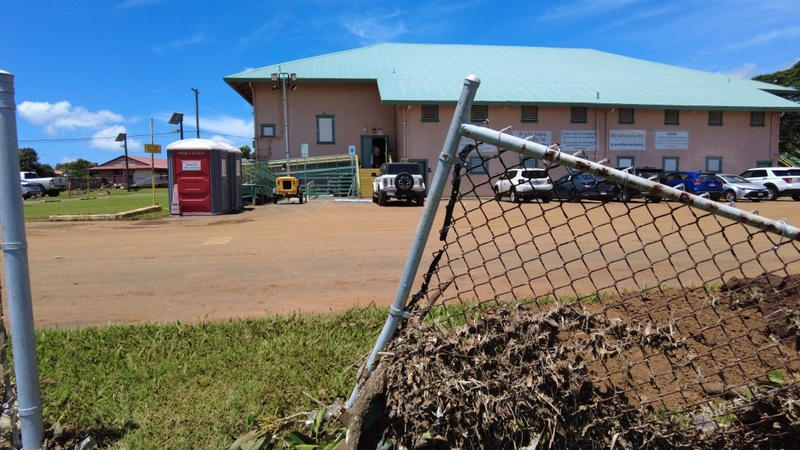
But shelters are not storm-proof either. This March’s Kona low storms also showed how some shelters are exposed to flooding: Waialua High and Intermediate School on Oʻahu, one of North Shore’s designated shelters, flooded, and nearly 200 people had to be relocated. On the Big Island in March, flooding at a community center in Nāʻālehu forced evacuees to the nearby elementary school gym instead.
Beyond the physical limitations of those buildings, coordination may also be lacking. A preparedness plan released last year states that Hawaiʻi's Department of Education lacks formalized plans and procedures for communicating with schools about their role as shelters during disasters. The Department of Education did not respond to repeated interview requests from Civil Beat.
Honolulu County estimates that there is only room for 100,000 people at shelters, half of the space that would be needed during a Category 5 storm, which would blow winds exceeding 157 miles per hour.
In 2018, David Lopez, the administrator at the state’s emergency management agency, told Civil Beat that it would take roughly three centuries to assess and retrofit the shelters needed statewide. He did not respond to a request for comment for this story.
Priorities Declared, Then Silence
Most storms that threaten Hawaiʻi form off the coast of Mexico and Central America, and weaken as they cross the Pacific's cooler waters and strong trade winds, according to Pao-Shin Chu, a climatologist at the University of Hawaiʻi Mānoa.
The last hurricane to make direct landfall, meaning the eye of the storm traveling over land, was the Category 4 Hurricane Iniki in 1992. Hawaiʻi’s most powerful storm on record, it caused several deaths and an estimated $3 billion in damage when it struck Kauaʻi. In 2018, Category 5 Hurricane Lane came close, which dumped a record 58 inches of rain on the Big Island.
Other hurricanes in recent memory have not been as strong. But with warming waters, the potential for stronger hurricanes that cross the Pacific Ocean and affect Hawaiʻi is significantly increasing, according to Chu.
The state declared it a priority in a January 2025 report to figure out a way to effectively manage the evacuation and sheltering of more than a half-million people. But whether any progress has been made in that regard is unclear. Civil Beat repeatedly contacted the state emergency agency in the last week for a status update, but the office did not respond.
A resolution enacted earlier this year by state lawmakers asks the Hawaiʻi Emergency Management Agency to "identify and assess emergency shelters capable of withstanding hurricane conditions and to develop a plan to improve the state's hurricane shelter capacity." A spokesperson for HIEMA did not respond to questions regarding how much progress they have made on this either.
The nearly four dozen sites on Oʻahu are not shelters but “refuge areas” – meaning they “provide a safer option than remaining in areas prone to flooding, storm surge, or in older homes with wood frames or single-wall construction,” but they “do not meet Hawaiʻi’s guidelines for hurricane evacuation shelters,” according to Honolulu's website.
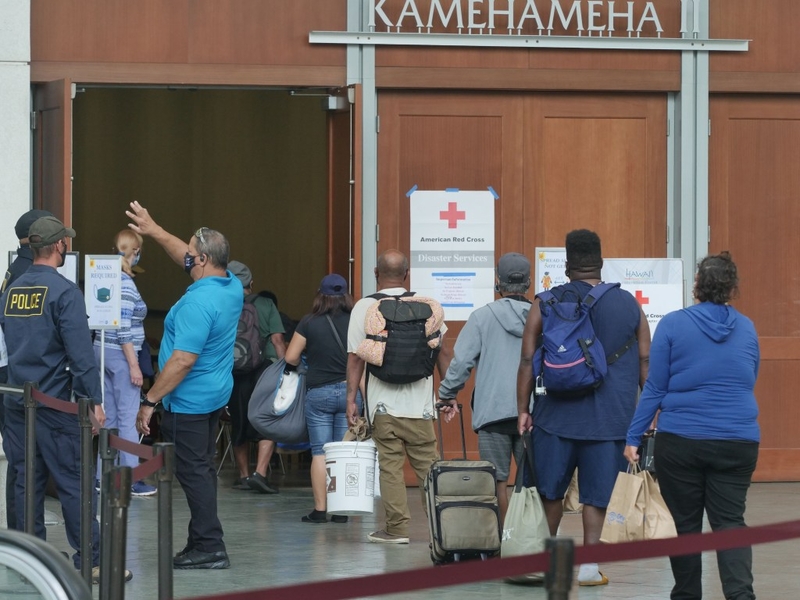
But the guidelines to which the county is referring are not specified on the site.
For Oʻahu, the number of shelters decreased by two-thirds since 2020 after an inspection found that they did not meet minimum standards. There used to be eight in Kailua. Now there are none. On the North Shore, Brigham Young University’s campus was a designated shelter until the inspection found that its building was in a flood zone.
Molly Pierce, public information and education officer at the Department of Emergency Management for Honolulu, said in an email that hurricane refuge areas are meant to be “a last resort” for those without safer options.
Honolulu County has a list of criteria on its website for residents to determine whether their home would be a safe space to shelter during a storm.
Sheltering At Home
Preparedness is not only about schools and gyms acting as proper shelters, but also making sure residents can safely shelter in their own homes.
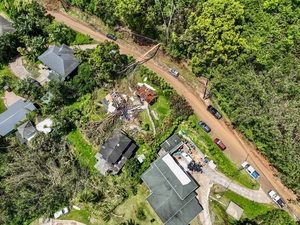
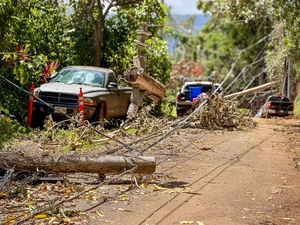
In the past week, videos of Lala blowing off the roofs of homes on the Big Island and in Kalihi on Oʻahu have spread across the internet.
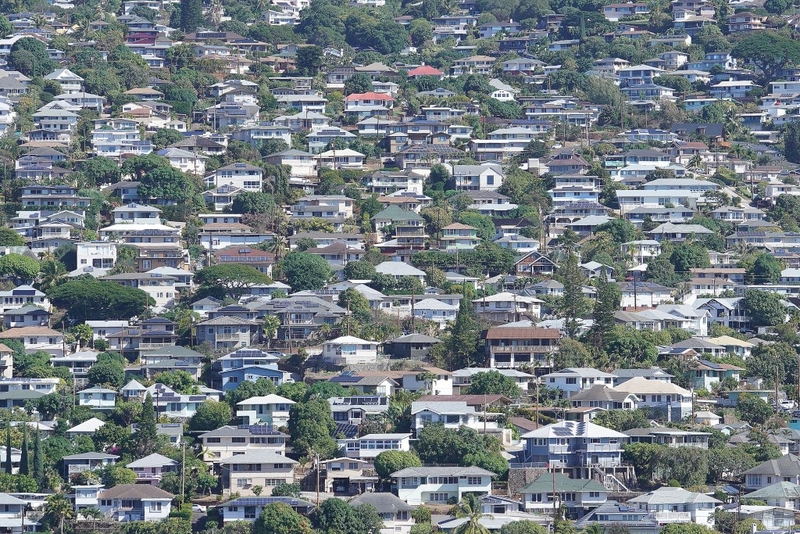
Since 2010, Hawaiʻi’s building code has required new homes to withstand the wind loads of a Category 3 hurricane, but the vast majority of the state’s older, wood-frame and single-wall homes are not prepared for that threshold of rain and wind.
Tina Grandinetti, a legislator who represents Kāhala and Kaimukī, said she was troubled when she first heard about Hawaiʻi’s lack of preparedness when it comes to shelters. She emphasized that if one roof blows away, it doesn’t just affect those residents, but everyone around them, too.
Much of her district, like many older neighborhoods across the islands, is built from housing stock that predates modern building codes. Honolulu county states that single-wall wood-framed homes built before 1995 that have not been retrofitted are at even higher risk.
“We have many aging plantation-era single-wall homes that were not built for these kinds of risks,” she said.
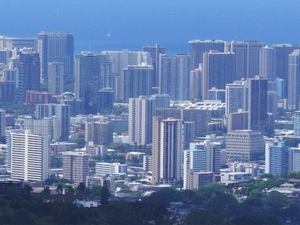
Residents in new high-rises may be better off, said Iwamoto, the legislator representing Ala Moana.
“I would go to the condos because their interior hallways are completely protected by concrete,” she said. “I would actually advise everyone to find somebody who lives in a condo with a protected interior hallway and become a guest of that person.”
In June, HIEMA received $4 million from Hawaiʻi’s new Green Fee – a visitor impact fee to fund climate and environmental resilience for the islands – to launch a pilot program helping residents strengthen roofs and improve window protection, with the earliest funding aimed at low-income homeowners and kūpuna. HIEMA did not respond to a query about how the program is going so far.
Some other efforts to fortify Hawaiʻi’s buildings against hurricanes have petered out. House Bill 2526, for example, would create a nonrefundable income tax credit for homeowners who retrofit their homes with wind-resistant features or build a hurricane shelter on their own property. But the House version of the bill went nowhere, and the Senate version stalled in the Ways and Means Committee.
Garcia, a Republican representing West Oʻahu, is a sponsor of the bill.
“Obviously there is no government location that can hold the majority of my residents,” in the case of a Category 5 hurricane, he said, so it’s important to “empower people to make their own decisions to retrofit their own home.”
The bill’s preamble points to Hurricane Mellissa, which tore through Jamaica last year and destroyed or badly damaged more than a third of the island’s homes, most of which were built with wood rather than concrete, which would make a shelter more resilient to this level of storms.
Senate Bill 2972 would require all high occupancy buildings built after January 1 of this year to be designed to withstand Category 5 hurricanes. It also failed to advance through the Ways and Means Committee.
Chu, the UH climatologist, warned that with ocean temperatures rising and forecasters already watching the next storm approach, Hawaiʻi should assume hurricanes will become more destructive than Lala.
“Once the hurricane passes, people forget about it,” he said. “But don’t be off guard... We expect to see more in the future.”
Honolulu, HI