Feds take on Kentucky cockfighting with multiple indictments
Sep 17, 2026 | 10:09 am ET
Description
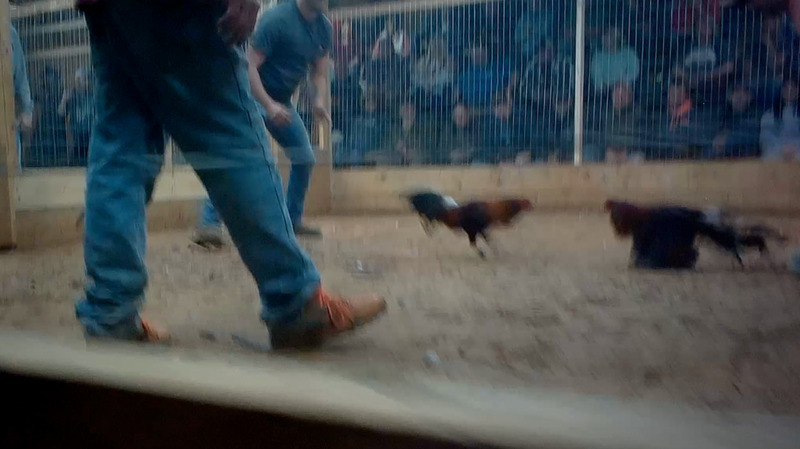
A cockfight at a Kentucky pit (Photo courtesy Animal Wellness Action)
Federal authorities have charged five people in Kentucky in connection with cockfighting in cases that show the state remains a key player in the illegal activity, according to animal-welfare groups.
Those groups have argued that a relatively weak state law is one reason Kentucky has been a key player in the bloody activity, not just in the U.S but internationally.
Cockfighting is a felony under federal law, but Kentucky is one of only eight states where it remains a misdemeanor, according to Wayne Pacelle, president of Animal Wellness Action and the Center for a Humane Economy.
Those groups, along with Showing Animals Respect and Kindness (SHARK), have been active in pushing police to crack down on cockfighting in Kentucky and announced the indictments.
Legislative efforts to make cockfighting a felony under Kentucky law have fallen short, though there is interest in reviving the issue in the General Assembly.
The new indictments in Kentucky are “pathbreaking” because they charged people with possessing roosters for the purpose of putting them in fights, rather than engaging in cockfights, the animal groups said in a release.
That’s significant because police have often felt they needed to catch cockfighters in the act at clandestine fights in order to make cases, requiring undercover work that can be difficult to do, Pacelle said.
It is easier to make a case on a charge of possessing birds for fighting, and the penalty is the same as for actually having the birds fight, he said.
“This really is a landmark set of arrests,” Pacelle said.
Pacelle said the June raids at gamefowl operations in Kentucky that led to the new indictments upset people in the cockfighting world because they know it would be easier to make criminal cases for possessing birds for fighting purposes if authorities continue that tactic.
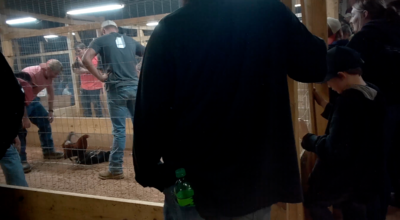
In addition to being cruel to roosters, opponents say cockfighting often is accompanied by other crime such as drug trafficking.
“Cockfighting gangs and cartels, and their interwoven ties to drug, weapons, and human trafficking, are on par with terrorism, and must be fought nationwide,” Steve Hindi, president of SHARK, said in a news release.
SHARK and other groups have said for several years that in addition to having a large number of illegal cockfighting pits, Kentucky breeding operations ship roosters to other countries to further cockfighting internationally.
SHARK identified more than a dozen cockfighting pits in the state in one 2023 report, some with stadium seating.
Pacelle said he considers Kentucky among the top five states in the country in cockfighting involvement.
The indictments
A federal grand jury returned indictments Sept. 10 charging Christopher Copas, Don Ray Haley, James Holland, and Ramon Escamilla and his son, Eric.
Copas allegedly ran an operation called Kentucky Acres Game Farm in Bowling Green to breed, raise and train roosters to fight, and to sell them.
Copas used his cell phone and Facebook to advertise roosters for sale and arrange to ship them to other states and internationally, the indictment charges.
Copas is charged with possessing roosters for the purpose of having them take place in cockfights.
Cockfighters attach sharp pieces of metal, called gaffs, to the legs of roosters during cockfights so they can slash and gouge opponents, with people in the crowd betting on the outcome.
The birds often die from their injuries.
Copas also is charged with having a pistol that had been defaced by removing the serial numbers.
Haley, also known as Donny Haley, allegedly had a breeding operation in Todd County to raise, train and sell fighting roosters.
He is charged with possessing roosters in order to have them fight.
That is the same charge against Holland, who allegedly had a breeding operation in Warren County called Possum Hill Gamefowl.
Escamilla is charged with running a rooster-breeding operation in Warren County beginning in at least 2011 and continuing through June. His son allegedly joined in the operation at some point.
The two raised and trained fighting roosters; took part in cockfighting “derbies”; and sold fighting roosters in the U.S.; and shipped others to customers in Mexico, the Philippines and elsewhere, the indictment charges.
Ramon Escamilla lived at the game farm at times and in Mexico other times, while his son ran the operation while he was away, according to the indictment.
The two are charged with conspiracy.
The charges against all five are punishable by up to five years in prison.
Efforts to reach them or their attorneys were not successful.
Changing laws
Opponents of cockfighting have long wanted to make the activity a felony under Kentucky law.
Most recently, state Sen. Greg Elkins, R-Winchester, introduced measures in the 2024 and 2025 legislative sessions that would have made cockfighting a felony.
Sen. Karen Berg, D-Louisville, joined in sponsoring the 2025 measure.
Elkins called cockfighting a “cauldron of crime” the first time he sponsored the bill, in 2024, which was supported by the Kentucky Association of Chiefs of Police and the Kentucky Sheriffs Association.
The 2024 and 2025 proposals died in committee.
Kentucky’s law on the issue is weak not only because cockfighting is only a misdemeanor, but because it does not bar other activities such as breeding, training and selling roosters to fight; selling fighting implements such as gaffs; and allowing children to be present at fights, said Leighann Lassiter, animal cruelty policy program director for Humane World for Animals, formerly known as the Humane Society of the U.S.
Making cockfighting a felony under Kentucky law would create another way to attack the problem and likely force many cockfighters out of business or out of the state, Pacelle said.
“Stronger penalties – big fines, incarceration, which come along with felonies – are a better deterrent,” he said. “Now, with a misdemeanor, a misdemeanor infraction is just the cost of doing business.”
Frankfort