Alabama state employees could see health benefit changes amid ‘difficult choices’
Jul 16, 2026 | 6:01 am ET
Description
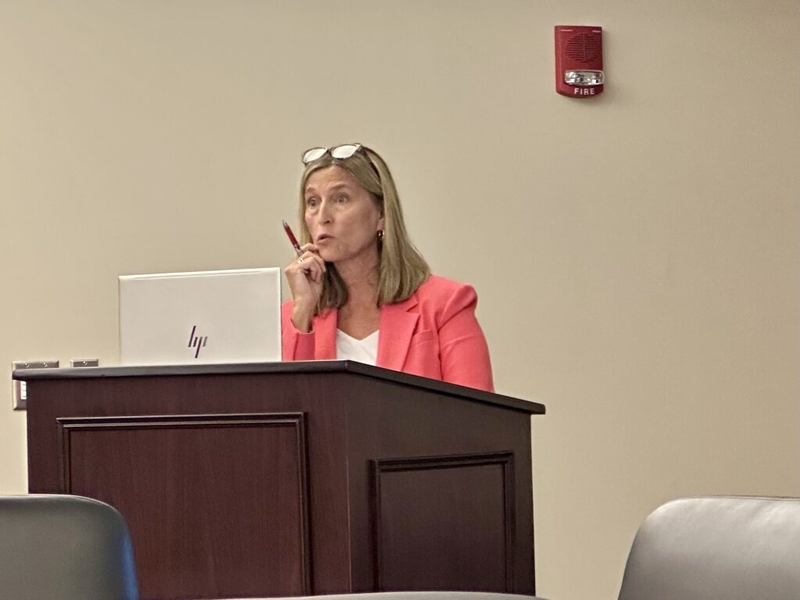
Stephanie Azar, CEO of the State Employees Insurance Board, speaking to the board at its quarterly meeting on July 15, 2026, in Montgomery, Alabama. The board may withdraw from the Retiree Trust Fund and change member benefits due to financial strain. (Anna Barrett/Alabama Reflector)
The board overseeing health insurance for Alabama state employees will likely consider benefit changes and withdrawals from a trust fund amid financial uncertainty, rising health costs and “difficult choices,” its CEO said Wednesday.
Changes could be presented to the State Employees Insurance Board (SEIB) in September, CEO Stephanie Azar said.
“The board has been hearing for a long time that you’ll be faced with difficult decisions in the upcoming September meeting, and that’s true,” she said. “You’re going to have to be.”
SEIB, which has about 32,000 active members, and the Public Education Employee Insurance Plan (PEEHIP) board, which covers public school employees, have faced financial challenges in recent years. In 2025, SEIB changed member benefits, which included some increased deductibles and copays but no impact to premiums. The PEEHIP board in June approved a withdrawal of up to $200 million from its Retiree Trust Fund to prevent an increase in premiums after the Legislature did not fund its full request.
The Legislature was able to fund SEIB’s fiscal year 2027 funding request, a $1,175 per member per month rate. It was a $150 per member per month increase from the FY26 state rate. The Legislature funded a $1,048 per member per month rate for PEEHIP, for about 104,000 active members.
“Our benefit plan is extremely rich, and it’s a very affordable plan, and SEIB is going to do everything it can, working with this board, to ensure that that remains, even if there has to be some premium or other benefit changes,” Azar said.
Even with the increased state rate for fiscal year 2027, which begins on Oct. 1, Azar projected SEIB will “be in the red” for that fiscal year based on the current health costs.
“That’s not good at all because we don’t have a net. That’s a very, very scary place to be, and we’ve got to get this plan over the next several years not to be faced with this problem unless we’re just knocked out of our feet, as we are often with things we can’t control,” she said.
David Bronner, CEO of the Retirement System of Alabama, which oversees the boards, warned members not to “push the panic button early” because there will be a new administration and new legislators to work with in 2027.
“What you have to remember is that a new politician coming in don’t give a hoot about the commitment to you, or to me, or the pensions, because they got elected doing what? ‘How do I promise you something?’” Bronner said. “New legislators have no commitments to old programs.”
He gave similar warnings to the PEEHIP board in June.
“Ask the new elected people. Ask the ones that don’t even have opposition. Do you support pensions and do you support healthcare? If the answer is no, get ready for a rough ride, and it’ll be a rough ride. I swear to God,” he said. “Keep in mind that the next administration won’t give a damn about what we submit this year.”
Azar said in an interview after the meeting that there is a good chance the board will request another rate increase for FY28, but there’s no way to know how much the increase will be.
“The main thing that’s really causing the revenue and expenditure difference is the healthcare inflation and uncontrollable cost, really,” she said. “It’s hard to keep everything in line to beat that call. It’s not really an Alabama problem; it’s a national problem.”
Montgomery