Alabama indigent defense policies can mean the difference between life or death
Apr 06, 2026 | 8:01 am ET
Description
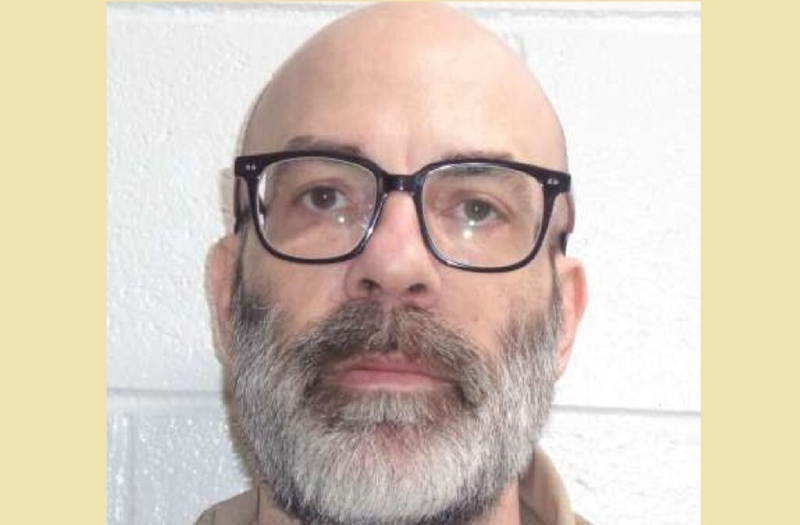
A jury convicted Cory Maples in 1997 of the 1995 murders of Stacy Alan Terry and Barry Dewayne and sentenced him to death. Maples repeatedly raised questions about the adequacy of counsel at his original sentencing and through an appeals process that lasted over 25 years. (Alabama Department of Corrections)
A Decatur jury in 1997 convicted Cory Maples of the 1995 murders of Stacy Alan Terry and Barry Dewayne and sentenced him to death on a 10-2 vote.
Maples confessed to the shootings. But he appealed his death sentence in part because attorneys at trial made little effort to bring evidence to the jury that might have prevented the imposition of the death penalty.
At one point, he got pro bono representation from a New York-based law firm. But a few months after filing a post-conviction appeal in 2001, Maples’ attorneys left the firm without informing the court or the firm that they were representing Maples.
Maples did not know in 2003 that a county circuit court denied his appeal or that a deadline for a new appeal had passed.
Multiple courts denied his attempts to restart the appeals process, but in 2012, the U.S. Supreme Court allowed him to continue with the original appeals process. It took another ten years for a federal court to order a new penalty phase for Maples, where he could present mitigating evidence.
Maples’ case illustrates the limitations of Alabama’s indigent defense policies. While the state has taken some steps in recent years to improve the system, the state’s policies that deviate significantly from recommendations from the American Bar Association on proper representation of indigent defendants. In capital cases, that can mean the difference between life and death.
Rights to counsel
Individuals who are charged with a crime have a right to receive effective assistance of counsel by way of the Sixth Amendment of the U.S. Constitution. The right to counsel was affirmed in the 1963 U.S. Supreme Court decision of Gideon v. Wainwright.
Aditi Goel, executive director of the Sixth Amendment Center, said the rules for effective assistance of counsel are established through case law. For example, there must be rules for attorney qualification and the time that the lawyer can devote to the case, the pay that the attorney receives and the independence of the attorney. The state must also establish an agency that oversees the rules.
However, no universal standards exist for what amounts to effective assistance of counsel.
“The short answer is it varies greatly depending on the state, and sometimes the county that somebody is charged in,” Goel said. “The variation that you see in states and in counties, it just depends on what the structure is that the state has to ensure the constitutional right to counsel.”
Most states provide lawyers for this critical death penalty appeal. Not Alabama.
In Alabama, the Office of Indigent Services, within the Alabama Department of Finance, works to ensure indigent defendants have effective counsel. The department sets the standards for the volume of cases, the pay and the qualifications for lead attorneys and associate counsel when appointed by the court to represent indigent clients.
The American Bar Association created guidelines that can serve as standards for capital cases, including no caps on compensation for indigent clients. Alabama, however, restricts payments. The Alabama Legislature approved an increase during the 2024 session that allows attorneys to receive $120 per hour to represent clients who are indigent. Prior to that, counsel could only be paid $70 per hour.
“If you are in private practice, and if you are an attorney, you can probably bill $400 to $500 per hour,” said Elizabeth Vartkessian, executive director of Advancing Real Change, a nonprofit that offers mitigation services — research aimed at reducing sentences — for those accused of crimes.
In addition, court-appointed attorneys in Alabama are only allowed to charge their services every six months, and could wait another six months before getting paid, a long time to carry a debt to represent a client.
“The incentive is to finish the case as quickly as possible,” Vartkessian said. “This happens all across the United States where you don’t have statewide public defenders. Then you see cases end up going to trial far faster than they should. They are not really ready, but that is what ends up happening because it is too financially taxing to carry the case for years.”
The deviation between the administrative rules and the ABA guidelines can create disparities in the outcomes of those who are assigned attorneys to represent them versus those who can choose their own.
Defendants who are indigent do not get to choose their attorneys and must accept the one that they are assigned. They are either referred to a public defender’s office, or in the more rural areas of the state that are not likely to have one, will have an attorney appointed to them by the court.
“The appointment of counsel is at the discretion of the trial judge, and OIDS does not play a role in assigning attorneys to specific cases,” said Ethan Girona, communications and policy specialist with the Alabama Department of Finance.
Defendants who can choose their own attorneys have the agency to choose the attorney that they believe will best represent their interests. Court-appointed attorneys are usually local to the area and appear before the court numerous times, which Vartkessian said can create conflicts of interest.
“This is a judge that you are going to be in front of for all your other cases, so immediately can you imagine the things that you ask for might be a little limited because this is a judge that you are going to have to see, and this judge has the ability to put you on cases or to not put you on cases,” she said.
People who are not indigent also have the money to secure the resources needed to mount a vigorous defense. For individuals who are indigent, the resources they can muster rest with the court.
“The judge may not want to approve it because it is a big expense,” Vartkessian said. “Some judges understand the need for it and some judges haven’t had enough education to really understand why it is necessary.”
Alabama’s rules also differ from ABA guidelines in not explicitly stating who should be on the defense team. The ABA guidelines set a minimum of two attorneys, and two others to assist with the case: an investigator along with a mitigation specialist.
Mitigation services
A mitigation specialist conducts research into the background of clients who have been charged with a crime to get an understanding of the type of people they are and the factors leading right up to the point of them committing the crime.
The goal is to give greater context about the person to give courts a broader understanding of the individual.
“They are really working to develop the life history of the client,” said Thea Posel, an attorney who works with mitigation specialists in her practice in Texas. “That involves a lot of relational work, they are visiting the client a lot, they are visiting family members, teachers, friends, spouses and ex-girlfriends.”
The goal is to uncover facts in the investigation that are relevant to the case. Mitigation specialists can spend up to two years researching cases.
“The scope is so broad because we don’t really know until we know what is out there, what has been important in someone’s life, until we look,” Posel said. “The standard for mitigation work is a scorched-earth investigation.”
Gov. Kay Ivey commutes death sentence of Charles ‘Sonny’ Burton
Specialists attempt to speak with as many people with a relationship with the client, some as far as three generations back. They try to learn about the family structure and how family dynamics affected the lives of their clients.
They also research genealogy to determine if there is a family history of mental illness or other medical conditions. They will review if any friends and family were ever incarcerated.
“We want all the possible records that exist related to the client, their family as well,” Posel said. “Prenatal records with the mother if those exist, school records from every school that our client has ever attended, if they have ever been to a doctor, we want all of those records, employment records, psychiatric records, if they were in the military, we want that.”
Other mitigation specialists probe for episodes of trauma, mental illness, neglect, psychological harm, intellectual disability or substance abuse. All of these are mitigating factors in a case.
The Maples case
When the U.S. District Court for the Northern District of Alabama in 2022 ordered that the trial court repeat the penalty phase, Maples received a mitigation expert from Advancing Real Change and Brian White, a local attorney, as counsel.
Vartkessian and Katherine Ashton, co-director of mitigation casework with Advancing Real Change, conducted the mitigation research. The attorneys that handled Maples’ appeal had recruited the firm and requested them for the mitigation work.
White said working with a mitigation specialist was “basic due diligence.”
“I had known of Elizabeth from some seminars in 2015, and heard her speak, and I was glad to see her be the person that had gotten involved,” White said.
One unique aspect of the case was the number of available documents, thanks to the decades-long appeals process.
The paperwork then led to witnesses that not only included his family, but also anyone from his school, from teachers to classmates. From the records and the conversations, Maples’ life history took shape.
Poverty became a clear theme in Maples’ story, from the photographs of the trailer where he grew up, the employment records for his stepmother and the lack of employment records from his father. Maples’ father was an alcoholic and his biological mother left him when Maples was three years old, though she lived nearby.
“His stepmom remembers just how often Cory would cry himself to sleep about that, about why his mom didn’t want him,” Ashton said. “This really broke his stepmom’s heart. I think she was quite emotional when she testified about it because it was so significant for him as a little boy.”
Maples’ extended family also spoke of long stretches of going without power and water.
“Cory’s brother and he were left for weekends without supervision or food and had to fend for themselves,” Ashton said.
Based on the interviews, Ashton and the rest of the defense team developed vivid anecdotes about the family coped with living in poverty.
“I remember at trial how his family had managed to jerry-rig a horseshoe and some wire to the barn of someone next door in order to get power to the house to heat their house in the winter,” Ashton said.
One of the defining traumas in Maples’ life was when his biological mother left him to custody of his father when he was young. School records led to interviews with grade school teachers who remembered that he was one of the only children who didn’t have a mother in his life.
Maples began smoking marijuana at 11 years old and he started to use cocaine at age 16. At one point, he was consuming cocaine, LSD and amphetamines every day. He made efforts to get sober, and tried get treatment at one point.
“I have wasted enough of my life on drugs and I have hurt too many people who love me and I feel it is time to stop,” Maples said on the intake form, found by Ashton during her research.
The documents, combined with the research and the interviews, were enough to convince the jury in the second penalty phase to spare Maples’ life. By a vote of 9-3, Maples was resentenced to life in prison without the possibility of parole, over 25 years after first being sentenced to death.
Almost 50 people have been sentenced to death in Alabama since 2012. Of those, almost 30 are in counties based in the smaller and more rural counties in the state, which likely do not have a dedicated public defender’s office with the expertise and the resources to mount a full defense for capital cases.
That leaves defendants, like Maples, to be left with court-appointed attorneys, some of whom may have the background and experience to adequately represent individuals charged with capital crimes and some who are not.
“You are really down to the luck of the draw, and you really hope that you end up getting someone who is going to do everything possible to help you secure the best outcome and get you to a safer place,” Vartkessian said.

Montgomery