Alabama House committee approves bill to criminalize organ harvesting
Jan 15, 2026 | 7:59 am ET
Description
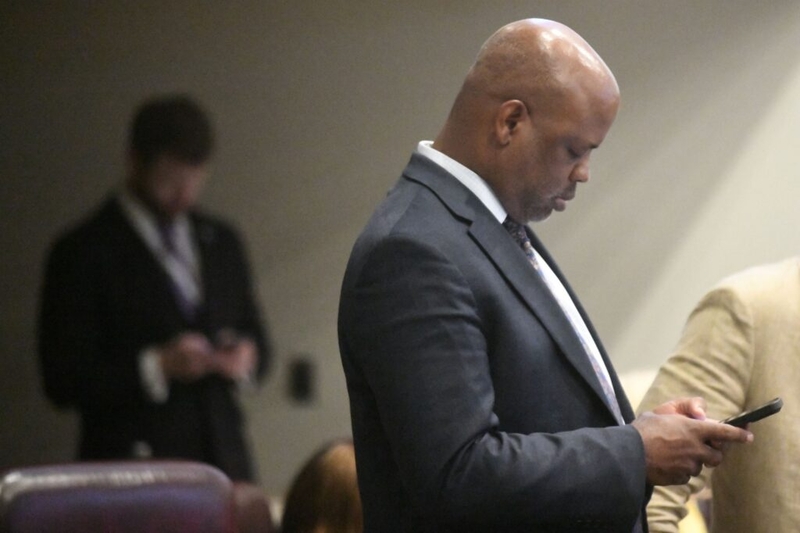
Rep. Chris England, D-Tuscaloosa, checks his phone during a meeting of the Alabama House of Representatives on April 15, 2025 at the Alabama Statehouse in Montgomery, Alabama. The Alabama House Judiciary Committee Wednesday approved a bill sponsored by England to make it a Class C felony for medical examiners to harvest organs of people without their family's permission. (Brian Lyman/Alabama Reflector)
An Alabama House committee Wednesday approved legislation that could subject medical examiners to prison time if they harvest a deceased person’s organs without first notifying and obtaining consent from the deceased’s family.
HB 71, sponsored by Rep. Chris England, D-Tuscaloosa, makes it a Class C felony, punishable by up to 10 years in prison and a $15,000 fine, for a medical examiner to take a person’s organs without contacting their next of kin. The law currently requires medical examiners to notify family members when organs are harvested and requires consent in all cases save for identification of the deceased, but does not provide penalties.
“The law already prohibited taking someone’s organs without permission, this adds a penalty to that because, apparently, this is a problem,” England said during a House Judiciary Committee meeting.
In 2024, eight families sued the Alabama Department of Corrections, alleging that the department harvested the organs of their loved ones, who died while in prison, and sent them to the University of Alabama Birmingham Heersink School of Medicine.
According to the lawsuit, a group of medical students from the school noticed that many of the specimens they worked with in the curriculum were taken from people who died while in Alabama’s prisons.
The university and the Alabama Department of Corrections sought to have the case dismissed in February claiming that the university is immune from civil litigation filed by the plaintiffs. The Montgomery Circuit court ruled against the motion to dismiss and allowed the case to move forward.
The House Judiciary Committee approved similar legislation that England sponsored in 2024.
The bill goes to the Alabama House of Representatives.
Montgomery