Alabama commission studying students’ screen time holds first meeting
Aug 18, 2026 | 6:01 am ET

Description
A child with a finger on a tablet. An Alabama commission charged with studying the risks and benefits of screen time instruction held its first meeting on Monday. (Oscar Lopez Rogado via Getty Images)
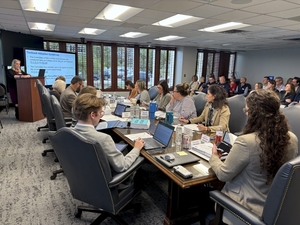
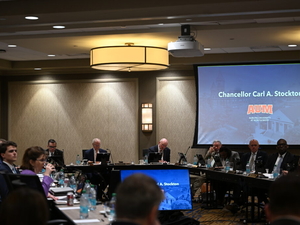
A state commission charged with studying the risks and benefits of screens in classroom instruction held its first meeting Monday.
The Commission on Screen-Based Instruction, created by Gov. Kay Ivey through an executive order last month, discussed goals and heard research-based presentations from two fellow commissioners.
Rep. Jeana Ross, R-Guntersville, the chair of the commission and a former state director of Early Childhood Education, said in an interview Monday that she wants to survey parents and teachers.
“We want to know what’s happening in Alabama, and we can address the issue when we know exactly what’s going on with our parents and teachers and administrators in the schools, according to what type of screen time and amount of screen time,” Ross said. “Because we’ve learned, particularly today, it’s been emphasized that all screen time is not equal. We want to focus more on what is quality and what does enhance instruction, not replace it.”
During the 2026 regular session, Ross sponsored HB 78, signed by Ivey in March, which set screen time limits for children up to five years old in licensed child-care facilities. Ross also filed HB 584, which would have expanded the screen time limits for all public school students. The bill failed to pass before the Legislature adjourned in April.

Ross said Monday she hopes to refile the legislation “based on what (the commission’s) recommendations are.”
Nashedra Barry, a child psychologist with Children’s Hospital of Alabama in Birmingham and a member of the commission, said during a presentation that the commission should consider the quality of the content being put in front of students rather than focus on strict time limits for screens.
“We have found that the quality of the screen use that you are consuming, as well as individual factors like child temperament, parental factors and all of those things, have a mitigating impact on the effects of screens on kids,” she said. “Child-centered designs are generally seen as better quality, so things that support language, cognition and social-emotional development for kids. Whereas things that we call engagement-based designs are seen to have a greater negative impact.”
Cailin Kerch, a clinical associate professor of early childhood education, curriculum and development at The University of Alabama and member of the commission, said during her presentation that while the usage of technology is prominent in classrooms, there isn’t evidence showing it’s the best way to educate students.
“One-to-one devices are almost universal in Alabama and in states across the U.S. However, we don’t have evidence yet to provide that that is the best way to educate young children,” Kerch said. “States are starting to focus on the quality of screen use versus the quantity, so not the number of minutes on the screen, but the number of minutes that’s really enhancing education, which is really central to our commission.”
Sen. Linda Coleman-Madison, D-Birmingham, said in an interview Monday that the commission isn’t looking to eliminate technology in schools.
“We don’t want to get rid of technology, that’s not what we’re saying,” she said. “We’re just saying that we need to back up and take a look at it to make sure, because the things that we do right now have long-term impacts. We want to make sure that we are intentional about teaching our students, that we’re intentional about what they learn, that we are concerned about the outcomes.”
The commission will report its findings to Ivey on Dec. 1.

Montgomery