After decades of denials, North Carolina’s Tuscarora Indians take a step closer to recognition
Jul 02, 2026 | 12:54 pm ET
Description
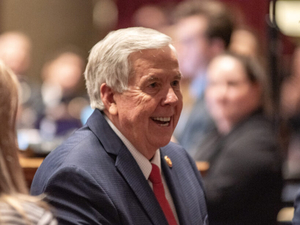
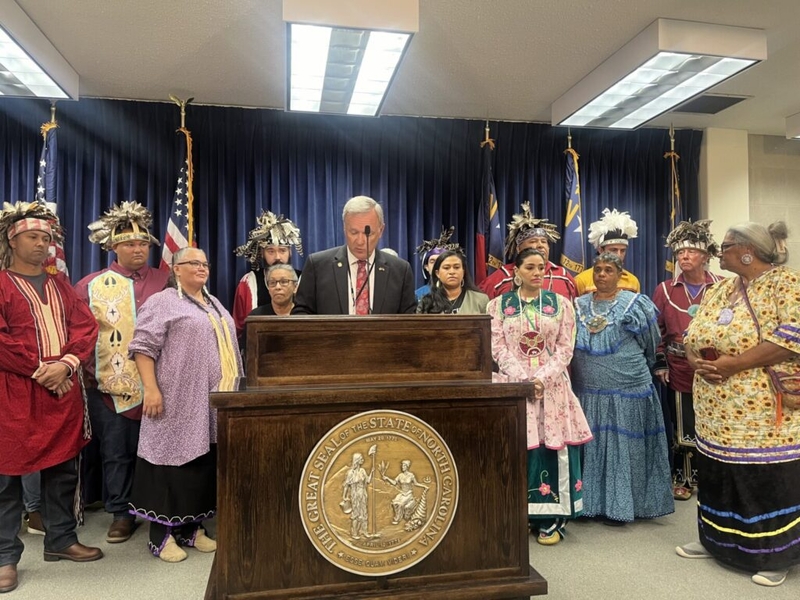
Rep. Ed Goodwin (R-Chowan), pictured here in 2024, has tried repeatedly to require the state to recognize the Tuscarora Indian tribe. (Photo: Ahmed Jallow/NC Newsline)
“I’m a firm believer. When somebody has been wrong, it has to be righted.”
Rep. Ed Goodwin (R-Chowan) choked back emotion Wednesday morning as he tried one last time to gain recognition for the Tuscarora Indians.
The 73-year-old Republican recounted how, in his childhood, the Tuscarora had worked long hours in the fields of eastern North Carolina helping his father bring their tobacco crop to market. Growing up, he marveled at Tuscarora history, but felt deeply frustrated that the tribe was repeatedly denied recognition.
“My heart has hurt because friends that I’ve had all my life couldn’t get recognized by the General Assembly. That just didn’t sit right,” Goodwin told members of the House Committee on American Indian Affairs.
On a week that the North Carolina legislature was focused on passing a $34 billion state budget, Goodwin, the vice chair of the House appropriations committee, wanted to use his time to fight for a tribe largely dismissed by the state Commission of Indian Affairs.
“You may think I’m a nut, but I’m not. You may think I’m a crybaby, but I’m not. It pissed me off,” said Goodwin.
He has tried unsuccessfully each session since 2019 to pass similar legislation on behalf of the tribe.
“I’ve tried all different kind of angles, and I’m about on my last tire. My tire’s blown out on me now, but I think this is the final effort that I will ever have to have a chance to get the Tuscarora nation recognized,” Goodwin said.
This year, Goodwin is advocating for House Bill 600, which would officially recognize the Tuscarora Indians of Kahtenuaka Territories and give them a seat on the North Carolina State Commission of Indian Affairs.
Language buried deep in this year’s state budget gives the Catawba Indians a seat on the commission, but not the Tuscarora.
The Tuscarora have long sought recognition from the state, arguing it is essential to preserve their culture and traditions. Tribal members and officials attended the hearing to make their case.
“Where will this tribe be located? Where’s the headquarters at?” asked Rep. John Lowery (R-Robeson), chairman of the Lumbee Tribe. The Lumbee Tribe of North Carolina received full federal recognition last December after more than a century of lobbying Congress.
Brandi Locklear-Alvarez, a member of the Tuscarora, said the tribe does not have a central office, but has no desire to encroach on Lumbee territory.
Opponents of recognition of the Tuscarora have suggested for years that they are merely a splinter group of the Lumbee.
Tribal Council co-chair David Webb said H600 does not create or invent a new tribe, nor take anything away from another tribe.
Congress passes Lumbee recognition bill, heads to Trump’s desk
“Instead, it recognizes our modern tribal government,” said Webb. “It’s really about fairness. It’s about correcting a historical error, and this committee has the opportunity to do that.”
Rep. Anna Ferguson (R-Jackson), a member of the Eastern Band of Cherokee Indians, said while she was spiritually with the Tuscarora, she could not logically support the measure.
“I would like to see a more unified presentation, especially from the Commission of Indian Affairs,” said Ferguson. “You’ve been denied there in the past. What I would like to see is going forward that you work with the commission.”
“It appears that the commission does not have a desire to work with them based on the comments that were made,” responded Rep. Amber Baker (D-Forsyth). Baker said it was also unfair for the commission to base state recognition on whether the Tuscarora of New York could validate the tribal members in North Carolina.
After an hour of debate, lawmakers voted 6-2 to advance the bill sending it on to the House State and Local Government committee. And while the legislation could stall as the session winds down, Rep. Carla Cunningham (U-Mecklenburg) reminded the Tuscarora no one on Jones Street should diminish or determine the value they bring to their community.
“Every day I fight for who I am, even when people don’t like it. They haven’t come from where I came from,” said Cunningham. “Stand for who you are. When people say no, you say, ‘God is watching. He is not finished.’ You aren’t either.”
Raleigh, NC