The affordability crisis doesn’t stop at the kitchen table. It’s hitting small business, too.
May 22, 2026 | 3:45 am ET
Description
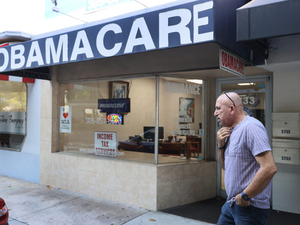
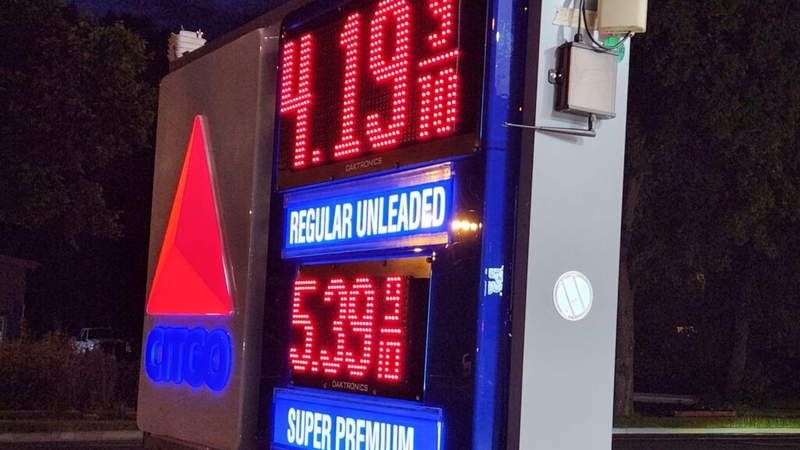
Spiraling gas prices are just part of the affordability crisis that small business owners face, Mel and Mike Ohlinger write. (Wisconsin Examiner photo)
Recently we paid $4.63 per gallon for gas while driving from Neenah, Wisconsin, to Nashville for our industry’s largest trade show. The trip is 633 miles each way. For years, loading up our company van with our booth and hitting the road was the affordable option for a small business like ours. Now even that feels out of reach.
We own OhmCo, a small, family-owned business that provides digital marketing and signage services for car washes across the United States. We are veteran-owned, woman-owned, and entirely self-funded. Every dollar we earn goes back into supporting our employees, growing our company, and serving our customers.
But right now, small businesses are being squeezed from every direction.
Every extra dollar spent on fuel is money that cannot go toward hiring, healthcare, equipment, or growth.
We understand that the recent inflation in the price of gas is driven by national policy and global events out of the state’s control. But that doesn’t make the escalating transportation and energy costs any easier for small businesses like ours to absorb, especially when travel, shipping, and logistics are essential to staying competitive.
Large corporations have dedicated legal, tax and compliance teams that can help them absorb rising costs more easily. Small businesses cannot.
What makes this even more frustrating is watching fuel prices climb while consumers are also dealing with higher costs tied to tariffs, supply disruptions, airline instability, and economic uncertainty. Working people and small businesses are left paying the price while political leaders seem more focused on spectacle than solutions.
At the same time, healthcare costs remain crushing for employers. Like many small business owners, we want to provide good coverage for ourselves and our employees, but premiums continue to rise beyond what many businesses can realistically sustain. Healthcare should not bankrupt employers or employees, and people should not have to stay trapped in jobs simply because coverage is tied to employment.
Through our advocacy with the Main Street Alliance, we have connected with entrepreneurs across the country facing the exact same challenges. Small business owners are delaying hiring, scaling back investments, and questioning whether they can continue operating under the weight of rising costs and instability.
We also need elected leaders, including our state Legislature, to prioritize regular working families and small businesses like ours instead of catering primarily to large corporations and powerful special interests.
Small businesses are the ones sponsoring local sports teams, supporting community organizations, employing local workers, and reinvesting in our neighborhoods. Yet too often it feels like the needs of Main Street come last.
Large corporations have the resources to negotiate, litigate or exploit loopholes. They benefit from complicated tax systems and special carve-outs tend to benefit them over local businesses and communities.
Tax incentives may keep a large corporation from leaving the community, but when they contribute less, that burden still has to be made up somewhere, and it often falls on homeowners or small businesses.
What small businesses need is not complicated. We need lower and more stable fuel prices and reduced tariffs that increase consumer and operating costs.
We need healthcare that is actually affordable for working families and employers, as well as affordable childcare.
We need simpler rules for interstate hiring, because every state has different payroll registrations, labor laws, unemployment systems, tax requirements and compliance rules. Larger companies can afford teams of lawyers and HR departments to manage that. Smaller businesses usually cannot.
We need stronger protections from predatory lending and excessive fees as well as easier access to loans. We need easier access to broadband internet and automation incentives.
We need more competition and affordability in transportation and energy markets. We need policies that support small business growth instead of squeezing us out — lower shipping costs, lower payroll processing and credit card processing fees, and stronger protections against large corporations that delay payments and dominate policy discussions to their advantage and our disadvantage.Most of all, we need elected leaders willing to prioritize regular people and small businesses over large corporations and special interests.
Small businesses are the backbone of this country. At OhmCo, we sponsor a local kids bowling team, and we travel around the country teaching businesses about technology, AI, marketing, and innovation. We believe deeply in our communities and in the promise of hard work.
But right now, many small businesses feel like we are being priced out of survival.
We are not asking for special treatment. We are asking for leadership that prioritizes working families and small businesses instead of corporate profits and political theater. Americans deserve an economy where hard work actually leads somewhere again.
Madison, WI