Acclaimed Florida developer gets down and dirty fighting over canal
Jul 09, 2026 | 12:05 am ET
Description
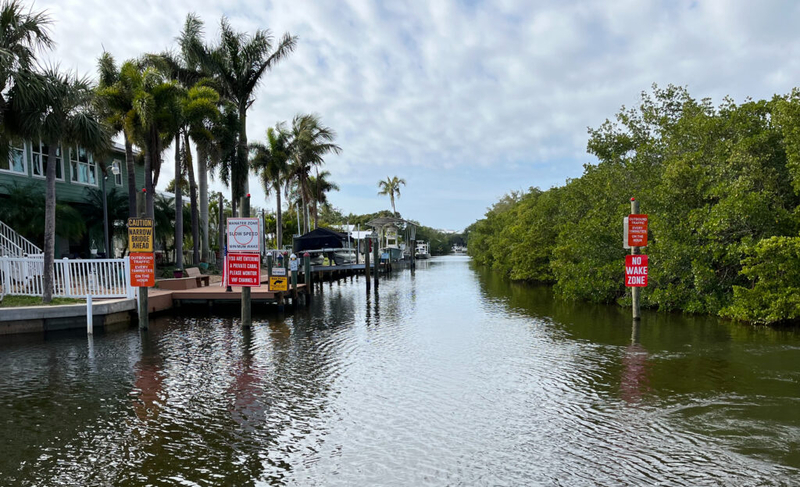
Developer Marshall Gobuty put up pilings with warning signs in the canal in Cortez. He was cited by the state for interfering with navigation. (Photo courtesy of Gobuty)
In 1985, a book appeared called “Finest Kind: A Celebration of a Florida Fishing Village” by Ben Green. It depicted life in a Manatee County waterfront town named Cortez. Green, a native, bemoaned the forces pushing to change little Cortez to be like everywhere else in Florida.
If anyone were to reprint “Finest Kind” today, you could subtitle it, “What Was Gained and Lost When Marshall Gobuty Showed Up.”
On Linkedin, Gobuty describes himself as a “community focused sustainable real estate developer.” On X, he boasts he’s “nationally recognized as a pioneer in the green building industry.”


He’s been happy to talk about himself and his work to the Weather Channel, Medium, and CNN. But the way the developer introduced himself to his new neighbors in Cortez, they say, was a tad less charming.
“There was a knock on our door at 7 in the morning,” Kim Ibasfalean said about that fateful day four years ago. “It was a sheriff’s deputy informing us that we were being sued.”
Ibasfaleen, who runs Capt. Kim’s Boat Rides and Charters, and her husband Mark, who works in a local fish house, are both Cortez natives. They have owned their home for 30 years.
When they were sued, they thought there’d been some mistake. Maybe they could clear it all up with a phone call. They were wrong.
Gobuty had sued them and seven of their neighbors, arguing that the canal they share doesn’t belong to anyone but him. He says he’s entitled to demand their eviction or payment of thousands in rent.
The two sides are now locked in a legal battle over control of the 1,400-foot canal that was built in the 1950s and connects to the Intracoastal Waterway. The local paper, the Anna Maria Island Sun, joked that it’s a case of “Marshall law.”
Gobuty hired attorneys from two law firms to pursue his case against the Cortez homeowners. Ibsafaleen, who was semi-retired, had to go back to work to pay their legal bills. It’s not enough, so she and her husband launched a Gofundme, posting a big sign about the case on the canal itself.
“They are suing us for trespassing in our own backyards and we must remove our docks,” the sign says.
When I first heard about all this, I was intrigued by the contrast between the glowing national coverage of Gobuty’s Hunters Point development and his down-and-dirty struggle with the blue-collar homeowners. It’s like a Florida variation on Dr. Jekyll and Mr. Hyde.
Adding to my fascination is the fact that the fight is over a manmade canal — one like thousands of others scattered around the state.
When I called Gobuty, the developer told me the case is “very black and white and clear.” He complained that the homeowners were “whining and crying and making up stories” and described Ibsafaleen as “just a troublemaker.”
Then I asked him about the time that a state wildlife officer accused him of interfering with navigation on the disputed canal.
“That,” he said, “was beyond scary.”
From denim to hotels to apartments
I’ve been writing about Florida developers for four decades. Gobuty’s background is different from most.
He grew up in Canada, where his father, Michael, made enough money from luxury leather goods that he wound up owning the Winnipeg Jets hockey team.
Gobuty told Medium that after college he “fell back into the apparel world,” which makes it sound like he landed in a pile of discarded dresses from “Project Runway.”
Actually, according to a podcast called “Supercool,” he created the Arizona Jeans brand and sold it to J.C. Penney, which I’m pretty sure is the only time the words “J.C. Penney” and “supercool” have appeared in the same sentence.
Next, he ran a company that managed thousands of apartments, mostly in Germany. Then, he told Medium, he sold furniture to hotel chains around the world. He didn’t identify his buyers, but perhaps your booty rested on an original Gobuty at a Hilton, Marriott, or a Motel 6.
At this point, Gobuty decided to try building, first in Israel, then in Thailand and England. Why did he then go to Manatee County? I assumed it was because he heard Manatee County at that time was in the hands of a bunch of pro-development county commissioners.
But he told me his daughter went to basketball camp at the elite, sports-oriented IMG Academy “and I just fell in love with Bradenton.” He built one over-55 project there, then turned his attention to some property he’d bought in Cortez.

When Gobuty first approached the commissioners about building in Cortez, said former Manatee County commissioner Joe McClash, he promised that what he had planned would fit the character of the historic fishing village.
Instead, said McClash, “he disrespected the Cortez community.”
Cortez vs. crazy
Cortez is one of the last remaining fishing villages on Florida’s Gulf Coast. It clings to its maritime heritage the way a drowning man clings to a life preserver.
First settled in the late 1800s, the town owes its location to a thriving fishing spot in Sarasota Bay. The spot was dubbed The Kitchen because it provided an abundance of seafood, especially mullet (the fish, not the hairstyle).
Now there’s a Florida Maritime Museum housed in the 1912 Cortez schoolhouse and a Commercial Fishing Festival held every February.
But the town’s recent growth has left it struggling. As the Anna Maria Island Sun put it, the town must figure out how to “shield itself from neighbors peering down from high-rise condos and complaining that their backyards are filled with stone crab traps and old boats.”
The town’s original name was Hunter’s Point, so it took some cheek on Gobuty’s part to name his development that too — especially since it was so different from everything around it. In our interview, Gobuty described the typical Cortez architecture as “slightly historic, slightly hillbilly.”
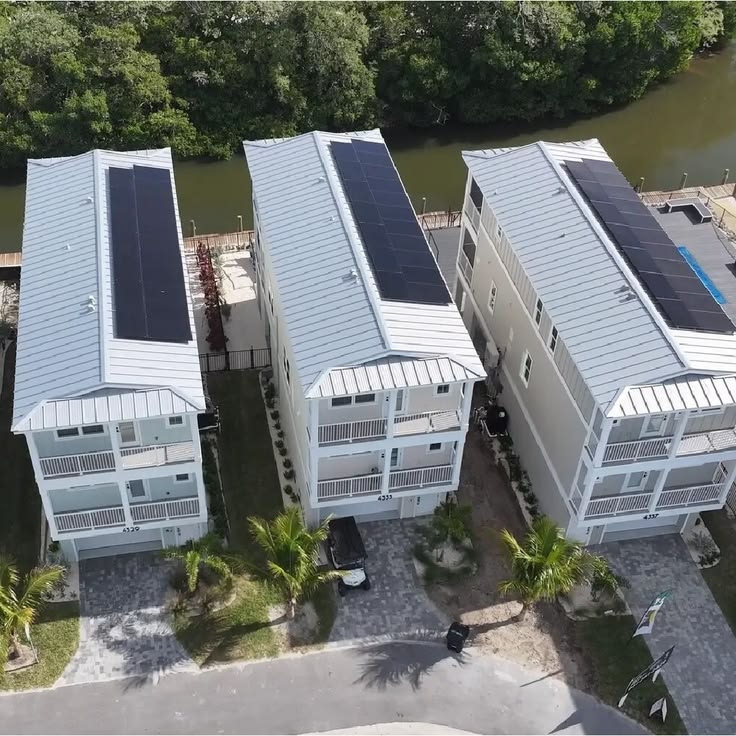
The marketing folks for Hunters Point, on social media, describe the condos as “a net-positive resort community … the first of its kind in the United States.” Aesthetically, though, it’s a far cry from the “finest kind” of Cortez.

“It’s an ugly development,” said Jane Von Hahmann, a former county commissioner who’s a longtime leader of the Florida Institute for Saltwater Heritage in Cortez. “It’s supposed to be small homes. Instead, you’ve got these pillboxes out there.”
All the national acclaim that Gobuty has received is because this unlovely development is so environmentally advanced. The buildings actually generate more electricity than they consume. They have no carbon footprint at all, he said.
“It was designed to be the home of the future — steadfast against extreme weather and reliant only on the sun for power,” the Bradenton Herald wrote last year.
But you could build something like that anywhere in Florida, I said to Gobuty. Why did you put it in Cortez? He said he had to show what the design could do under the most adverse conditions.
“We had to put it right on the water,” he insisted. “It had to be in a [federal] flood zone.”
Thus, when Hurricanes Helene and Milton hit in 2024, the solar-powered buildings never lost electricity. The steep elevation guaranteed that no flooding reached the interior. And the airtight construction warded off wind damage.
“We didn’t have one insurance claim filed,” he told me.
His one problem with the site, he said, was dealing with the neighbors across the canal, several of whom he says have cussed him out to his face.
“They’re trespassing,” he contended. “My angst on this is that they’ve dragged this out and made me crazy.”
The grouper trooper
I had a hard time wrapping my head around the idea of a “private canal.”
I thought any navigable waterway belonged to us taxpayers. But I consulted with a number of land-use experts and lawyers who told me it’s much more complicated than that.
“Generally, the state owns waterways that were naturally navigable or were dredged to replace naturally navigable waterways,” explained retired University of Florida professor Richard Hamann.
Canals dredged from dry land where no waterway existed are considered private, not public, he said.
Gobuty told me he was just as clueless as I was when he bought the property in 2016.
“I wouldn’t know a canal from a lake from a river,” he said. “I’m a homebuilder. That’s my job. My job is not canal management.”
The conflict emerged when he wanted to put in 49 docks for Hunters Point. His engineer on the project messed up, he told me. The engineer failed to properly advertise his state permit application.
When the owner of the nearby Loggerhead Cortez Village Marina belatedly found out about the docks, the marina objected. It argued that the new Hunters Point docks would interfere with other boaters using the waterway.
Gobuty struck back by suing the marina. That’s when he sued the eight homeowners too, collateral damage in the war.

The developer quickly obtained a court order preventing them from selling their property before the case was resolved. Fred Moore, an attorney for the homeowners, told me one family had been on the verge of selling their home and moving elsewhere when Gobuty’s suit “messed up the sale.”
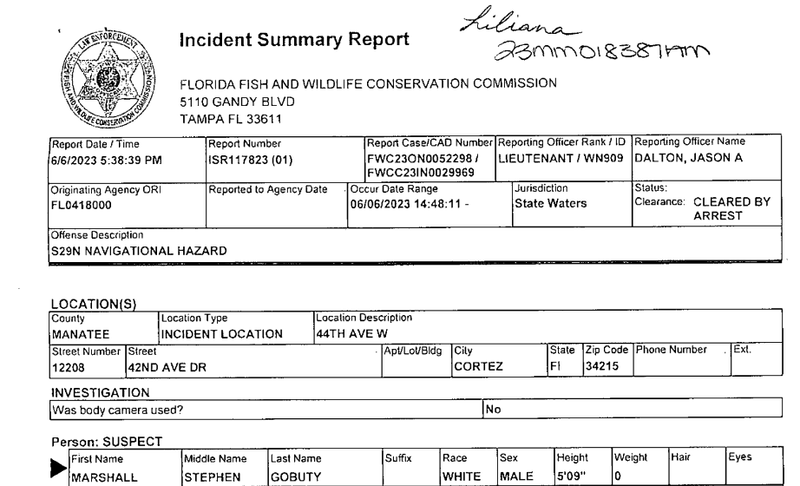
Then, without permits, Gobuty put up new pilings in the canal. On the pilings he posted warning signs to tell boaters to slow down and watch out for manatees. Someone reported the unpermitted pilings to the Florida Fish and Wildlife Conservation Commission.
The commission’s law enforcement arm, nicknamed “grouper troopers,” sent out a lieutenant to investigate. He wrote Gobuty a citation for interfering with navigation.
Gobuty told me he found that unsettling, because “police scare me.” He figured someone had done it “just to rattle me.”
He hired another lawyer to fight the citation, arguing that his pilings were too far apart to interfere with navigation. The commission didn’t respond to his motion to dismiss the citation, so a judge granted it.
However, he did pull the pilings. When I asked why he put them in without asking for permits, he said, “I don’t need them, because it’s my canal.”
Tug of war
During my interview with Gobuty, I tried to point out to him that he’s an outsider who’s challenging docks and boat lifts that have been in place for decades. The local government allowed them to be built, so the residents assumed they were legal.
He insisted the locals took a too-lax approach to regulations.
“Cortez is the kind of a place where you can do something like that and then ask for forgiveness,” he said. “You ask for a dock permit, and they give it to you. They never look to see who the land belongs to.”
Moore told me that he thinks Gobuty may have overplayed his hand on the question of ownership. The developer doesn’t own the whole canal — parts appear to belong to the marina and a couple of RV parks.
The case was set for trial in May. But shortly before the trial started, Gobuty parted ways with his attorneys, citing “irreconcilable differences.” The judge postponed the trial until September so he could hire new ones and get them up to speed.
Meanwhile, the judge ordered everyone to a mediation session. It yielded no compromises, much to Moore’s disappointment.
“I’d like to think we could work it out,” the attorney said with a sigh, “but here we are.”
Gobuty insisted he’s willing to cut a deal with the homeowners. In March he settled with one defendant (who told the Anna Maria Island paper she gave up because of the legal fees). He told me he’s not the one being unreasonable. It’s the other side.
My suggestion to resolve this is to stage a tug-of-war, with the homeowners on one side of the canal pulling against Gobuty and any corporate partners he can round up. First one to hit the water loses. I bet the old anglers of Cortez, accustomed to spending their days pulling cast nets, would approve of this approach.
I think Gobuty might let himself be roped into this contest. Mr. Net Zero Building acknowledged that he’s grown weary of the canal conflict.
As he put it, “It’s such a waste of energy.”

Tallahassee, FL