27 years after landmark ruling, people with disabilities still face neglect and death
Aug 05, 2026 | 12:41 pm ET
Description
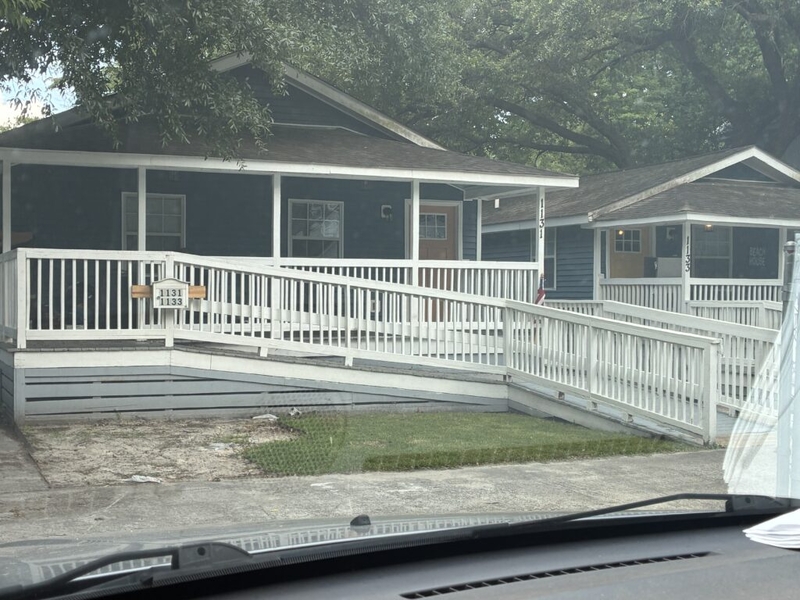
This photo taken Thursday, June 11, 2026, (from the street inside a vehicle) shows the community residential care facility at 1133 Bexley St. in North Charleston, South Carolina, named Park Circle Home, where a search warrant was conducted on March 3, 2026. A community care residential facility is supposed to provide around-the-clock care of vulnerable adults. (Photo by and courtesy of Patricia D. Sanford)
In 1999, the U.S. Supreme Court decided Olmstead v. L.C., holding that unjustified segregation of people with disabilities can violate the Americans with Disabilities Act. People should receive services in the most integrated setting appropriate to their needs.
That principle is right. It should be enforced.
But moving people out of large institutions does not automatically create integration, dignity, or safety. Buildings can become smaller while the people inside remain hidden. The failure is not only institutional size. It is what happens when vulnerable people disappear into a system that no single agency fully explains.
Consider Park Circle Home, a licensed community residential care facility on Bexley Street in North Charleston.
Thaddeus Moose was 64. The South Carolina Attorney General’s Office alleges that neglect at the facility between June 12, 2024, and April 10, 2025, caused his death.
He was taken to the Ralph H. Johnson Veterans Affairs Medical Center on April 10 and died four days later from septic shock, bronchopneumonia and dehydration associated with multiple Stage 4 pressure ulcers and osteomyelitis. The coroner ruled his death a homicide.
He was not the only one.
The Attorney General’s Office alleges that, between Nov. 9 and Dec. 5, 2024, the same operators failed to provide another resident essential care and that the neglect contributed to that resident’s death.
That resident has never been publicly identified.
On March 3, 2026, investigators executed a search warrant and, according to the Attorney General’s Office, found two vulnerable adults locked in a room with no means of leaving the building. Investigators also allege that a third resident was criminally neglected in the days before the search and suffered great bodily harm.
Three people have been charged, including the facility’s licensed administrator. The charges include neglect resulting in death or great bodily injury and kidnapping allegations involving the residents reportedly found locked inside.
The cases are pending. Everyone charged is presumed innocent.
Here is what troubles me most.
I cannot tell you whether the resident who allegedly suffered great bodily harm is alive today. I cannot tell you the name of the resident who died in 2024. I cannot tell you what became of the people removed from the home.
I have looked. The public record does not answer those questions.
I am not saying no one responded. The Attorney General’s Office credited several state agencies and the Long Term Care Ombudsman with helping remove residents.
Renovations to centers for disabled South Carolinians scaled back after shortfall discovered
Agencies acted.
But the record is scattered. Licensing, Medicaid oversight, protective services, ombudsman functions, death investigations and criminal enforcement are divided among different offices. Each agency possesses one piece.
The public is left to assemble fragments after someone has already been harmed.
Privacy should protect residents. It should not make a publicly licensed and publicly funded care system impossible to examine.
This is personal for me.
My son Walter is nonverbal and autistic. He has high support needs and has remained on South Carolina’s Medicaid waiver waiting lists for more than five years. South Carolina calls these places community-based care. But a smaller building with a different name is not automatically safer or more integrated.
A court decision cannot inspect a bedroom. It cannot examine a pressure ulcer, test a locked door, count missed medications or determine whether a resident received food and medical care.
Olmstead is only as good as the system that checks.
South Carolina should enforce the integration mandate and fund meaningful home- and community-based services. It should also require unified oversight of licensed residential care facilities.
When a resident dies, suffers serious injury or is removed from a state-licensed, publicly funded home, the public should receive a basic incident-accountability report after necessary privacy redactions.
It should identify the facility, the nature of the incident, the agencies notified, whether an inspection or investigation followed, any regulatory findings, corrective action imposed and the facility’s current license status.
Not private medical records.
An answer.
Without that accountability, someone can enter one of these homes, disappear from public view, and we may never know what happened to them.
We did not end institutionalization.
We changed the address.
Columbia