With 2026 on the horizon, these candidates are hoping to be Michigan’s next governor
Nov 26, 2025 | 7:00 am ET
Description
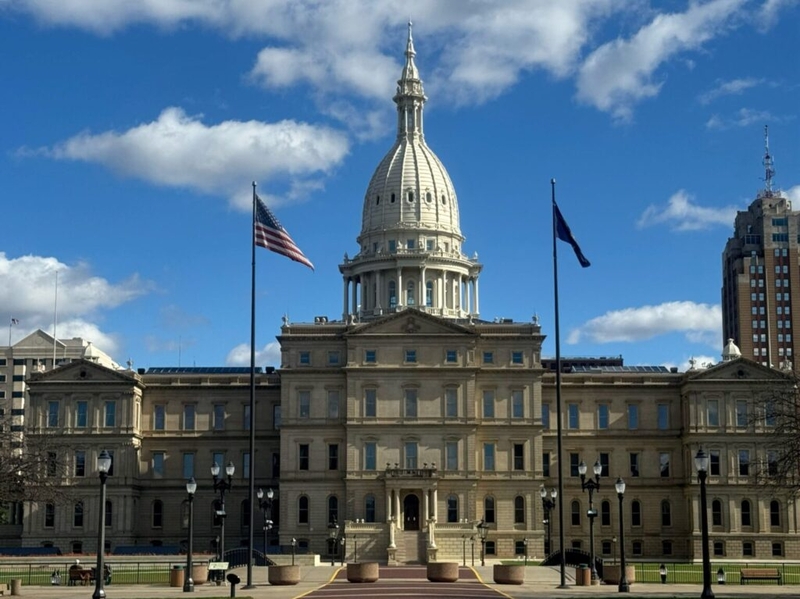
Michigan Capitol building. (Photo by Susan J. Demas
Michigan Gov. Gretchen Whitmer will soon be in her final year in office, and a crowded field of candidates have stepped in to stake their claim as the state’s next executive.
There is a deep bench of candidates from both parties, and Detroit Mayor Mike Duggan has set aside his lifelong affiliation with the Democratic party to launch an independent bid for the state’s top office. The dynamic has led some to question whether a third party candidate could garner enough support to secure the governorship.
Although control of the governor’s office has flipped back and forth over the past 40 years, a strong showing among Democrats this November amid frustration with President Donald Trump’s policies could signal a potential shift in that dynamic.
Here’s the Advance’s breakdown of the race thus far, with details on each candidate and current fundraising totals.
The Democrats
Heading into election year, Michigan Secretary of State Jocelyn Benson, Lt. Gov. Garlin Gilchrist II, Genesee County Sheriff Chris Swanson and former Cape Coral, Fla. Mayor Marni Sawicki make up the slate of Democrats aiming to hold onto the executive seat in Lansing.
Benson has emerged as an early favorite amongst Democrats, retaining a cash advantage over her opponents as well as a commanding lead in internal polling with strong recognition over Gilchrist and Swanson.
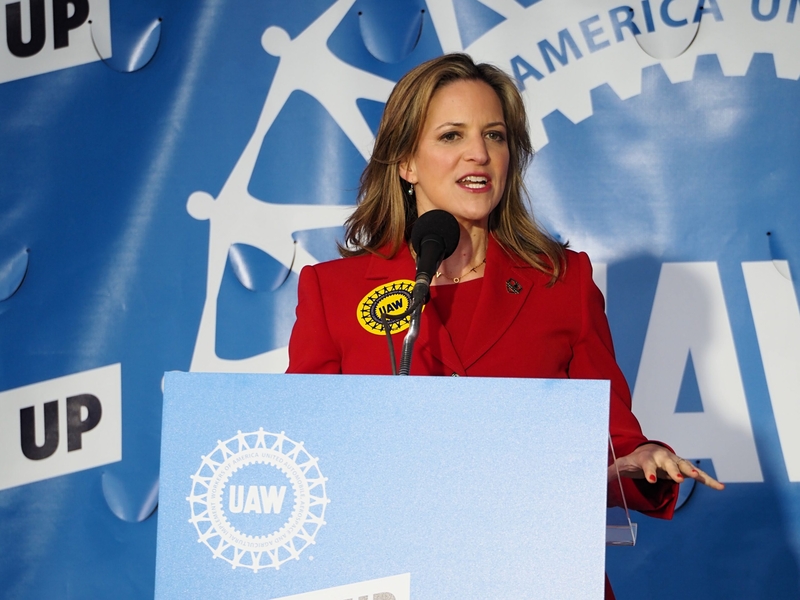
Jocelyn Benson
Over her tenure as secretary of state, Benson has overseen elections with record-setting turnout and helped implement new laws initiated by Michigan voters aimed at improving access to the ballot box. She has focused on protecting voting rights, to ensure all Michiganders can cast a vote regardless of their race, gender, faith or sexuality.
Benson has also secured endorsements from several state lawmakers, as well as the campaign finance reform group End Citizens United, EMILYs List, Vote Mama PAC, the Progressive Women’s Alliance, and labor groups including the Michigan Laborers District Council, the Association of Flight Attendants, UA Local 174, Teamsters Local 243 and 406 and UFCW 876 and 951.
Campaign finance reports filed with the state in October show Benson’s campaign has raised the most of any Democratic candidate, bringing in $4.75 million and spending $1.76 million, leaving her with $2.98 million on hand.
Garlin Gilchrist
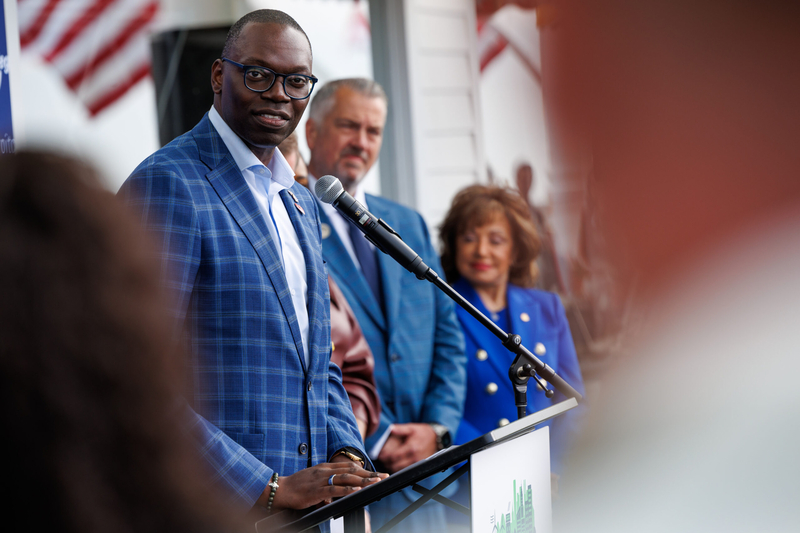
Serving as Whitmer’s second-in-command since 2019, Gilchrist is the state’s first Black lieutenant governor. If successful in the primary and the general election, Gilchrist would also be the state’s first Black governor.
A Detroit native and former software engineer for Microsoft, Gilchrist has carried forward the Whitmer administration’s goals of growing businesses and economic opportunities in the state to attract families and retain Michigan graduates. Gilchrist also broke with his competitors in calling Israel’s war on Gaza a genocide, pledging not to accept campaign funding from the American Israel Public Affairs Committee, or AIPAC, the largest pro-Israel lobbying group in the U.S.
He has won endorsements from U.S. Reps. Rashida Tlaib (D-Detroit) and Jasmine Crockett (D-Texas), Democratic National Committee Black Caucus Chair Virgie Rollins and several state lawmakers.Campaign finance disclosures filed with the state in October show Gilchrist’s campaign has raised just under $1.13 million and spent $748,632, leaving the campaign with $378,457 on hand.
Chris Swanson
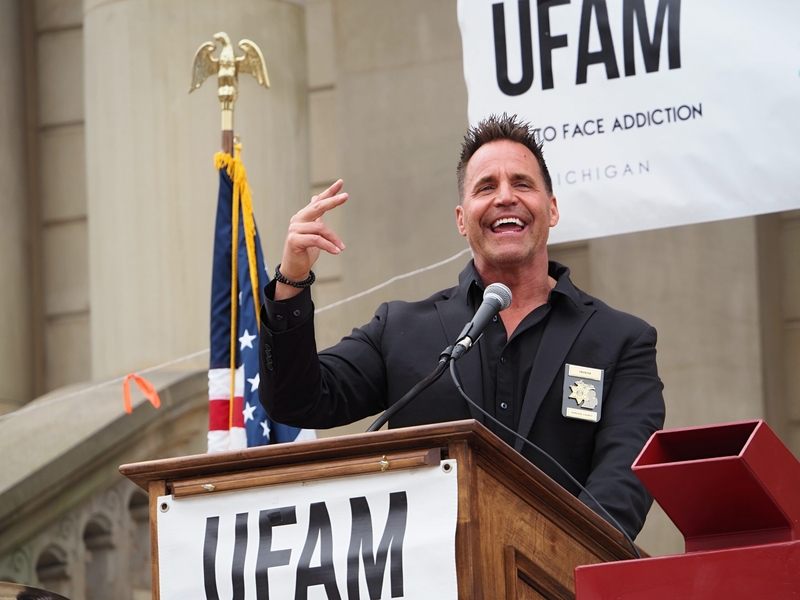
Genesee County Sheriff Chris Swanson made national headlines in 2020 after taking off his riot gear to walk alongside protestors speaking out against police brutality after the killing of George Floyd. Now he’s looking to be Michigan’s next governor.
Swanson has pledged to protect, serve and unify, telling attendees at his campaign announcement that he would bring a “customer service mindset” to state government. Swanson has also called for support to small business by creating an Office of Innovation, and for the adoption of a statewide model of his office’s Genesee County Human Oppression Strike Team, which works to combat human trafficking.
Campaign finance disclosures filed with the state in October show Swanson’s campaign has raised $1.36 million and spent $975,997, leaving the campaign with $385,189 on hand.
Marni Sawicki
A Battle Creek native, Sawicki announced her campaign for governor in March, promising a focus on government transparency.
In her announcement, Sawicki offered her transparency plan, which would include regular public performance dashboards for all state departments, livestreamed and recorded board/committee meetings and decision-making sessions, a searchable database of all state contracts and expenditures, mandatory ethics training for all elected officials and state employees and require public lobbying logs documenting all meetings between elected officials and lobbyists.
Campaign finance disclosures filed with the state in October show Sawicki’s campaign has brought in $15,930, and spent $14,605, leaving the campaign with $1,324 on hand.
The Independent
Mike Duggan
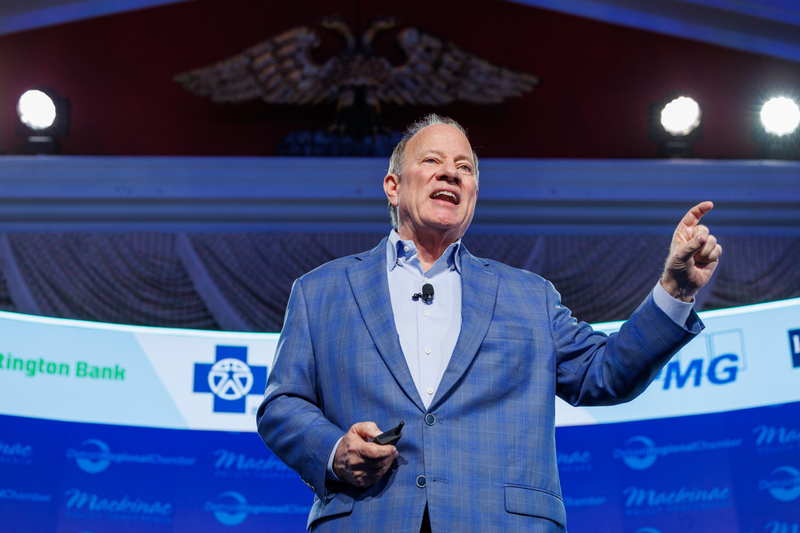
Breaking away from the Democratic Party, Duggan is looking to shake up an increasingly divided political system citing the “toxic and personal” nature of today’s politics in his decision to forgo a campaign from within the two major parties.
Duggan has pitched his campaign as a balm to the partisan arguments barring government from addressing the issues facing the state, but his split from the Democrats has brought plenty of hurt feelings, as members of Duggan’s former party have gone on the offensive, accusing him of cozying up to Republican donors and labelling him a spoiler candidate who could draw votes away from Democrats. Polling released in October showing Duggan closing the gap with the top Democratic and Republicans candidates.
He has also secured the support of the Detroit Regional Chamber of Commerce, Lansing Regional Chamber, the Southeast Michigan Chamber of Commerce, several Detroit area unions and former U.S. Rep. Dave Trott (R-Commerce Township), among others. Campaign finance disclosures filed with the state in October show Duggan’s campaign has brought in nearly $4.38 million and spent more than $1.96 million leaving the campaign with more than $2.4 million cash on hand.
The Republicans
With a crowded slate of candidates and no clear frontrunner, signs are pointing to a messy primary for Republicans headed into 2026.
While U.S. Rep. John James (R-Shelby Township) emerged as an early frontrunner in the race, but interest in the second term Republican could be fleeting. A straw poll conducted among members of the Michigan Republican Party placed James at fourth amid his competitors and other names floated for governor.
James was notably absent from a gubernatorial forum hosted by the Michigan Republican Party at its biannual conference on Mackinac Island, and his absence from the Michigan Republican Party’s first gubernatorial debate prompted immediate criticism from his opponents, with supporters of Senate Minority Leader Aric Nesbitt (R-Porter Township) bringing milk cartons bearing a missing poster with James’ likeness on the side.
John James
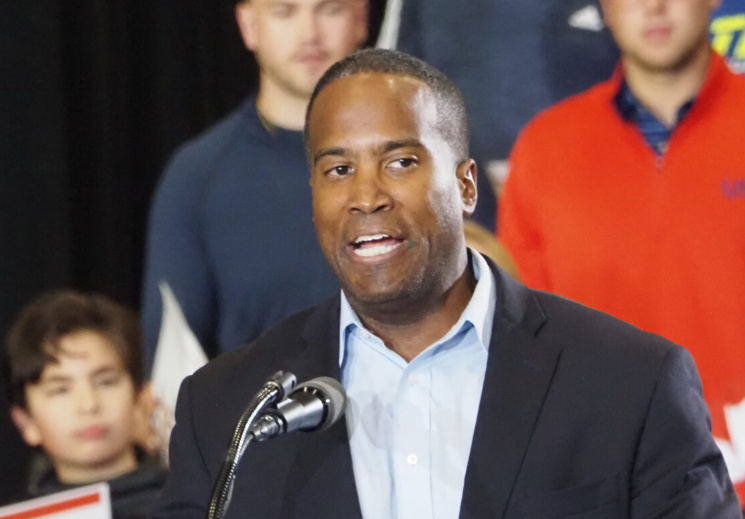
Opting against a third term in the U.S. House, James announced in April that he would instead seek the top spot in Lansing, arguing that “It’s time to get Michigan’s government out of fantasyland and back to common sense,” while touting his ties to Trump.
If elected, James would be Michigan’s first Black governor.
James’ campaign lists affordability as his top priority, with the representative promising a focus on kids and families in education, a reduction in regulations on business and support for law enforcement while opposing diversity, equity and inclusion initiatives within government.
Campaign finance disclosures filed with the state in October show James’campaign has brought in $3.65 million and spent nearly $1.38 million, with more than $2.27 million cash on hand.
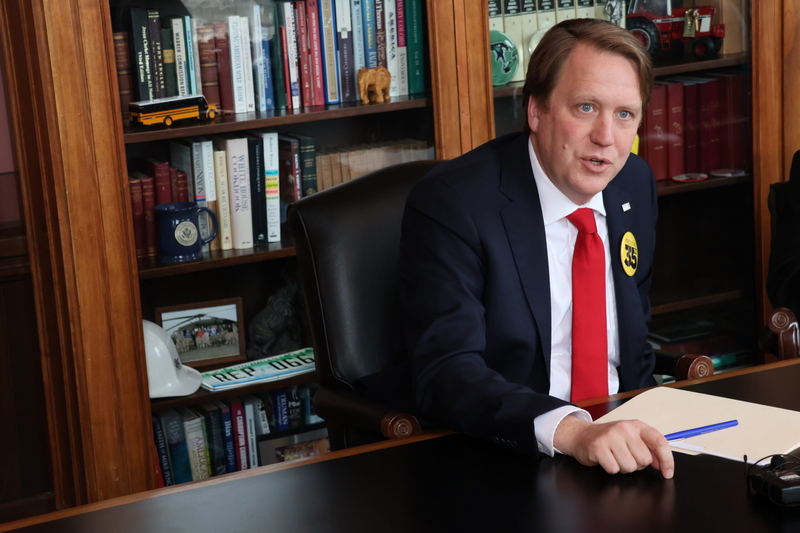
Aric Nesbitt
As the top Republican in the Michigan Senate for the previous three years, Aric Nesbitt has been an outspoken critic of both Whitmer, and Democrats in the Legislature, and has repeatedly criticized Democrats for their approach to education, business regulation and government spending.
As a supporter of President Donald Trump, Nesbitt’s campaign platform shows some overlap with the president’s policies, opposing electric vehicles and calling on law enforcement to partner with the federal government to deport undocumented immigrants. He also supports cutting taxes, eliminating government spending and protecting the Second Amendment.
Campaign finance disclosures filed with the state in October show Nesbitt’s campaign has brought in $2.7 million and spent $616,869.34, with more than $2.1 million on hand.
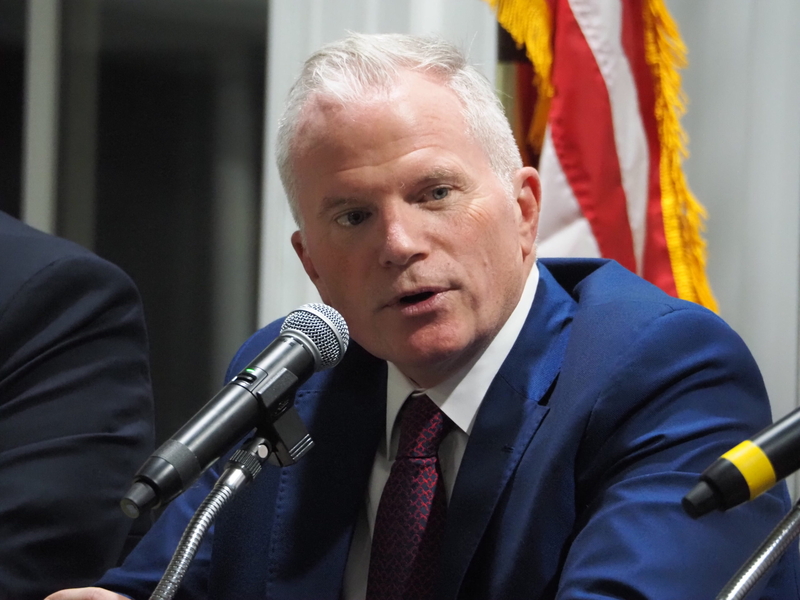
Mike Cox
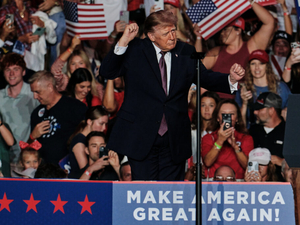
Emulating the president’s campaign slogan, Mike Cox, who served as Michigan’s attorney general from 2003 to 2011, has pledged to “Make Michigan Great Again.”
Cox supports eliminating the state income tax and restoring Michigan’s Right to Work laws, a series of policies enacted under Snyder and repealed under Whitmer’s administration. He has also called for an end to corporate subsidies and to “DOGE” state government, referencing the now defunct U.S. Department of Government Efficiency.
Campaign finance disclosures filed with the state in October show Cox’s campaign has brought in more than $4.58 million and spent $757,638, with more than $3.78 million on hand.
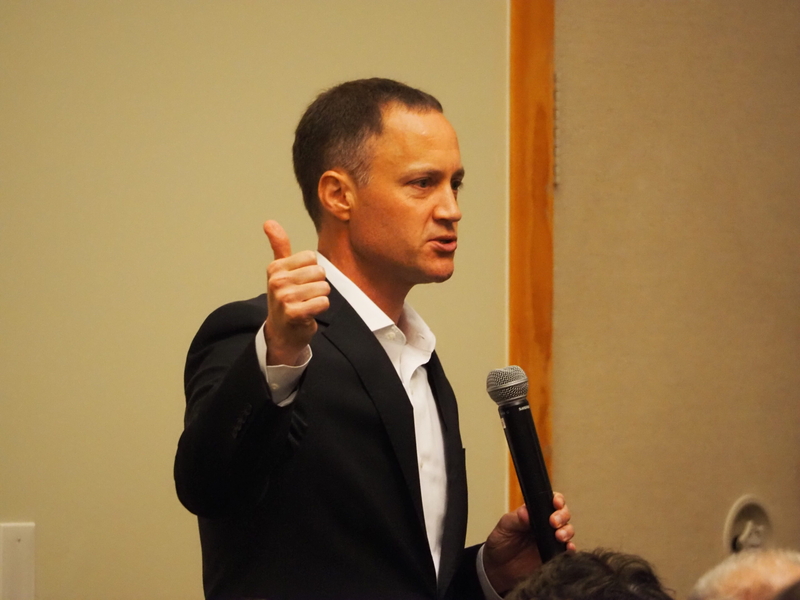
Tom Leonard
A three term state representative and former Michigan Speaker of the House, Tom Leonard sought the Republican nomination for attorney general in 2022 but came up short against fellow attorney Matt DePerno.
As part of his campaign, Leonard has put forth proposals to improve ethics and accountability in state government, including subjecting the Legislature and the governor’s office to Michigan’s Freedom of Information Act and a state-level version of the federal Hatch Act, which bars government employees from politicking while on duty, in uniform or utilizing government vehicles or facilities. He has also proposed eliminating the Michigan Economic Development Corporation, which oversees subsidies to attract businesses to the state, eliminating regulations on farmers and the agriculture industry and investing in recruitment for law enforcement.
Campaign finance disclosures filed with the state in October show Leonard’s campaign has brought in $937,023 and spent $227,730, with $709,293 on hand.
Karla Wagner
After years of spearheading efforts to eliminate state property taxes, AxMITax founder Karla Wagner is making the same issue the central issue of her campaign for governor.
Wagner owns Aunt Belle’s Kitchen in Rockford, and has listed promoting and protecting small businesses among her campaign priorities. Wagner also supports a reassessment of the state’s clean energy law, promoting farming and homesteading and a reform of public school funding, which is primarily sourced from property taxes.
Campaign finance disclosures filed with the state in October show Wagner’s campaign has brought in $2,875 and spent $2,619 with $255 cash on hand.
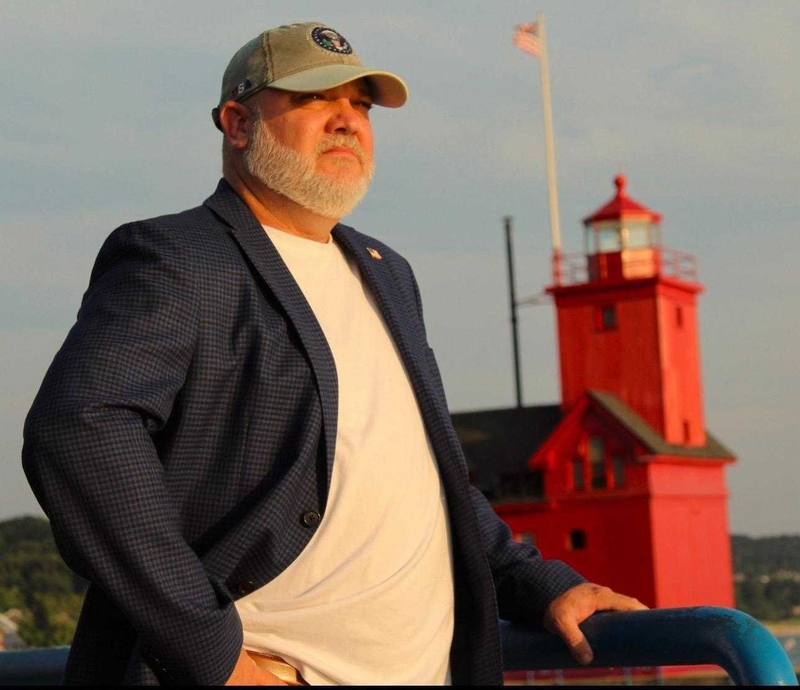
Anthony Hudson
Genesee County Truck Driver Anthony Hudson has made his opposition to state income tax and property taxes a cornerstone of his campaign, promising to implement Trump’s Agenda within the Great Lakes State.
Hudson’s campaign has also called for the elimination of wind and solar energy farms, and exempting paid time off and sick time and sick time from taxes.
Campaign finance disclosures filed with the state in October show Hudson’s campaign has raised $13,682, with the campaign spending $12,479 since its launch. According to the report, Hudson’s campaign has $1,202 cash on hand.
Ralph Rebandt
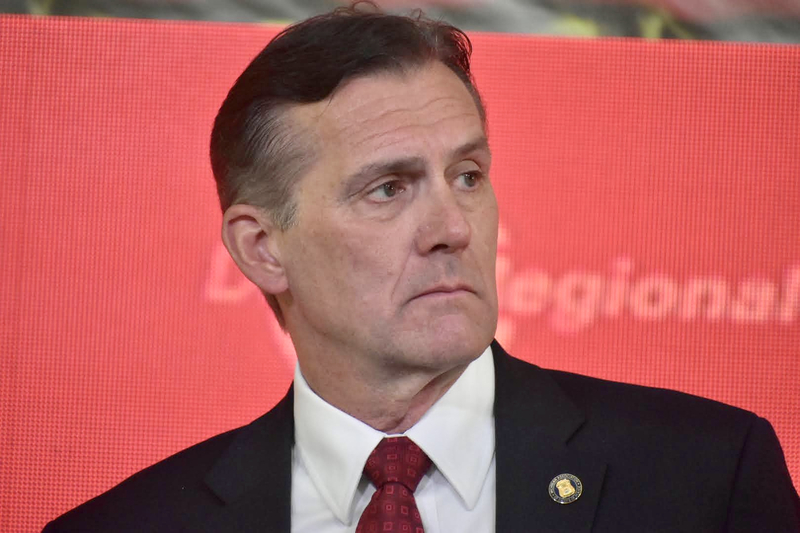
Rebandt, a retired pastor from Oakland County, is taking another bite at the apple after placing last in the 2022 Republican gubernatorial primary election.
Rebandt opposes abortion and has called for constitutional protections for fetuses with very limited exceptions for medical emergencies and no exceptions for rape or incest. His campaign also emphasizes support for law enforcement, the Second Amendment, lower taxes and reduced regulations for small businesses and universal school choice.
Campaign finance disclosures filed with the state in October show Rebandt’s campaign has brought in $926,800 and spent $46,344, with $880,455 on hand.
Lansing, MI