DFL Sen.-elect Mark Legvold to wear many hats in the Senate: veteran, firefighter, farmer, educator
Nov 27, 2026 | 7:00 am ET
Description
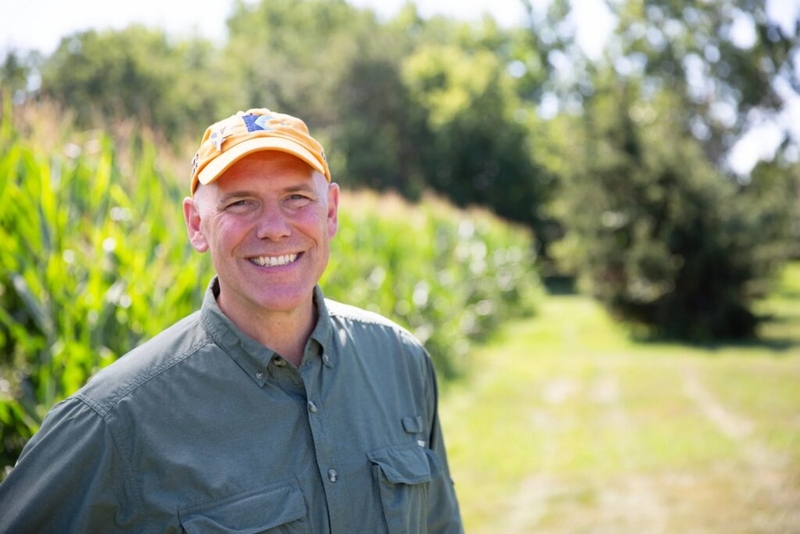
Mark Legvold, DFL-Northfield, said he’ll focus on reducing the cost of living for Minnesota families, while bolstering public education and the state’s agricultural economy. (Courtesy photo)
Sen.-elect Mark Legvold, who defeated first-term Republican state Sen. Bill Lieske, has exactly the resume Democrats needed after losing working-class voters badly in 2024: He’s a veteran, firefighter, farmer and educator.
Legvold, 56, graduated Northfield High School in 1989 and enlisted in the Air Force, serving five years on active duty before returning to Minnesota in 1995, when he joined the Air National Guard.
Legvold worked as a teacher and school administrator for St. Paul Public Schools. He returned to military service full-time, becoming a fire chief at Minneapolis-St. Paul International Airport. He retired in 2023 and farms alongside his father on the family’s Northfield-area corn and soybean operation.
“I still felt compelled to serve other people after doing it for 33 years, and wanted to make my community and my country a little bit better place,” he said. “So I decided to run for office.”
District 58 covers a swath of southeastern Minnesota, including Northfield, Dundas, Lonsdale, Farmington and parts of Rosemont and New Prague.
Legvold said he’ll focus on reducing the cost of living for Minnesota families, while bolstering public education and the state’s agricultural economy.
This interview is a part of a series on rookie state legislators. It has been edited for length and clarity.
Tell us about yourself.
I went to college while I was in the service and eventually chose elementary education as my major. When I reached the point where I needed to student-teach, my family had grown to include my wife and two kids, so we moved back to Minnesota for me to finish my education.
I started working in St. Paul Public Schools while serving in the military part-time. I earned my master’s degree in school administration and my principal’s license from the University of Minnesota while continuing my military service.
In 2007, the guard asked if I’d take a full-time position. I became the fire chief at the Twin Cities airport. By then, I had three kids.
Along the way, I became a single parent in 2010. Then I met my wife, Lisa, through her kids, and we eventually got married. We’ve got a family of six, all paired up with a lovely significant other, and five and one-third grandkids.
What made you decide to run for office?
My degree from Hamline University is in political science and elementary education, so I’ve always been politically interested. But in the military, we’re not politically active. We vote, we protect democracy, but we’re not influencing.
My last job, especially, was very politically adjacent. I had a lot of experiences seeing how things are shaped in our global and local politics by good policy work, so, yeah, I was interested.
I also served during the first Trump administration, which was incredibly difficult. I knew when he got elected a second time, it was going to be just plain hard, to put it mildly.
Why do you think you won?
Good, hard work. We started the race over a year and a half before the election, and we were knocking on doors, introducing myself, getting out and meeting people where they were, listening to folks and putting in the hard work that people in public service should do.
Did you learn anything new about your district on the campaign trail?
Absolutely. What I learned first and foremost is that politics is local, and relationships come down to the doorstep. People are genuinely kind and decent, and very understanding of somebody standing on their doorstep, even if you don’t agree politically.
For the most part, folks are good. They just want a better life, and they care about how we get there.
Looking ahead, what are some issues you want to work on?
Making life affordable for every Minnesotan and figuring out how we get there is really going to matter.
People are struggling to afford their health care, but they’re also struggling to afford gas in their tank, food on their table, clothes on their backs and a roof over their heads. So, making Minnesota a more affordable place, providing a great public school education that’s available for every single kid in Minnesota, and making sure our economy thrives.
And that means, for me as a family farmer, making sure we protect our family farms and that the folks in agriculture are able to thrive. Twenty four percent of our state’s economy relies on agriculture. So if farmers aren’t doing well and people in agriculture aren’t doing well, then the rest of the state isn’t doing well.
What issues do you think you might disagree with your party?
Economic growth might be one area where I disagree, as well as health and human services, or just human services in general.
I am a strong supporter of environmental initiatives and taking good care of our air, land and water, so I don’t think we’re going to see a lot of disagreement there. But how we do that is going to matter.
Time and again, folks out in the rural areas of our district, especially, want to see us compromising with our Republicans out there. They want to see how we involve everybody who has been elected to office in solving the complex problems we’re facing.
With us going into a session where we do have a trifecta in place, I still want to make sure that we’re working with Republicans who are reasonable, come to the table and want to solve these problems. I just don’t have time for extremism, and neither do the people in our district.
What is something about your background that you know the majority of the public would be kind of surprised to learn?
I was a single parent for a time, with three teenagers at home while working a full-time job and farming. (Levgold is divorced.) I didn’t necessarily share that much on the campaign trail.
I understand the hard work it takes to be a single parent, and I’m really proud of our blended family.
As a single parent, how does that shape how you’re entering the next legislative session? With those experiences behind you, did it make you think about things differently?
It really has. It’s not just about what I went through, but what every single parent goes through while trying to build a better life.
My wife is a great role model and mentor. She was also a single parent of three before we blended our families. She went to school full-time while raising three kids and maintaining a household. Without some of the help she received, she wouldn’t be where she is today.
She’s a physician assistant who worked hard and had help along the way. I keep saying it: When you put your money where your people are, it makes our world and our state a much, much better place.

Saint Paul, MN