Feds offer new agreement framework for states working with satellite providers in broadband program
Nov 27, 2026 | 6:45 am ET
Description
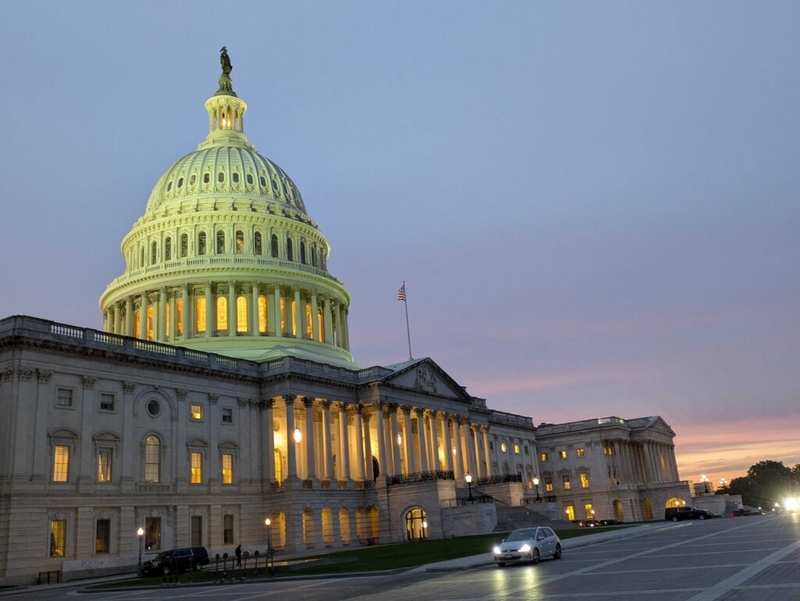
The U.S. Capitol on the evening of Sept. 30, 2025, just hours before a federal government shutdown. (Photo by Ashley Murray/States Newsroom)
LINCOLN — New federal guidance for how states should work with large satellite internet providers under the Broadband Equity, Access and Deployment, or BEAD, program is raising eyebrows among local broadband advocates.
The National Telecommunications and Information Administration released a new model agreement Monday meant to “simplify the contracting process” with satellite providers and expedite services to eligible BEAD locations. According to an NTIA statement, some national satellite companies have been slow to sign state contracts, as different states have imposed “a patchwork of obligations” beyond the basic federal requirements.
BEAD is a nationwide broadband expansion program that began under the Biden administration. In late 2025, state lawmakers learned of changes coming to BEAD through President Donald Trump’s “Benefit of the Bargain” initiative.
A BEAD on Nebraska broadband: State reopens provider applications with over $300M still in limbo
Nebraska has received roughly $57 million of the $405 million it was initially awarded, with the leftover dollars being held as “non-deployment funds” that may or may not come to the state.
Currently, about 23% of Nebraska’s BEAD technology is satellite, according to a previous statement from the Nebraska Broadband Office. Nebraska Department of Transportation — which encompasses the Broadband Office — spokesman Jay Omar said the office was in the middle of evaluating its response to the latest guidance.
“NBO is currently evaluating all options in response to the recent guidance around the Model Zero Outlay Agreement and will share decisions in the coming days,” Omar said of the changes announced Monday.
According to the NTIA statement, states can use the model agreement for Low Earth Orbit satellite providers that agree to meet BEAD service and testing requirements, but decline BEAD subsidies. States that choose to not use the model agreement will be responsible for finding a different provider who can serve locations at a comparable cost.
Emily Haxby, a Gage County farmer and vocal critic of the changes made to the BEAD program under the Trump administration, said the model agreement will mainly impact Nebraska’s working relationship with Starlink, SpaceX’s satellite company. She said she believes the model agreement would remove the accountability measures meant to ensure that Starlink serves Nebraska’s BEAD locations.
“SpaceX is giving up the subsidy and minimizing exposure, which makes sense because their entire BEAD award nationwide is less than two weeks of revenue for the company,” said Claude Aiken, chief strategy officer for Nextlink, another internet provider participating in Nebraska’s BEAD implementation. “The long-term benefit for them is keeping other providers from receiving subsidies for these locations.”
While Haxby said she suspected supporters of the latest changes would frame the model agreement as a cost-saving opportunity, she noted that Starlink was already serving Nebraska locations and wasn’t in need of BEAD subsidies in the first place. She said she doubts Nebraska would be able to find another company that can offer comparable or cheaper costs.
“(Nebraska) could have absolutely done better, but I will give them a little bit of a benefit when I tell you that the NTIA and them changing the rules did not help us at all,” Haxby said. “Quite frankly, they should just keep their grubby paws out of it.”
Lincoln, NE