Longer lines, anxious people: SNAP changes are straining Kentucky food pantries
Nov 26, 2026 | 5:30 am ET
Description
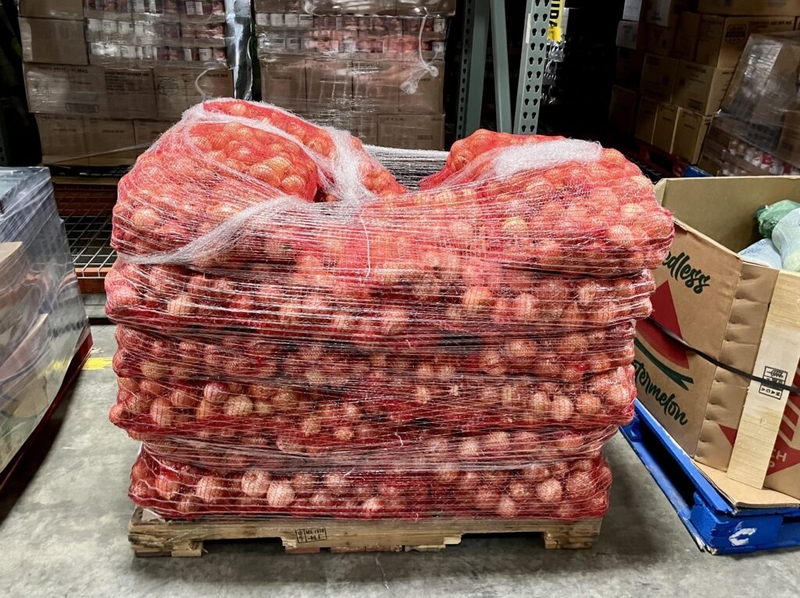
Bags of potatoes in the Dare to Care food bank in Louisville, May 14, 2025. (Kentucky Lantern photo by Sarah Ladd)
During the COVID-19 pandemic, Daryl Caldwell recalls receiving around $300 a month in food assistance.
Now, he’s down to $24.
When he got $300 — thanks to pandemic-era reimbursement increases — he didn’t need help from his local food bank in Louisville, he said.
Now, he’s getting a box every month from Exodus Family Ministries, he said, which includes items like juice, cereal, vegetables and powdered milk.
“Same things I like, some I don’t,” he said. “So what I don’t use, I give to the needy, so somebody could use it.”
Food banks are already struggling to keep up with the demand brought on by changes to the Supplemental Nutrition Assistance Program, more commonly referred to as SNAP, in the One Big Beautiful Bill Act.
Dare to Care president and CEO Vincent James said that while the government rose to meet the surge of hunger during COVID, it has not done so now as grocery prices, gas and energy costs rose this year.
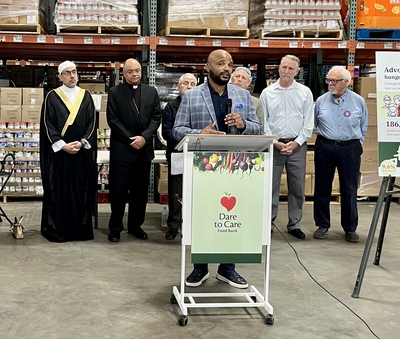
“For the first time in Dare to Care’s history, we’ve exceeded 200,000 individuals in our service area that are experiencing food insecurity,” James said. “I think the drivers are what is affecting everyone: It’s the gas prices, it’s grocery prices, it’s the economy as a whole.”
And food banks just can’t keep up with the increase in hungry people as around 80,000 Kentuckians have lost access to food benefits: He’s had to turn people away. As of September, James said Dare to Care has seen a 115% increase in demand for food this year.
“For those who are on the margins,” James said, “they are now over.”
Longer lines
The One Big Beautiful Bill Act, a sweeping budget bill passed by Congress in 2025, made several changes to the SNAP program.
Last November, for example, veterans, the homeless, recent foster care youth and adults ages 54-64 were no longer exempt from work requirements to receive food benefits for themselves and their families through SNAP.
KFF Health News reported in October that around 5 million, or 13%, fewer people, were enrolled in SNAP in June 2026 than July 2025.
Danielle Bozarth, the interim president and CEO of God’s Pantry, said in the 50 counties her organization serves, demand for food is also on the rise.
“What our … partner agencies are reporting is longer lines, running out of food. People are lining up earlier, before it opens, and just anxious,” she said. “Just making sure that they’re able to leave with food that day while they’re in line.”
Supply is a challenge right now. James and Bozarth both pointed to a shortage in food commodities coming in from the United States Department of Agriculture.
“That typically will ebb and flow with the administration, and we recognize that; it’s ebbed and flowed for years,” said James, who said Dare to Care is down 3 million pounds of food from federal commodities.
This is the first time, though, that he’s seen federal food commodities decrease while demand for food is increasing.
Bozarth said God’s Pantry served around 280,000 people last year. As of Nov. 18, it was up to 314,000 people in 2026. James said Dare to Care saw a 115% increase in food demand from January to September.
Looking to the holidays, winter
Winter can exacerbate hunger, experts said: Kids who got lunches at school are leaving the classrooms for break; heat bills are higher.
“I think families will struggle trying to put food on the table,” Bozarth said. “I think it will be a tough, tough December for families. And then with heat bills and buying Christmas presents, and … providing additional food for the kids when they’re home. I think January will probably be really hard for the families.”
James doesn’t expect the increase in hunger to slow down.
“We’re consistently seeing more and more people entering into the roles of food insecurity,” he said.
This is also a time of giving, for many: Thanks to bulk buying, many food banks have better purchasing power than the average person. Therefore, monetary donations are often appreciated, though food donations and volunteering are also welcome, James said.
“Food banks have such a large buying power that we’re able to buy more food at less cost than someone who would be purchasing a can of soup for $1,” James said. “We can provide two meals where for $1 purchasing some soup is only going to get you one can of soup.”
Could the ‘blue wave’ help?
The power in Washington D.C. shifted during the 2026 midterm elections. Democrats now have control of Congress, and they have already signaled they want to restore funding to social service programs cut in recent years.
“We just simply need every elected official to be able to, at every level of government, understand that charitable food assistance again cannot make up for the reduction in the federal nutrition programs that we’ve seen already, and we need that continued support,” James said.
Melissa McDonald, the executive director of Feeding Kentucky, said during a Nov. 18 meeting of the Race and Access to Opportunity Committee that “SNAP provides nine meals for every one meal that a food bank is able to provide.”
“My hope is that we can work towards a Kentucky where no family has to worry about where their next meal is coming from, where farmers have opportunities to succeed, and where food we produce helps our people thrive,” McDonald said. “I believe these goals go hand in hand.”
Persistent myths
Many people receiving food assistance are working already, experts say, contrary to the idea that people getting government assistance aren’t in the workforce.
James called it a “classic myth.”
“For the first time, we’re seeing two-income families that are still not able to make ends meet,” he said. “The math simply isn’t mathing; it’s not working. And so these families are turning to charitable food assistance for relief because they’re having to make tough decisions. Because the gas inflation prices, they can’t afford to fill up a truck that they need for their job and work, and it’s costing them $100 a week when they were used to paying $70 a week. That $30 is a huge difference for someone who’s on the margin already.”
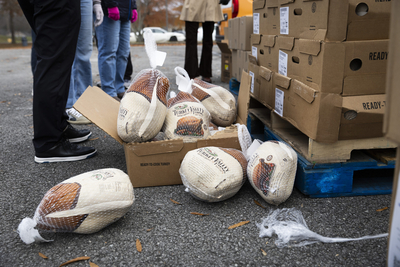
This year, Dare to Care has seen a 30% increase in two-income families turning to food banks for the first time, James said.
“Some of these are hardworking families, or these are seniors choosing between food and medicine,” Bozarth said. “There could be an unexpected expense or setback. It could happen to any of us.”
For Caldwell, 63, it was a storm of crises that hit him back to back.
He broke his ankle in 2013 and got an infection, he said. He filed for disability because he couldn’t work. In 2019, he had a heart attack and had to get a stent. Then he became homeless.
“I couldn’t afford housing, so I started drinking heavy,” he recalled.
He eventually got help from a Louisville nonprofit that helped him get settled in a reduced-rent apartment.
“I get very little…SNAP, but other things help me,” he said. “I’m doing all right. I’m blessed. I’ve got a roof over my head.”
Frankfort