The dream of farming is alive and well in New Hampshire — but it’s still a tough row to hoe
Nov 26, 2026 | 5:00 am ET
Description
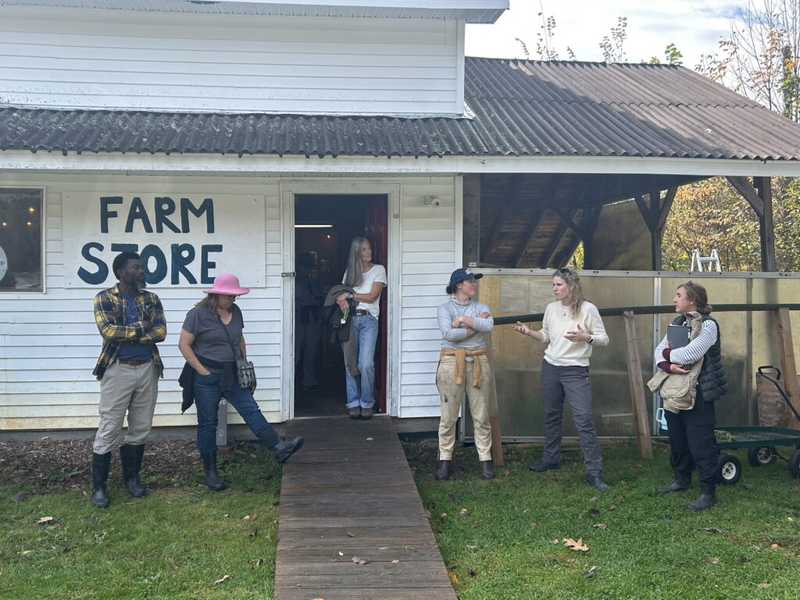
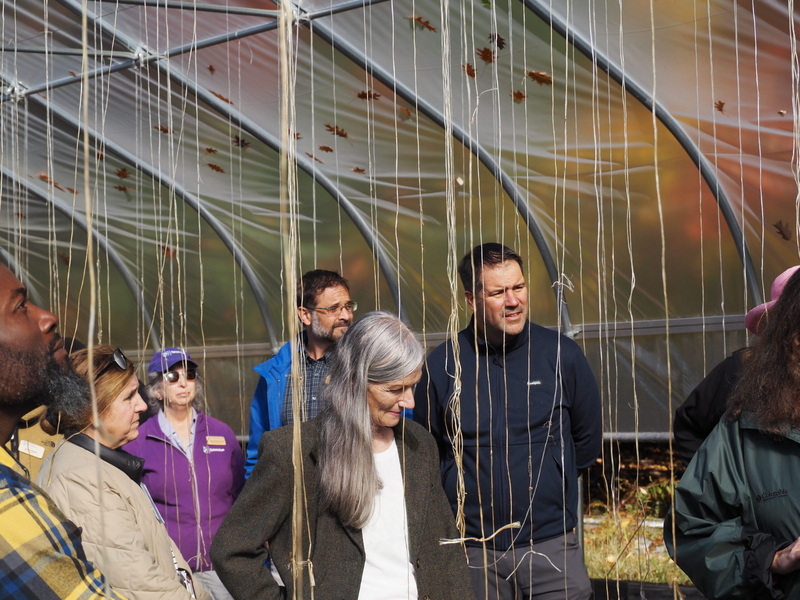
Running a small farm in New Hampshire requires a strong community and support system, said Jesse Wright, field specialist in agricultural business management with UNH Extension. Here, she speaks with new and aspiring farmers during an Extension New Farmer School session in Rochester on Oct. 14. From left: Walter Alce, Maria Elena Potter, Deborah Stacy, Sam Monohon, Wright, and Lisa Aquizap. (Photo by Molly Rains/New Hampshire Bulletin)
Sustainable, local, farm-to-table food can sound especially appealing in a world of hyper-processed products and periodic food-safety scares.
That’s just one of several ideals cited by some of the newest small-scale farmers to take the plunge into the world of New Hampshire agriculture.
“Food security is the main goal here,” said Walter Alce, who dreams of running a self-sustaining family farm with his wife and four children — and who, last year, took a major step toward that goal when he purchased Elm Farm in Francestown.
It’s not an unusual dream. Others across New Hampshire also aspire to work the state’s land to produce crops and livestock for their families and neighbors. But for those new to the field, there’s lots to learn about the realities and limitations of farming in New Hampshire. And sometimes that journey comes with hard lessons along the way, experts and new farmers said.
Food and community
Small family farms make up about 86% of all agricultural operations in the U.S., according to the U.S. Department of Agriculture. In New Hampshire, that proportion is similar. According to 2022 data from the department, the median size of the state’s farms, by land area, is 37 acres; that year, the average operator took home $6,568 in net profit.
New and aspiring farmers come from diverse backgrounds, drawn to farming for many different reasons, said Jesse Wright, field specialist in agricultural business management with the University of New Hampshire Extension.
With Caroline Beaton, Wright helps run the extension’s New Farmer School program, where some of those fledgling farmers gather. The class welcomes recent retirees and young adults; transplants and lifelong New Hampshire residents; and people who have dreamed of farming their whole life alongside people suddenly plunged into the field when they, say, inherited a family member’s land or married into a farming family, Wright said.
Many, like Alce, were drawn to farming as a way to provide healthy food or other natural products for their family and community.
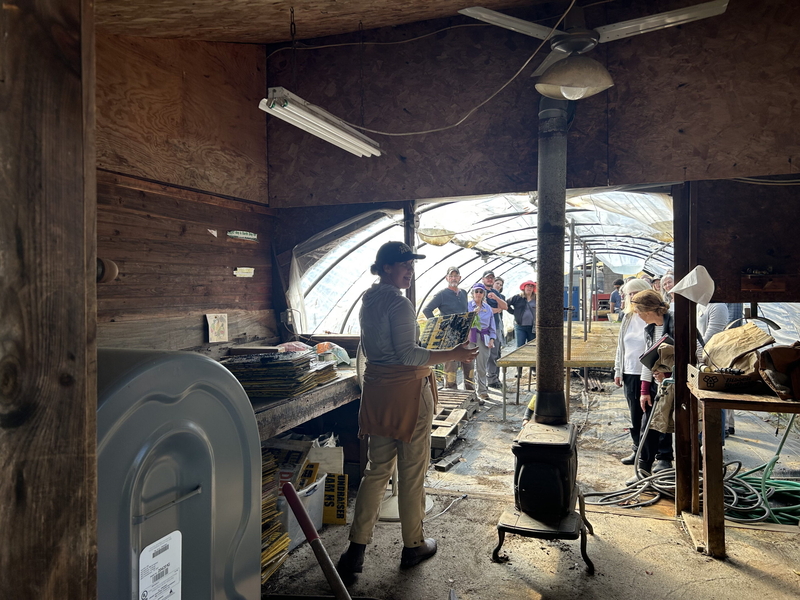
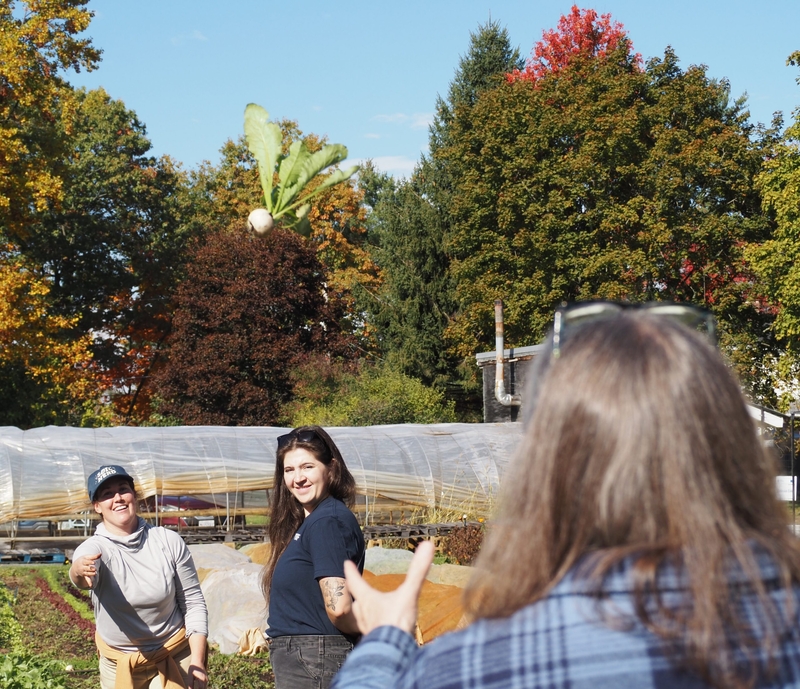
“This is where science and food and community and practicality all kind of meet together,” said Sam Monohon, who for four years has co-owned Nerdy Turnip Farm in Rochester, where New Farmer School students arrived for a tour of the grounds this fall.
Finding a field to plant in
One of the first and biggest barriers many aspiring farmers face is land access.
The high cost of property and limited amount of well-suited farmland coming onto the market are major hurdles for many, Wright said.
“If you don’t have space, or a space that’s well suited to growing, it’s kind of a non-starter,” she said.
Alce and his wife searched for over three years before finding the right property that could support the chickens, pigs, cows and other livestock they wanted to raise. Navigating fluctuating interest rates and a competitive market for land was a frustrating and drawn-out process, he said.
At the same time, it felt like the puzzle piece that would make everything else fall into place.
“Land is something you can’t make more of,” Alce said. “You find the land, then anything else, and everything else, is possible.”
In the end, Alce said, success came down to “being in the right place at the right time and sending out the right email.”
But for others — some of whom cannot afford to purchase land themselves or struggle to find a suitable property — newer, creative approaches to secure land access can help, said Beaton. These include joining forces with other aspiring farmers to make joint land purchases; renting fields instead of buying land; and working with land trusts and other groups to access agricultural conservation land.
Sowing spreadsheets
Like the matter of land, many other parts of the high barrier to entry for beginning farmers are also financial. In a broad sense, one thing most non-farmers may not realize is the sheer amount of business savvy required to run a successful farm, Monohon said.
“Every farmer that I know is secretly a giant spreadsheet nerd,” she joked. “Doing the farming is kind of a small piece of what it ends up being, when you own the farm or when you manage or run the farm.”
Rising costs have also hit farmers, and the price of production for crops and livestock can be staggering for those just getting into farming. For Alce, that realization hit him when he first began looking into raising chickens.
“I think most of us don’t know the true cost of food,” Alce said.
Government subsidies for large-scale farms can obscure the true cost of food and make it hard for small farms to compete, Alce said.
Wright recalled a conversation with an aspiring farmer and New Farmer School participant who calculated the total cost of producing their goods, from seeds to fertilizer, feed and labor, and concluded that to charge anything over the actual cost of production would price out members of their community.
Farmers must also contend with the normal costs of running a small business: accounting and payment processing, wages for their laborers and insurance, to name a few, Monohon said.
Marketing is a major task for farmers, who must cultivate a reliable customer base in addition to their crops and products. For many, this means reluctantly posting on social media.
“The shiny, beautiful, outside thing is the growing of the things, and the less fun thing is the number crunching and the Facebook posting,” Wright said.
Affording health insurance for themselves as well as their employees is a major burden on many beginning farmers and, in some cases, a barrier to entering the field, Beaton said.
To make it work, many farmers work a day job. Alce and his wife both work 9 to 5, while Monohon’s husband, Caleb, works full time, allowing the couple and their two toddlers to access health insurance through his work. Many other participants in New Farmer School also said they work day jobs, have a family member who does or are retired.
It’s a difficult reality that can bring up complicated feelings for farmers.
“There’s a lot of imposter syndrome feelings that I get,” Monohon said. “… It is a difficult thing to do without that kind of tie into society. Farming can kind of make you self reliant, but Caleb and I have not figured out a way to be entirely just on the farm.”
It’s a common struggle, Wright said: Aspiring farmers enter the field with big dreams and wholehearted visions for their future, while societal barriers make those dreams difficult to realize.
Helping farmers access resources and promoting programs like incubator farms, extension trainings and community support is crucial to helping lessen the burden, as is transparency about the difficulty of the endeavor, she said.
It’s possible to achieve the dream of a small, sustainable farm successfully, she said, but not without multifaceted community support.
“I think we have to be done pretending that you can have a small farm in New Hampshire and support a family, support a lot of folks’ vision for what life can look like without some of these background levers being pulled,” she said.
A committed lifestyle
Beyond the finances, living as a farmer requires near-constant commitment.
One thing that some New Farmer School participants are dismayed to learn is that farmers “can’t necessarily go on vacation,” Beaton said.
Alce said he decided against raising dairy cows after talking to other farmers, who told him they were a seven-day-a-week commitment. It’s knowledge-sharing and discussions like that, he said, that have helped him gather experience and avoid pitfalls as he gets his footing.
Contending with the unpredictability of growing is one of the biggest struggles of the farming life, said Monohon. Weather, pests and a revolving array of unforeseeable circumstances — like fungus or equipment problems — can turn plans upside down.
But for Monohon, after four years of running the farm, the plunge has proven worthwhile. After the trial-by-fire days of navigating both farm ownership and parenthood for the first time, Monohon said, she feels a new era beginning. And though her day-to-day is still full of challenges, seeing the farm take on a life of its own has been both fulfilling and exciting.
“There’s something really wonderful about it,” she said. “… I have my little chunk of land that I’m going to do with what I can to make the greatest positive impact on this greater problem, and help protect my family and my friends and my community in future years.”
Concord, NH