How prepared meals are helping fill in food aid gaps in Portland and across Maine
Nov 26, 2026 | 5:00 am ET
Description
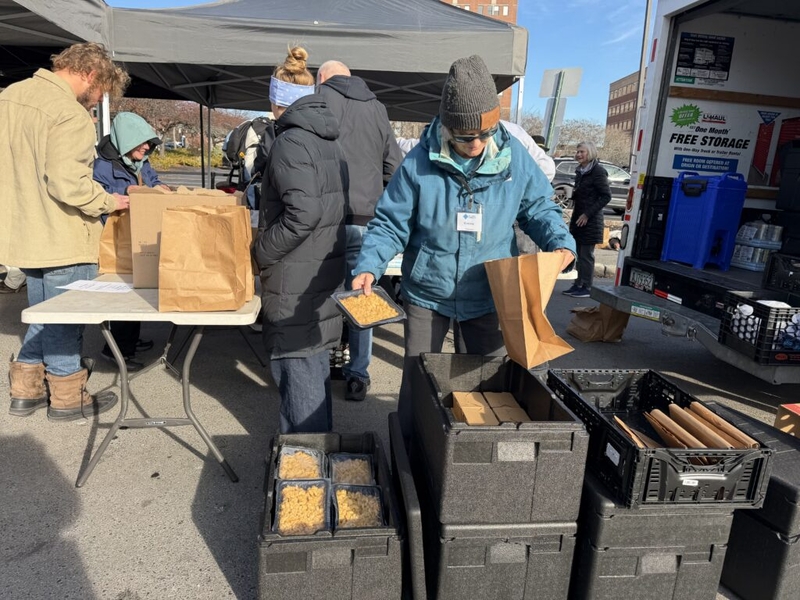
Volunteers package hot meals at Cotton Street's food distribution site on Nov. 25, 2026. (Photo by Eesha Pendharkar/Maine Morning Star)
Ron Stanley has been unhoused in Portland for six years, but it wasn’t until last October that he found a reliable place to secure a hot lunch. Now, Stanley, along with dozens of others, most of whom are unhoused, gather each day on Cotton Street to get two prepared meals along with dry goods, packaged food and drinks.
“I don’t know how people are going to get a hot meal if these guys don’t show up,” Stanley said, gesturing toward the volunteers handing out food.
“It’s always a pretty good meal too,” he said. “They’re always hot, they’re nutritious and they have people here that can support and counsel us, too.”
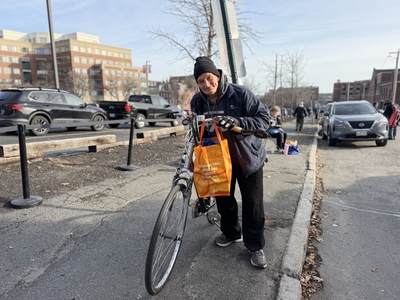
The meals come from nonprofit Preble Street, which prepares everything served on site at its Food Security Hub in South Portland. The City of Portland collaborates with the nonprofit, providing tables, chairs and a canopy for people to sit under and eat their meals. Volunteers from Milestone Recovery and various faith-based organizations often hand out meals.
“This fills the gap for people who are staying outside for consistent meal services, and it’s the lowest barrier option for consistent food in the city, especially with SNAP changes,” said Andrew Volkers, Preble Street’s director of health services and Street Outreach Collaborative. “In these times, hot food can really feel like a privilege.”
The need for services like the one on Cotton Street comes as food insecurity continues to rise across Maine. According to the latest national food insecurity data from Feeding America’s Map the Meal Gap study, 14.5% of Maine residents experienced food insecurity in 2024, up from 13.8% the previous year.
Since then, President Donald Trump’s administration has cut access to federal food assistance for thousands of Mainers. Combined with rising costs for food, energy and other essentials, an even larger percentage of people currently have limited or uncertain access to food.
But for people who rely on services like those at Cotton Street, access to food is only part of what makes them important. The opportunity to sit down, share a meal and spend time with others can be just as meaningful, particularly during the holidays, Volkers said. Last year was the first Thanksgiving meal the nonprofit offered in downtown Portland.
“Last year on Thanksgiving when I was here, it just felt happy and lively, and there was a lot of camaraderie,” Volkers said. “Not only food-centric holidays, but family-centric holidays bring up a lot … like trauma, lack of social support, lack of family. So offering hot meals and pie, and just sitting with them for the afternoon I think is really important.”
The Cotton Street location is part of a broader effort by Preble Street to expand access to prepared food across Maine, which accelerated after the nonprofit opened its Food Security Hub in South Portland in 2025.
There is more demand than ever among food pantries for prepared meals, according to Colin Freeman, the organization’s chief director of community partnerships. Now that the organization has a facility in which it can cook up to 2,000 meals a day, and store thousands of frozen fully prepared meals, they can come closer to meeting it. The kitchen has the capacity for them to eventually scale up to 10,000 meals every day.
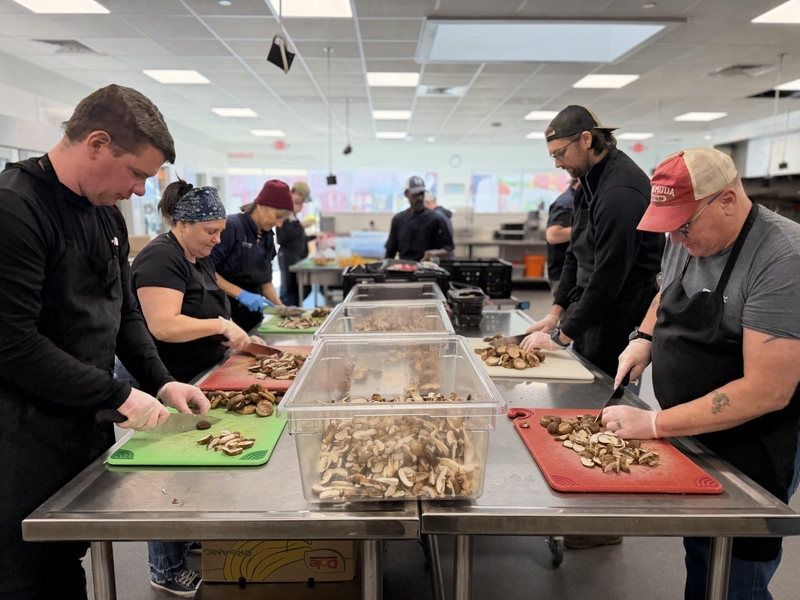
Those meals are prepared with produce donated by Maine farms and are distributed within Preble Street’s Portland shelters, on Cotton Street and — most recently — through Good Shepherd Food Bank to pantries across the state.
“Pantries really need to fill this market where there’s people that don’t have the time to be able to produce their own meals, because if you see the kind of food that they’re receiving, it’s dried beans and things that are laborious and take time to really create delicious meals out of,” Freeman said.
“So for somebody that’s trying to work, take care of their kids, keep a house over their head, and cook for their family at the same time, this kind of meal is such a helpful thing.”
Last month, Preble Street announced the partnership with Good Shepherd funded by a $150,000 grant from Hannaford Bros. The program, called Harvest to Home, has already offered more than 10,000 meals in the month since it launched, with the goal being 100,000 meals a year.
“Access to nutritious food means more than having something to eat, it means having food that supports health, well-being and dignity,” Good Shepherd Food Bank President Heather Paquette said in a statement announcing the partnership. “Together, we can reach communities across all 16 counties and strengthen our collective response to hunger.”
Augusta, ME