Some law enforcers say Utah’s emergency radio system – their ‘lifeline’ – is unreliable
Nov 24, 2026 | 5:07 pm ET
Description
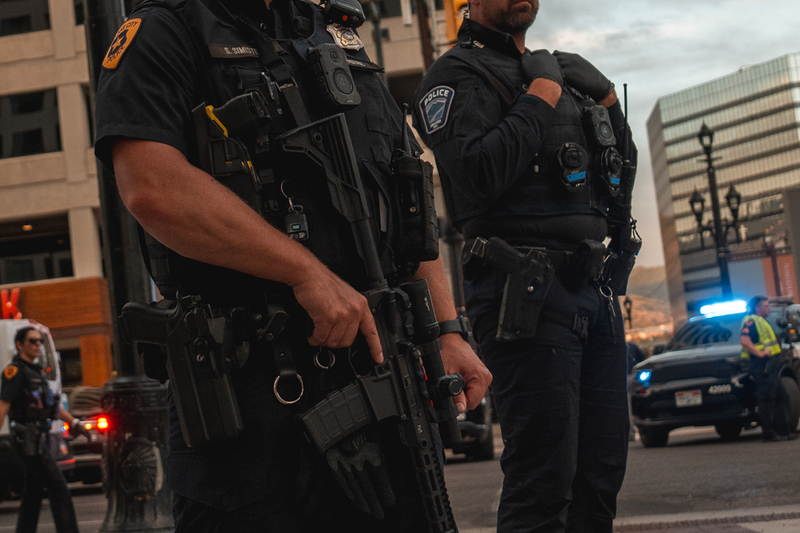
A Salt Lake City police officer and Draper police officer wear body cameras at the scene of a shooting at a No Kings protest in Salt Lake City on Saturday, June 14, 2025. (Photo by Spenser Heaps for Utah News Dispatch)
Several Utah law enforcement agencies say the state’s public safety radio system is unreliable and at times prevents their officers from calling for backup or communicating with 911 dispatchers — issues they warn can drive up the risk for officers in already dangerous situations and delay emergency response.
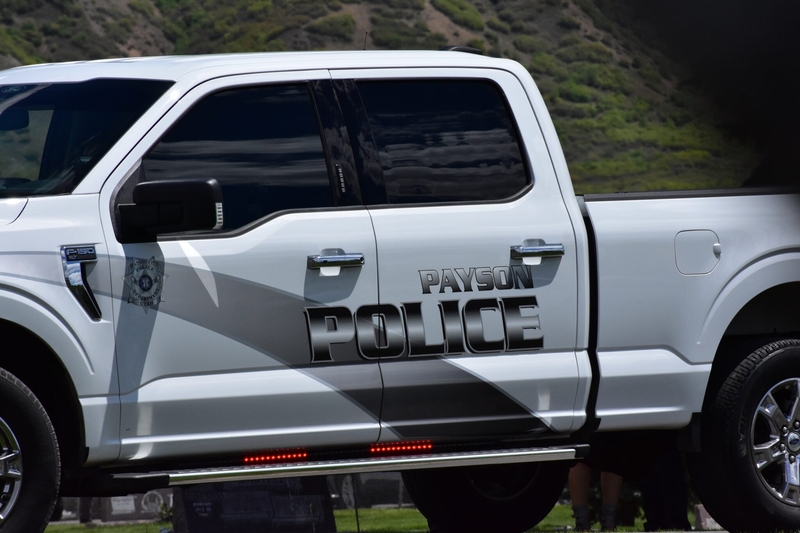
“What’s at stake is our officer safety,” said Brad Bishop, chief of the rural Payson City Police Department about an hour’s drive south of Salt Lake City. “If we have a situation where an officer is in need of help quickly and they can’t get out on the radio, that’s their lifeline.”
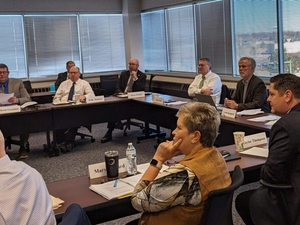
Bishop, also the president of the Utah Chiefs of Police Association, told state legislators on a law enforcement panel last week that the topic dominates his discussions with other police chiefs.
He’s worried police calls for urgent medical help or to fire departments also aren’t getting through. And he said he’s observed communication gaps firsthand. A few weeks ago, he and some of his officers were having lunch at a diner when a dispatch call came in.
“Two of the officers get the transmission; the other three don’t get the transmission,” Bishop told the Law Enforcement and Criminal Justice Interim Committee on Wednesday. “This happens frequently.”
He surveyed police and sheriff’s departments about the radio system that’s been in place for two years and shared responses from 15 agencies ranging from St. George in southern Utah to Brigham City to the north. While a handful of those law enforcement agencies are satisfied with the system, others reported frustrations with issues such as garbled audio and missed or clipped transmissions.
It’s a concern for the state’s prison and parole system, too.
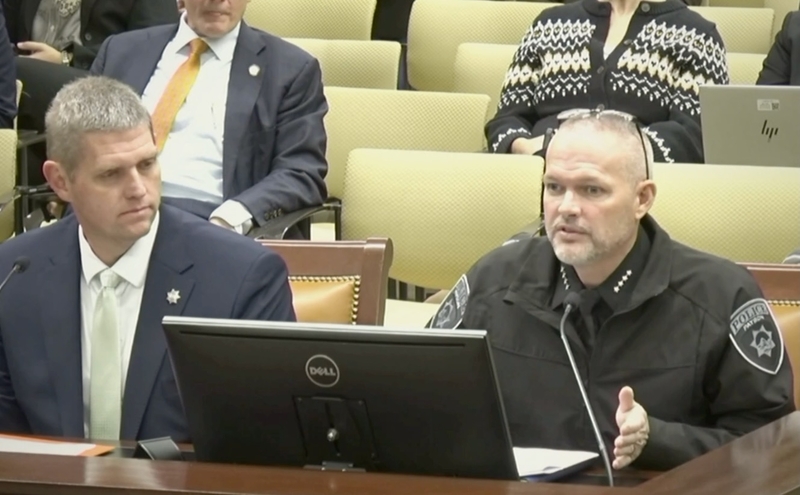
Spencer Turley, deputy commissioner for the Utah Department of Corrections, sat next to Bishop last week at the Capitol. Turley told members of the committee there’s been “marked improvement” as crews have worked on a radio tower near the prison’s Salt Lake City site.
But until recently, he said it took officers four or five tries to make a call, with some carrying two radios at a time to make sure their message went through.
“Some of them resorted to using hand signals because they couldn’t get their radio call to go through, and the problem just perpetuated,” Turley said. “Officers are saying, ‘I’m not safe to come to work because I can’t get my radio to go through if I need help.’”
He said to the credit of the Utah Communications Authority, which oversees the system,“they are responding and we are seeing an improved difference at the prison, but there’s still concerns.”
It wasn’t the first time lawmakers have heard about the safety concerns. Rep. Ryan Wilcox, an Ogden Republican who chairs the committee, recalled one police chief telling him that the department now sends out two officers to respond to calls instead of one.
“He has to double up on every call because they can’t have – they don’t have – reliable service, which means we’re cutting law enforcement in half,” Wilcox said during last week’s meeting at the Capitol.
He noted an audit of the communications authority’s performance is underway but hopes the Legislature won’t wait for it to wrap up to start addressing issues with the system.
“I’m concerned there’s some underlying network issues with network design and how we’ve done some of this, let alone the rollout,” Wilcox said.
The Utah Communications Authority, an independent state agency, oversees the system that transitioned from Motorola to L3Harris Technologies in late 2024 and early 2025 under a $51 million contract.
L3Harris Technologies did not immediately respond to a request for comment.
Tina Mathieu, the authority’s executive director, told Utah News Dispatch a reliable public safety radio system requires a joint effort between the authority and the agencies using it.
“UCA’s job is to build, maintain, and keep improving the statewide network, and we are dedicated to this mission,” Mathieu said in an email.
She went on to say the “agencies’ part is making sure the radios in their officers’ and firefighters’ hands are up to date, in good working order, and running current firmware. The network can only perform as well as the equipment connected to it. When both sides do their part, first responders get a system they can count on, and that’s the goal we all share.”
Mathieu said the authority relies heavily on feedback from police, fire, emergency medical services, and dispatch centers, and that her agency works to find the root cause of problems and determine the right solution.
She told members of the law enforcement committee last week that many radios in the state run on outdated firmware that can drop or mangle transmissions – some with versions released as early as 2014. And while some issues can appear to stem from the network, they’re actually tied to the radios themselves, which departments are responsible for.
Another factor: signal boosters called bi-directional amplifiers that are used to eliminate dead zones in buildings. When the system changed over two years ago, those amplifiers needed reconfiguration to work properly, according to Mathieu.
Mathieu said a poorly installed or badly maintained bi-directional amplifier can take down radio coverage not just for that building, but beyond it.
Bishop, the Payson police chief, said his department has updated radios and antennas, but is still having issues.
“We’re not necessarily saying we want a new system,” Bishop said. “We just want the system we have to work correctly.”
Salt Lake City, UT