Citing legal concerns, Whitmer orders EGLE to halt Line 5 tunnel permit activity
Nov 24, 2026 | 5:29 pm ET
Description
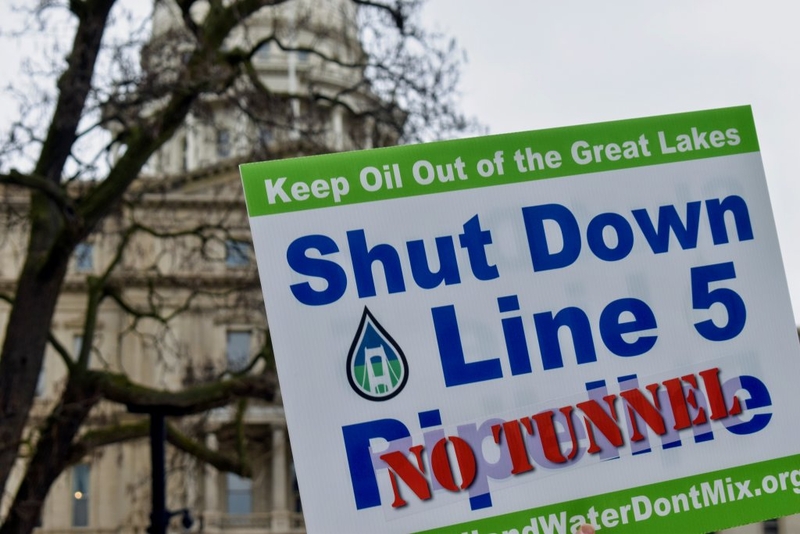
"Shut Down Line 5 - No Tunnel" sign on the grounds of the Michigan Capitol. | Laina G. Stebbins
Michigan Gov. Gretchen Whitmer announced Tuesday she was putting environmental permit considerations for the Enbridge’s Line 5 tunnel project on ice, until the state can resolve legal questions raised by the state Supreme Court over the summer.
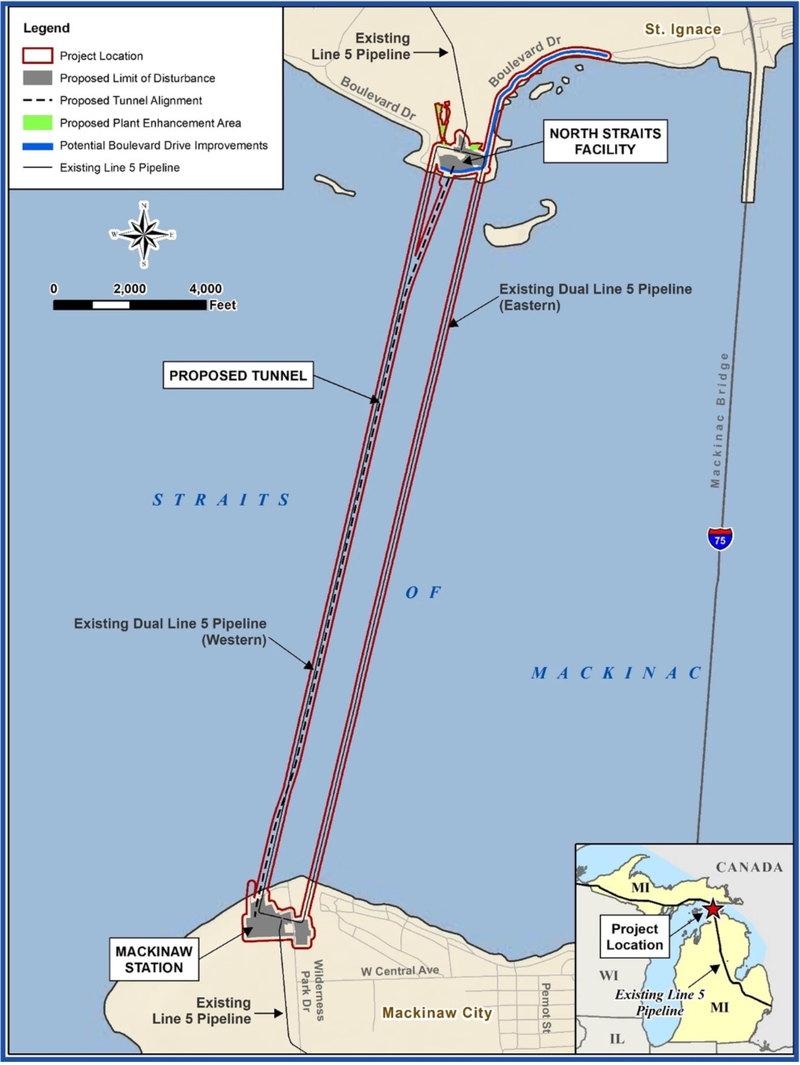
The 645-mile pipeline running from northwest Wisconsin to southwest Ontario includes a 4.5 mile dual segment resting on the bed of the Straits of Mackinac, where Lake Michigan and Lake Huron meet.
At the end of July, the Michigan Supreme Court ordered the Michigan Public Service Commission to revisit its decision to issue a permit for the controversial project. The court ruled that the commission, which regulates Michigan’s energy and utility companies, had not properly considered the environmental harms that could arise from extending the lifespan of the oil pipeline.
In September, the governor directed the Michigan Department of Environment, Great Lakes and Energy to examine how the Supreme Court ruling affects its permitting decisions.
Following Whitmer’s announcement, pipeline opponents filed two separate requests for a contested case on a set of permits EGLE approved in July, arguing that the tunnel project posed a serious threat to the environment and the lifeways and cultural resources of Native American tribes in the region.
EGLE has yet to issue a decision on a National Pollution Discharge Elimination System permit, which would allow Enbridge to release up to 6 million gallons of wastewater created during construction into the Great Lakes, after treating it at one of two sites on opposing ends of the Straits of Mackinac.
“Protecting the Great Lakes and the people who depend on them has been a top priority of mine since day one,” Whitmer said in a statement on Tuesday. “I have always said my ultimate goal is to get Line 5 out of the water. Just one spill threatens irreparable damage to our water, our economy, and our way of life. Given what is at stake, and the Michigan Supreme Court’s recent decision, I have directed EGLE to suspend further action on its Line 5 Tunnel Project permits at this time. Michigan will continue to put the protection of our water, environment, public health, and communities first.”
EGLE Strategic Communications Advisor Scott Dean confirmed the department was suspending further permitting action until the legal questions are resolved.
“Taking a step back until we have greater clarity is the right thing to do for the Great Lakes, our natural resources, and the communities whose livelihoods depend on them,” the department said in a statement.
Enbridge spokesperson Ryan Duffy said the Michigan Supreme Court’s decision to revoke the permit from the public service commission had introduced new uncertainty as the company aims to secure the permits needed to move forward with the tunnel, “even as the permitting record remains strong.”
“The Michigan Department of Environment, Great Lakes, and Energy issued permits in July 2026 and previously in 2021. Both permitting rounds included detailed technical reviews, public meetings, hearings, and consideration of thousands of public comments,” Duffy said in a statement. “They also involved extensive interaction between Michigan’s tribal leaders and state agencies.”
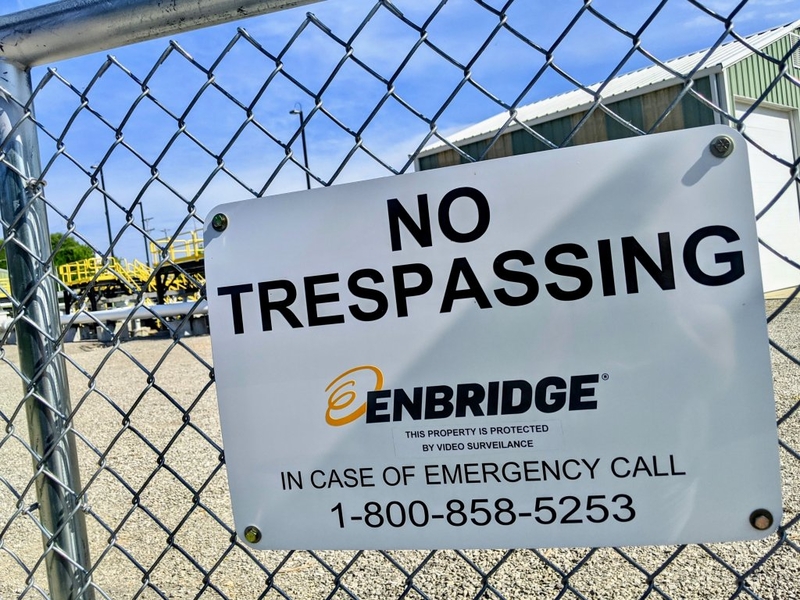
The fight against Line 5 has stretched on for years, with tribal nations and environmental advocates calling for the pipeline to be shut down.
“This decision is not the finish line,” Whitney Gravelle, president of the Bay Mills Indian Community said. “Our responsibility to protect the Great Lakes does not end with a pause in permitting. Tribal Nations have been here since time immemorial, and we will be here long after any corporation has come and gone. We must keep fighting for our waters, demand that our voices are heard, and ensure that decisions affecting our homelands respect our rights and responsibilities. The future of the Great Lakes must be shaped by those who have care for these waters, not by the interests of corporations seeking to profit from them. We have a responsibility to future generations, and we will not stop speaking up or standing up for the Great Lakes.”
In response to concerns that the pipeline may rupture, spilling crude oil into the Great Lakes, Enbridge agreed to replace the dual pipelines with a new segment, housed within a utility tunnel buried beneath the lakebed.
In her 2018 campaign for governor, Whitmer promised to take action against the pipeline, later revoking and terminating Enbridge’s easement to operate the pipeline within the Great Lakes.
Enbridge has since taken legal action against Whitmer and the director of the Michigan Department of Natural Resources, arguing that federal regulations and a 1977 treaty between the United States and Canada bar the state from terminating the easement.
While Judge Robert Jonker of the U.S. District Court for the Western District of Michigan deemed Whitmer’s move to revoke the easement unenforceable, the governor and DNR Director Scott Bowen appealed the case to U.S. Court of Appeals for the Sixth Circuit. Arguments in the case are scheduled for Dec. 15.
Lansing, MI